Key Takeaways
-
The farmer's walk loads both hands equally for maximum total weight, building full-body strength under heavy bilateral load.
-
The suitcase carry loads one hand at a time, forcing the obliques, quadratus lumborum, and glute medius to resist lateral flexion and keep the spine upright against an asymmetric pull.
-
Farmer's walks scale from roughly 25% of bodyweight split between hands for beginners up to 50% per hand for advanced lifters, while suitcase carries start at 15-20% of bodyweight in a single hand.
-
Neither carry is superior on its own. The farmer's walk builds raw load capacity and conditioning, while the suitcase carry corrects left-to-right imbalances and strengthens hip control.
-
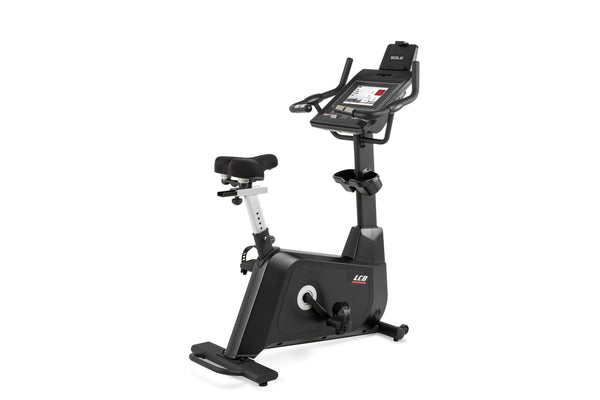
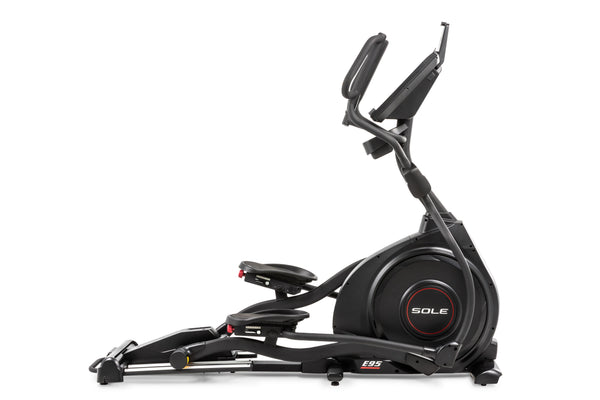
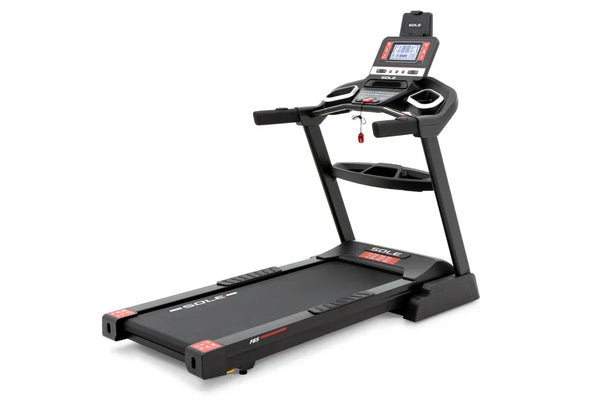
SOLE Fitness treadmills, ellipticals, and bikes fill the conditioning gaps between heavy carry days, with free shipping and a 30-day satisfaction guarantee.
How Load Distribution Changes What Each Carry Trains
The farmer's walk and suitcase carry look similar but train different qualities. Holding weight in both hands lets you go heavier and build total-body strength under a balanced load. Holding weight in one hand forces your trunk to fight a lateral pull that a two-handed carry never creates, shifting the demand toward your obliques, deep spinal stabilizers, and hip control.
That difference in loading determines how each carry fits into a program. Farmer's walks build grip endurance, trap stability, and cardiovascular conditioning at high loads. Suitcase carries expose and correct the left-to-right imbalances that bilateral exercises hide. Most lifters need both, programmed for different purposes within the same training week.
Heavy carry sessions demand recovery between them, and those off-days benefit from low-impact cardio that keeps blood moving without re-loading the grip and spine. SOLE Fitness treadmills, ellipticals, and exercise bikes are built for exactly that kind of active recovery at home.
|
Premium Home Gym Equipment with Award-Winning Quality! Complete Your Home Gym:
Why Choose SOLE: ✓ Commercial-grade quality for home use 30-Day Money-Back Guarantee: Love it or return it, no questions asked. |

Farmer's Walk vs Suitcase Carry: Overview
What Is the Farmer's Walk?
In the Farmer's Walk, you pick up a heavy weight in each hand and walk. It mimics the kind of labor farmers have done for centuries, loading both sides of the body equally and demanding full-body engagement with every step.
You carry a weight in each hand, keep your chest up, shoulders back, and walk for a set distance or time. Your grip, traps, core, and legs work simultaneously to keep the load stable and your body upright.

This bilateral (two-sided) loading pattern makes the Farmer's Walk particularly effective for building raw strength and muscular endurance.
What Is the Suitcase Carry?
The Suitcase Carry involves holding a weight in one hand and walking while your entire core fights to keep your body from tipping to the loaded side.
It looks easier than the Farmer's Walk at first glance, but don't be fooled. The one-sided, or unilateral, load introduces an anti-lateral flexion demand that the Farmer's Walk doesn't have. Your obliques, quadratus lumborum, and glutes all have to fire harder to keep your spine tall and your hips level.

The Suitcase Carry is a powerful tool for identifying and correcting strength imbalances between the left and right sides of your body.
Muscles Worked
Muscles Worked in the Farmer's Walk
-
Grip & Forearms: Your forearm flexors and extensors are contracting isometrically to keep the weight from slipping, building the kind of crushing grip strength that transfers to deadlifts, pull-ups, and everyday life.
-
Traps, Shoulders, & Upper Back: Your traps are working hard the entire time you walk, holding your shoulders packed down and back against the downward pull of the weights. Your rhomboids and rear deltoids also fire continuously to keep the weights from pulling your shoulders forward and rounding your upper back.
-
Core & Lower Body: Your abs and lower back brace with every step to keep your spine neutral under load. This is pure isometric core strength that builds real spinal stability. Meanwhile, your quads, hamstrings, glutes, and calves drive each step forward, making the Farmer's Walk as much a lower-body conditioning tool as it is an upper-body exercise.
Muscles Worked in the Suitcase Carry
-
Obliques & Anti-Lateral Flexion: Your obliques are the primary movers fighting the weight's lateral pull in a Suitcase Carry. Your quadratus lumborum, a deep lower back muscle that connects your pelvis to your spine, also works intensely throughout the movement.
-
Glutes & Hip Stability: With a single-sided load, your hips have to work harder to stay level with each step. Your glute medius fires aggressively on the unloaded side to maintain a stable, level stride. This makes the Suitcase Carry an excellent corrective exercise for people who exhibit hip drop during running or single-leg movements.
Farmer's Walk vs Suitcase Carry: Key Differences
Bilateral vs Unilateral Load
In the Farmer's Walk, the equal load on both sides allows your body to stay relatively symmetrical. You can move heavier weight and build more total strength because both arms share the demand.
Meanwhile, in the Suitcase Carry, that one-sided load shifts constantly with every step, requiring your core to make micro-adjustments throughout the entire set to prevent lateral collapse.
Core Demand
The Farmer's Walk does challenge your core. Walking with heavy weights in both hands requires significant bracing to protect your spine. But because the load is balanced, the demand is symmetrical bracing across multiple planes rather than resistance to a one-sided pull.
The Suitcase Carry, on the other hand, adds an anti-lateral flexion component that the Farmer's Walk doesn't replicate. Your obliques and quadratus lumborum are working overtime to stop you from leaning toward the weight. This makes the Suitcase Carry one of the best oblique exercises available, even though it looks nothing like a traditional crunch.
Effort Required
The Farmer's Walk is harder in terms of absolute load. You can move significantly more weight with two hands than one, and it produces greater systemic fatigue. At high loads, it taxes your cardiovascular system, grip endurance, and legs more aggressively.
On the other hand, the Suitcase Carry is harder neurologically and for core stability. Keeping your body perfectly upright with a heavy load pulling you sideways is genuinely challenging, even with a lighter weight. Beginners often find the Suitcase Carry humbling, even with far less weight than they would in a Farmer's Walk.
How Much Weight to Use for Each Exercise
Farmer's Walk Starting Weight
For beginners, start with approximately 25–30% of your total body weight split between both hands. So if you weigh 180 lbs, that's roughly 45–54 lbs total, or about 22–27 lbs per hand.
If you can walk for more than 60 seconds without any form breakdown or grip failure, increase the weight at your next session. The goal is a challenging load that still allows you to maintain a tall spine, packed shoulders, and a natural walking gait.
Suitcase Carry Starting Weight
The Suitcase Carry demands a more conservative starting point because the unilateral load is deceptively difficult. Begin with 15–20% of your body weight in a single hand. For a 180 lb person, that's roughly 27–36 lbs to start. The benchmark here is whether you can walk perfectly upright without any visible lean toward the loaded side.
Farmer's Walk vs Suitcase Carry: Comparison Table
|
Category |
Farmer's Walk |
Suitcase Carry |
|
Load Type |
Bilateral (both hands) |
Unilateral (one hand) |
|
Primary Muscles |
Grip, traps, core, quads, hamstrings, calves |
Obliques, quadratus lumborum, gluteus medius, grip |
|
Core Demand |
Symmetrical multi-plane bracing |
Anti-lateral flexion |
|
Starting Weight |
25–30% of body weight (total) |
15–20% of body weight (one hand) |
|
Best For |
Total-body strength, conditioning, grip endurance |
Core stability, imbalance correction, hip control |
|
Difficulty |
Higher absolute load demand |
Higher neurological and stability demand |
|
Beginner Friendly |
Moderate |
Yes, easier to learn with lighter load |
|
Cardiovascular Impact |
High at heavy loads |
Moderate |
|
Real-World Carryover |
Carrying heavy loads with both hands |
Luggage, groceries, asymmetrical daily tasks |
Recover Between Carry Days with SOLE Fitness

SOLE Fitness treadmills provide low-impact cardio sessions between hard training days.
The best loaded carry program uses both variations rather than picking one. Farmer's walks build the raw grip and total-body capacity; suitcase carries correct the imbalances and hip instability that bilateral work hides. Programming both across the week covers the full range of functional strength most lifters need.
At SOLE Fitness, we build the cardio equipment that supports the rest of that training week. Our treadmills, ellipticals, and exercise bikes provide low-impact recovery sessions between heavy carry days without reloading the grip and spine. Every machine ships free with a 30-day satisfaction guarantee. Shop SOLE Fitness to build the setup that keeps your training moving between sessions.
Frequently Asked Questions (FAQs)
Is the suitcase carry harder than the farmer's carry?
The Farmer's Walk is harder in terms of absolute load and cardiovascular demand. You can move significantly more total weight with two hands, and systemic fatigue is greater at heavy loads. However, the Suitcase Carry is harder neurologically, requiring intense core stability and anti-lateral flexion control that many lifters find surprisingly challenging even at lighter weights. Both are difficult in different ways, and both have a place in a well-rounded program.
How far should you walk with suitcase carries?
A good working range for most people is 20–40 meters per set, or 20–40 seconds if you are working by time rather than distance. Beginners should start at the lower end and build up as their core stability and grip endurance improve. More advanced lifters can push to 50 meters or beyond, as long as form stays perfect throughout. The moment you start leaning toward the loaded side, the set is over regardless of distance.
How much weight should I carry on a farmer's walk?
Beginners should start with approximately 25–30% of their total body weight split between both hands. For a 180 lb person, that means roughly 22–27 lbs per hand. If you can walk for more than 60 seconds without grip failure or form breakdown, increase the load at your next session. More experienced lifters can work up to 50% or more of their body weight per hand, but form always takes priority over the number on the dumbbell.
Do suitcase carries build muscle?
Yes, suitcase carries build muscle in the obliques, quadratus lumborum, gluteus medius, forearms, traps, and upper back. Because you hold the load isometrically throughout the movement, the muscles stay under sustained tension for the duration of each set, which is a recognized stimulus for muscle growth. They won't replace a dedicated isolation program for muscle size, but they are effective for functional strength and muscle building.
What SOLE Fitness equipment supports a loaded carry training program?
The carries themselves need dumbbells or kettlebells that fit your space and budget. Where SOLE Fitness fits in is the rest of the week. Low-impact cardio between heavy carry days reduces strain on fatigued muscles, and SOLE treadmills, ellipticals, and exercise bikes are built for exactly that kind of active recovery. Every machine ships free with a 30-day satisfaction guarantee.
*Disclaimer: Products and prices mentioned in this article are accurate as of the date of publication and are subject to change. Please visit the official SOLE website for the most current information.