Key Takeaways
- For walking, an electric treadmill is the better choice for most people, while a manual treadmill makes sense on a tight budget or in a small space. The difference comes straight from the pros and cons of each.
- A manual treadmill's pros are a low price, quiet operation, and a light, movable build that needs no electricity; its cons are a jerky start, the effort of pushing the belt the whole time, thin cushioning, and a fixed incline that can strain joints.
- An electric treadmill's pros are a motor that holds a steady pace, a cushioned deck that eases joint impact, powered incline, and accurate metrics; its cons are a higher cost, the need for an outlet, more weight, and a low motor hum.
- The right pick depends on how you walk. An electric treadmill suits regular, comfortable walking and slow, steady paces, while a manual fits occasional, low-budget walking where space and price matter most.
- SOLE builds both manual and electric treadmills for comfortable walking and running, backed by the free SOLE+ app with instructor-led workout classes and an industry-leading lifetime frame-and-motor warranty.
Matching Treadmill Type to Your Walking Routine
Electric treadmills suit most walking routines, since a motor keeps the belt steady, while manual models fit tighter budgets and smaller rooms. Shoppers often assume the two work the same way with a different price tag attached, but the mechanics change how a walk actually feels, not just what it costs.
Picking the wrong type shows up fastest in your joints. A manual belt forces short, choppy steps that can aggravate knees and ankles during longer sessions, while an electric deck's steady cushioning was built for exactly that kind of daily use. Stride length, workout frequency, and how much floor space you can spare all shift the right answer more than price alone.
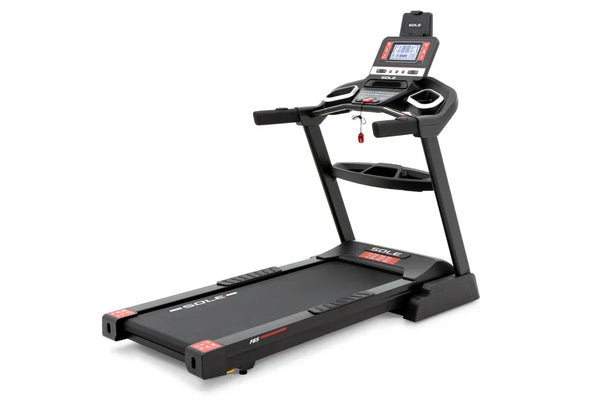
SOLE builds both manual and electric models, including the motor-driven F63 for steady daily walking and the self-powered C80 for a more natural stride, so the choice comes down to fit rather than availability.
|
Award-Winning Commercial-Grade Treadmills for Your Home
Why Choose SOLE: ✓ Commercial-grade steel frames with up to 4.0 HP motors 30-Day Money-Back Guarantee: Love it or return it, no questions asked. |

What Is a Manual Treadmill?
A manual treadmill has no motor. The belt moves only when your feet push against it, so your effort sets the pace. Two styles exist. Flat-belt manual treadmills are the budget option most shoppers picture, usually light, compact, and built with a slightly raised front so gravity helps the belt turn. Curved manual treadmills are the premium style, with a concave surface made for sprint intervals and harder cardio rather than casual strolling.
For plain walking, the flat-belt version is the one people tend to consider. It gives you a basic surface to log steps indoors without plugging anything in. The trade-off is that you supply all the drive, which changes how a walk feels and how long you can comfortably keep going.
The SOLE C80 Curved Manual Treadmill is a self-powered curved treadmill that uses your own effort to drive the belt, delivering a more natural running experience that closely mimics outdoor training.
Its 8 levels of magnetic resistance let you adjust workout intensity for everything from recovery sessions to strength-focused runs, while the self-powered slat belt design provides smooth, bidirectional movement without requiring a motor for a more responsive, low-maintenance workout.
What Is an Electric Treadmill?
An electric treadmill uses a motor to drive the belt at a speed you choose on the console. Press a button to walk faster or slower, and on most models, you can raise the incline to add effort without changing your pace. The console tracks time, distance, calories, and pace, and many include workout programs and app support.
The SOLE F63 runs on a 3.0 HP motor with speeds from 0.5 to 12 mph and 15 incline levels, built around a 20" x 60" deck with a 2-ply belt. That steady, motor-driven belt is what makes walking on an electric model feel smooth and predictable, even at slow speeds where a manual belt tends to stall or surge.

Electric treadmills use a motor to control belt speed and incline, making workouts smooth and predictable.
Pros & Cons of Manual Treadmills for Walking
Pros of Manual Treadmills
Price and simplicity are the main draws. A basic flat-belt manual treadmill costs far less than a motorized one, runs without electricity, and stays quiet since there is no motor. These units are light and easy to move or stand against a wall, which helps in apartments and small rooms.
With no motor or electronics, there is also less that can break, so upkeep is minimal. You get a little extra muscle work, too, because driving the belt yourself recruits your legs and glutes more than strolling on a powered deck does.
Cons of Manual Treadmills
The drawbacks show up fast during a real walk. The belt does not move until you force it, so starting feels jerky, and stopping can be abrupt. Holding a relaxed, even pace is difficult, since any change in your stride changes the belt speed.
Many budget models have a fixed front incline you cannot lower, which can strain the calves and knees over a longer session and makes them a poor fit for older adults or anyone with joint issues. Cushioning is usually thin, and you rarely get accurate readings for speed, distance, or calories.
However, premium manual treadmills like the SOLE C80 address many of these limitations with a self-powered slat belt that delivers a smoother, more natural stride, 8 levels of magnetic resistance for adjustable intensity, and Bluetooth connectivity with the free SOLE+ app and Strava for accurate workout tracking.

Manual treadmills offer affordability and simplicity but can feel jerky, lack cushioning, and make maintaining a steady pace difficult.
Pros & Cons of Electric Treadmills for Walking
Pros of Electric Treadmills
A motor solves most of the problems walkers run into. You set a speed, and the belt holds it, so your walk stays smooth, and you can settle into a rhythm for 20, 40, or 60 minutes without fighting the surface. Slow paces of one or two miles per hour remain rock-steady, which suits treadmill-desk walking and easy recovery sessions.
Powered incline lets you add intensity while keeping the same comfortable pace, useful for burning more calories or training for outdoor hills. Quality decks provide real cushioning, the console displays accurate metrics, and a safety-stop key adds peace of mind.
Cons of Electric Treadmills
The downsides are mostly practical. Electric treadmills cost more upfront, require a nearby outlet, and weigh more, so they take up a fixed spot in the room even when many models fold for storage. The motor runs with a low hum that a manual belt avoids.
The belt and deck need occasional care, such as keeping them clean and lubricated. For someone who only plans to walk a few minutes now and then, that extra cost and bulk may be more than the routine calls for.
Manual vs Electric Treadmill for Walking: Comparison Table
|
Feature |
Manual Treadmill (e.g., C80) |
Electric Treadmill (e.g., SOLE F63) |
|
Power source |
Self-powered by your stride |
Motor-driven, needs a power outlet |
|
Pace consistency |
Varies with your effort |
Steady, set on the console |
|
Speed control |
No fixed speed |
Precise, button-controlled |
|
Incline |
Fixed or none on basic models |
Powered, adjustable levels |
|
Cushioning |
Usually minimal |
Deck cushioning eases joint impact |
|
Footprint |
Compact and light |
Larger, many models fold |
|
Data and programs |
Limited or none |
Tracks metrics, app support |
|
Noise |
Very quiet |
Low motor hum |
|
Best for |
Occasional, low-budget walking |
Regular, comfortable walking |
Where SOLE Fits Into Your Walking Routine
The right treadmill for walking comes down to how you plan to use it. A motor-driven deck suits steady, regular sessions with less strain on the joints, while a manual belt fits occasional walks where budget and space matter most. Match the machine to the routine, not just the price tag.
We build both the motor-driven F63 for steady, everyday walking and the self-powered C80 for a natural stride on a budget, so your routine decides the fit, not the other way around. Check out our full treadmill lineup to find the option that keeps you moving comfortably.
Frequently Asked Questions (FAQs)
Are manual treadmills good for walking?
They can work for light, occasional walking on a small budget. The belt moves only when you push it, so there is no power bill and the unit stays compact. The downside is a jerky start and the constant effort needed to keep moving, which makes them less comfortable than motorized models for anyone walking regularly.
Is a manual or electric treadmill better for walking to lose weight?
An electric treadmill is usually better for weight loss through walking, because the steady pace and adjustable incline let you sustain longer sessions and track calories accurately. A manual treadmill burns slightly more effort per minute, but most people find it harder to hold a consistent pace long enough to see steady results.
Do manual treadmills work without electricity?
Yes. A manual treadmill has no motor, so the belt turns only as your stride drives it. That means no outlet, no power bill, and very quiet operation. The trade-off is that you get no set speeds, no powered incline, and usually little accurate workout data.
How much does a good walking treadmill cost?
Basic flat-belt manual models often cost a few hundred dollars. Quality motorized treadmills built for daily walking sit higher, such as our SOLE F63 at $1,299.99, because they include stronger frames, deck cushioning, accurate consoles, and long warranties that hold up to regular use.
What makes a SOLE treadmill a good pick for walkers?
A SOLE treadmill suits walkers because our machines pair commercial-grade frames with a Cushion Flex deck that eases joint impact, plus free SOLE+ app workouts and a 30-day money-back trial. For someone walking most days, SOLE keeps each session comfortable, trackable, and low-risk to try at home.
*Disclaimer: Products and prices mentioned in this article are accurate as of the date of publication and are subject to change. Please visit the official SOLE website for the most current information.