Key Takeaways
-
Overhead extensions target the long head through a deep overhead stretch, while skull crushers load the lateral and medial heads from a stable bench.
-
The overhead position stretches the long head across the shoulder and elbow joints simultaneously, creating the mechanical tension that drives muscle hypertrophy.
-
Skull crushers let you move heavier weight with less stability demand, making them the stronger choice for progressive overload and raw triceps strength over a training cycle.
-
Programming both movements across the week covers all three triceps heads and prevents the flat-arm or weak-horseshoe imbalances that single-exercise routines create.
-
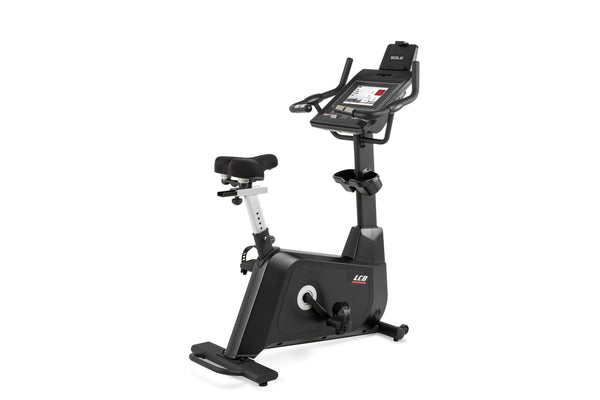
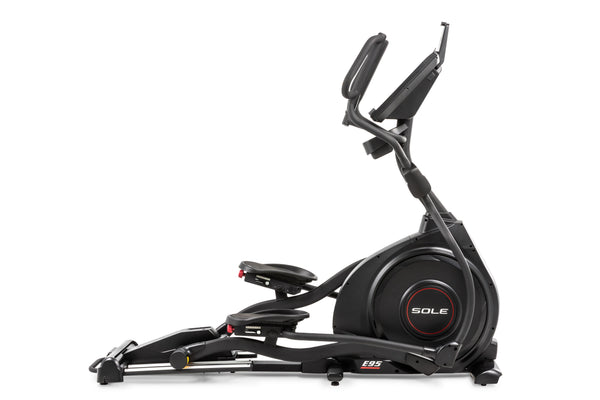
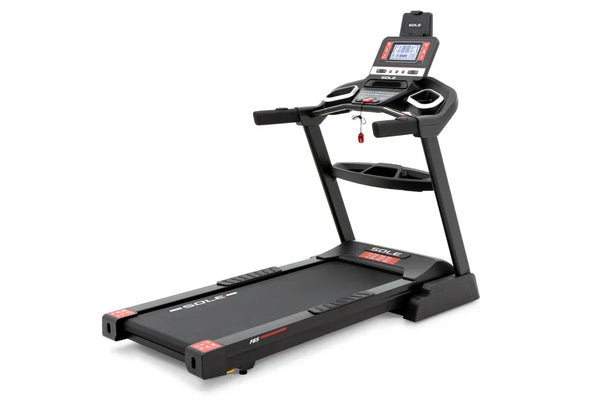
SOLE Fitness treadmills, ellipticals, and bikes keep your training consistent between arm days, with free shipping and a 30-day guarantee so you can test the fit risk-free.
How Arm Position Changes Which Triceps Head Does the Work
Overhead triceps extensions and skull crushers both isolate the triceps, but arm position during the movement determines which of the three heads takes the most load. Extensions raise your arms overhead to stretch and load the long head, while skull crushers keep your upper arms vertical on a flat bench to hit the lateral and medial heads harder. Most lifters gravitate toward one and skip the other, which is how triceps imbalances develop over months of otherwise solid programming.
The distinction matters because the long head is the largest of the three and the only one that crosses both the shoulder and elbow joints. Training it in a shortened position, as skull crushers do, still recruits it, but not with the same stretched-position tension that current hypertrophy research links to faster growth.
Heavy triceps work also demands rest days between sessions, and those off-days don't have to be idle. SOLE Fitness treadmills, ellipticals, and exercise bikes fill the gaps with cardio that promotes recovery without loading the muscles you just trained.
|
Premium Home Gym Equipment with Award-Winning Quality! Complete Your Home Gym:
Why Choose SOLE: ✓ Commercial-grade quality for home use 30-Day Money-Back Guarantee: Love it or return it, no questions asked. |

Overhead Triceps Extension vs Skull Crusher: Technique
What Is the Overhead Triceps Extension?
The overhead triceps extension is an isolation exercise performed with your arms raised overhead, elbows pointed toward the ceiling. You can do it seated, standing, or even lying down, using a dumbbell, EZ-bar, cable, or barbell. The weight travels behind your head as you bend at the elbows, then you press back up to full ex

The overhead triceps extension keeps the shoulders in a fixed position, which makes it effective for targeting the largest of the three triceps heads.
What Is the Skull Crusher?
The skull crusher, also called a lying triceps extension or supine triceps extension, is performed flat on a bench with your upper arms held vertical and stationary. You lower the barbell, EZ-bar, or dumbbells toward your face (forehead, nose, or just above the head), then extend back to the starting position. The name comes from the uncomfortable truth that a slip in form could bring the bar directly to your skull.

You can load more weight with skull crushers, which makes them a reliable choice for building raw triceps strength.
How Each Movement Targets the Triceps
Muscles Worked in Overhead Triceps Extension
Long Head of the Triceps (Primary Mover)
The long head is the largest of the three triceps heads and the one most heavily recruited by the overhead position. Because it crosses both the elbow and the shoulder joint, stretching it above your head lengthens the muscle fibers to their fullest position and puts them under greater tension throughout the range of motion.
Lateral & Medial Heads (Secondary Movers)
The lateral head (the outer part of the triceps visible from the side) and the medial head (the deeper part underneath the long head) both contribute to elbow extension throughout the movement.
They work as secondary movers, but the overhead position emphasizes the long head, which is why this exercise is typically paired with pushdowns or kickbacks that target the other two heads more directly.
Core & Shoulder Stabilizers
Because your arms stay extended overhead throughout the exercise, your core and shoulder stabilizers work isometrically to keep your torso upright and your shoulder joint safe.
Muscles Worked in Skull Crushers
Lateral & Medial Heads of the Triceps (Primary Movers)
The skull crusher's flat-bench position with elbows pointed up puts the greatest load on the lateral head (the outer part of the triceps visible from the side) and the medial head (the deeper part underneath).
These two heads handle the majority of the work during elbow extension in this position, which makes skull crushers particularly effective for building the horseshoe shape of the triceps that's visible from the side.
Long Head of the Triceps (Secondary Mover)
The long head still contributes to the movement, but because your arms aren't raised overhead, it doesn't stretch as much as it does during an overhead extension. It works as a secondary mover here, which is why skull crushers are often paired with overhead extensions in a well-rounded triceps program.
Anconeus & Forearm Stabilizers
The anconeus is a small muscle at the elbow that assists the triceps during elbow extension, particularly at the end of the movement when you lock out. Your forearm and grip muscles also engage isometrically throughout the exercise to keep the bar or dumbbells controlled through the descent and press.
Benefits of Each Exercise
Benefits of the Overhead Triceps Extension
Maximum Long Head Stretch for Muscle Growth
When the long head is stretched at both the shoulder and elbow at the same time, it creates a high level of mechanical tension. This is why overhead extensions are often programmed specifically when a lifter's long head lags behind the lateral head in development.
Improved Elbow Flexibility Over Time
Regularly performing overhead triceps extensions through a full range of motion can improve elbow and shoulder mobility over time. This makes it a dual-purpose movement for building muscle while simultaneously maintaining joint health and flexibility that carries over to bench press, dips, and other compound lifts.
Benefits of the Skull Crusher
Heavier Loads for Strength Gains
The bench's stable platform means your nervous system doesn't have to allocate resources to balance and stabilize the way it does during standing or seated overhead extensions. Over a training cycle, that translates to measurable strength gains that feed directly into your pressing performance on bench press and close-grip bench variants.
Lower Shoulder Strain
Skull crushers keep the upper arms vertical and the shoulders out of flexion, so the joint never supports load in an overhead position. That makes them the easier of the two movements to train around when your shoulders are already absorbing heavy pressing volume during the week.
Key Differences Between Overhead Triceps Extension & Skull Crusher
Body Position & Arm Angle
In an overhead triceps extension, your upper arms are raised and aligned with your ears, keeping the long head under constant tension throughout the full range of motion. In a skull crusher, your upper arms stay fixed at roughly 90 degrees to your torso, which shifts the mechanical demand away from the long head and onto the lateral and medial heads.
For heavier seated overhead extensions and skull crushers alike, a bench like the SOLE SW116 with nine backrest angles provides the stability required.
Range of Motion & Stretch
Overhead extensions win on range of motion. The combination of shoulder flexion and elbow flexion creates a deeper stretch on the long head than most other triceps exercises.
Skull crushers have a slightly shorter effective range of motion, but that doesn't make them inferior, because the reduced stretch is offset by the ability to control heavier loads with greater precision.
Shoulder Demand & Joint Safety
The overhead position requires full shoulder flexion throughout every rep, which places sustained load on the rotator cuff and the surrounding stabilizers. For lifters with healthy shoulders and adequate mobility, that loading is manageable and can even improve overhead range of motion over time. But for anyone dealing with impingement, rotator cuff sensitivity, or limited overhead mobility, the position aggravates exactly the structures that are already compromised.
The skull crusher keeps the shoulder joint in a neutral, stable position for the entire movement. There is no overhead loading, no rotator cuff strain, and no risk of impingement from a fully elevated arm. That makes it the more sustainable option for lifters working around shoulder issues or anyone whose pressing volume already puts significant demand on the joint during the week.
Overhead Triceps Extension vs Skull Crusher: Comparison Table
|
Factor |
Overhead Triceps Extension |
Skull Crusher |
|
Primary Target |
Long head of the triceps |
Lateral and medial heads |
|
Body Position |
Standing, seated, or lying with arms raised |
Lying flat, upper arms vertical |
|
Range of Motion |
Longer: deeper stretch on long head |
Slightly shorter, more controlled |
|
Load Capacity |
Moderate: limited by stability demands |
Higher: stable bench position |
|
Shoulder Demand |
High: full shoulder flexion required |
Low: shoulder stays neutral |
|
Best For |
Hypertrophy, long head development |
Strength gains, lateral and medial head development. |
Keep Moving Between Arm Days with SOLE Fitness

SOLE Fitness equipment comes with access to the SOLE+ app for guided workouts, perfect for recovery days that demand light cardio.
Full triceps development takes both movement patterns. Overhead extensions supply the stretched-position stimulus the long head needs, and skull crushers supply the loading capacity to build strength across all three heads. Dropping either one leaves a gap that extra sets of the other won't fill.
At SOLE Fitness, we build the cardio equipment that keeps your training on track between heavy lifting days. Every treadmill, elliptical, and exercise bike ships free with a 30-day satisfaction guarantee. Shop SOLE Fitness to keep moving forward, even on rest days.
Frequently Asked Questions (FAQs)
What are the three best tricep exercises?
The three most effective triceps exercises, based on muscle activation and practical programming value, are close-grip bench presses, overhead triceps extensions, and skull crushers. Together, these three exercises cover every major triceps development need: compound strength, long head stretch, and balanced isolation.
What tricep exercise is better than skull crushers?
For pure long head hypertrophy, the overhead triceps extension outperforms skull crushers because of the deeper stretch it places on the largest head of the triceps. For overall strength and balanced development, the close-grip bench press edges out skull crushers by letting you move heavier loads through a compound movement pattern.
Are skull crushers enough to build triceps?
Skull crushers alone can build impressive triceps, but they won't maximize your results on their own. They work all three heads, with the lateral and medial heads doing most of the work, with balanced tension, and their ability to progressively overload makes them a reliable builder of size and strength. However, without an overhead movement in your routine, the long head of the triceps won't reach its full development potential.
Is overhead tricep extension the best tricep exercise?
For targeting the long head specifically, overhead triceps extensions are one of the best exercises available. The combination of shoulder flexion and elbow flexion places the long head under a stretch, and research increasingly supports training muscles in their lengthened position as a key driver of hypertrophy.
What SOLE Fitness equipment supports a full triceps training week?
The lifting itself requires a bench, a rack, and free weights that fits your budget. Where SOLE Fitness fits in is the rest of the week. Low-impact cardio between arm days keeps blood flowing to the muscles without re-loading the triceps, and SOLE treadmills, ellipticals, bikes, and SR550 rower.are built for exactly that kind of active recovery. Every machine ships free with a 30-day satisfaction guarantee.
*Disclaimer: Products and prices mentioned in this article are accurate as of the date of publication and are subject to change. Please visit the official SOLE website for the most current information.