

Key Takeaways
- The PPL split organizes exercises based on movement patterns with push day targeting chest, shoulders, and triceps through bench press variations and overhead presses.
- The pull day develops back and biceps through deadlifts and rows, and leg day focuses on quadriceps, hamstrings, and glutes.
- The 6-day PPL split, hitting each movement pattern twice weekly, creates more regular protein synthesis stimulation and greater total weekly volume.
- The 3-day split training targets each pattern once weekly and works well for beginners or those with limited recovery capacity.
- While barbells build the foundation, our SOLE SW180 Adjustable Dumbbells complement barbell training for isolation work, and the SOLE SW116 Weight Bench supports bench press variations.
Why Barbell-Only PPL Is Effective
The simplicity of a barbell can be deceiving. This single piece of equipment has built more powerful physiques than perhaps any other tool in fitness history.
A well-designed barbell-only program eliminates excuses, focuses on fundamental movement patterns, and forces you to master the exercises that truly drive strength and muscle development.
The PPL split organizes exercises based on movement patterns rather than individual muscle groups. Push movements target chest, shoulders, and triceps.
Pull exercises develop back, biceps, and forearms. Leg training focuses on quadriceps, hamstrings, glutes, and calves. This approach ensures balanced development while allowing adequate recovery between sessions.
Barbell training develops crucial stabilizing muscles often neglected in machine-based workouts. Every press, row, or squat with a barbell requires your body to control the weight through three-dimensional space.
This builds proprioception, core strength, and real-world functionality that translates directly to improved athletic performance and injury prevention.
|
Build Your Foundation with Premium-Grade Strength Equipment!
 Complete Your Home Gym:
Why Choose SOLE Strength: ✓ Heavy-duty steel construction with rust protection 30-Day Money-Back Guarantee: Love it or return it, no questions asked. |
Complete Push Day Workout
|
Exercise |
Sets |
Reps |
Rest |
|
Barbell Bench Press |
4 |
6–8 |
2–3 min |
|
Incline Barbell Bench Press |
3 |
8–10 |
2 min |
|
Standing Overhead Press |
3 |
8–10 |
2 min |
|
Close-Grip Bench Press |
3 |
10–12 |
90 sec |
|
Lying Triceps Extensions |
3 |
12–15 |
90 sec |
Chest Exercises
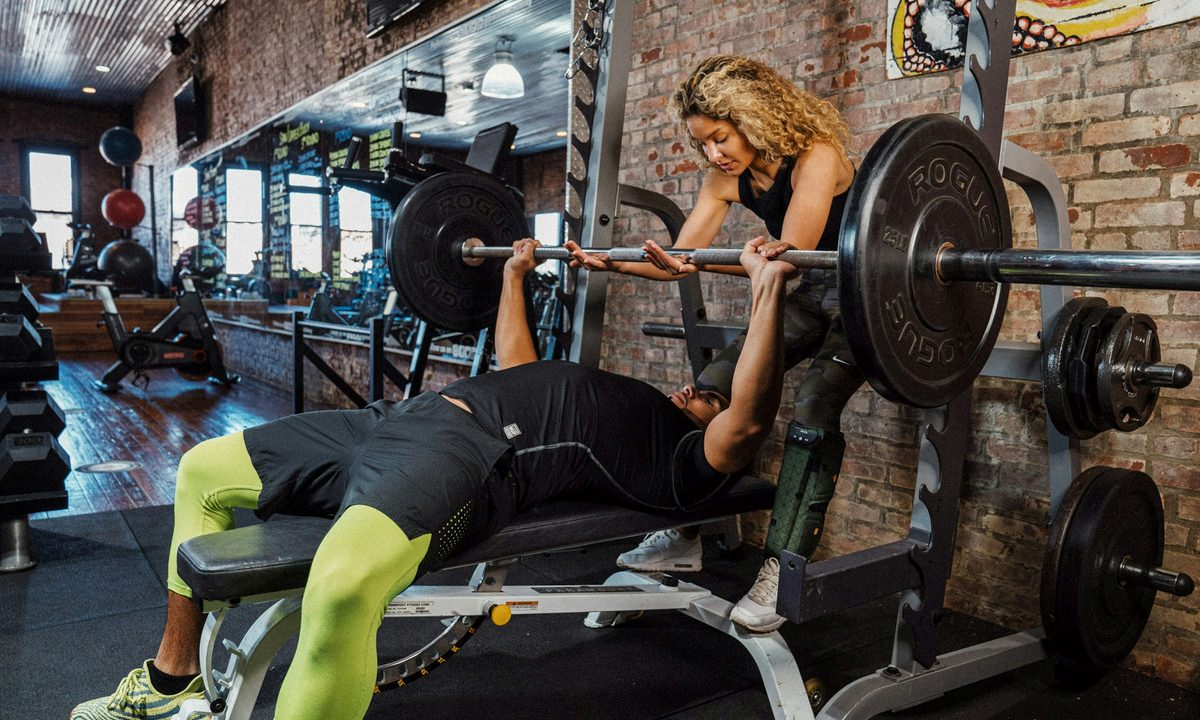
Flat bench press engages pectoralis major, anterior deltoids, and triceps. The incline position of 30–45 degrees shifts emphasis to the upper chest. Decline at 15-30 degrees targets the lower chest.
Shoulder Exercises
Standing overhead press maximizes deltoid development while strengthening the upper back and core. Barbell upright row activates the middle deltoid heads.
Triceps Exercises
Close-grip bench press with hands 8–12 inches apart shifts emphasis to triceps. Lying triceps extensions target all three heads, particularly the long head.
Complete Pull Day Workout

Pull day focuses on the posterior chain with the conventional deadlift standing as the king of back exercises, engaging everything from traps to hamstrings in a functional, strength-building movement.
|
Exercise |
Sets |
Reps |
Rest |
|
Conventional Deadlift |
3 |
5–6 |
3 min |
|
Bent-Over Barbell Row |
4 |
8–10 |
2 min |
|
Underhand Grip Barbell Row |
3 |
10–12 |
90 sec |
|
Barbell Shrugs |
3 |
12–15 |
90 sec |
|
Standing Barbell Curl |
4 |
10–12 |
90 sec |
Back Exercises
Conventional deadlift creates tension throughout lats, erector spinae, rhomboids, and rear deltoids. Bent-over rows with a pronated grip emphasize the upper back. Supinated grip shifts emphasis to lats and biceps.
Trap Development
Barbell shrugs directly target the trapezius. Elevate your shoulders straight up rather than rolling, holding the contracted position briefly.
Biceps Training
The standing barbell curl remains highly effective. A shoulder-width grip targets biceps evenly, a wider grip emphasizes the inner head, and a narrow grip targets the outer head.
Complete Leg Day Workout

The lower body contains the largest muscle groups responding exceptionally well to barbell training, with the back squat serving as the foundation.
|
Exercise |
Sets |
Reps |
Rest |
|
Back Squat |
4 |
6–8 |
2–3 min |
|
Romanian Deadlift |
3 |
8–10 |
2 min |
|
Barbell Split Squat |
3 |
10–12 per leg |
90 sec |
|
Barbell Hip Thrust |
3 |
12–15 |
90 sec |
|
Barbell Standing Calf Raise |
4 |
15–20 |
60 sec |
Squat Variations
A narrow stance increases quadriceps involvement, while a wider stance places more demand on glutes and adductors. Front squats create greater quadriceps activation while reducing spinal compression.
Hamstring Exercises
The Romanian deadlift provides intense hamstring stretch through hip hinging. Push your hips backward while keeping the barbell close to your legs to maximize hamstring engagement.
Calf Training
Standing calf raises from a slight elevation allow a full range of motion. Straight legs maximize gastrocnemius involvement while bent knees shift emphasis to soleus.
Programming Your PPL Split

PPL programming offers flexibility, adapting to different schedules, recovery abilities, and training goals while maintaining its fundamental structure.
3-Day Split
Training each movement pattern once weekly works well for beginners, those with limited recovery ability, or individuals with significant time constraints. The structure is Push/Rest/Pull/Rest/Legs/Rest/Rest. This allows higher per-session volume and intensity with substantial recovery between sessions.
6-Day Split
Hitting each movement pattern twice weekly creates more regular protein synthesis stimulation and greater total weekly volume. The structure is Push/Pull/Legs/Push/Pull/Legs/Rest. Reduce per-session volume compared to the 3-day version while maintaining similar intensity to prevent accumulated fatigue.
Recovery Requirements
Getting 7–9 hours of quality sleep nightly allows your body to release growth hormone and testosterone while repairing muscle damage. Protein intake of 1.6–2.2 grams per kilogram of body weight provides the amino acids needed for muscle repair. Active recovery methods like light cardio and foam rolling enhance recovery between sessions.
Progressive Overload
The most straightforward method is adding weight while maintaining sets and reps. With double progression, work within a rep range until you complete all sets at the upper end, then increase weight and return to the lower end. Microloading with 0.5–1kg (1-2 lb) plates allows smaller jumps when standard increments become too large.
Build Strength with Barbell Training and SOLE
A barbell-only PPL split targets all major muscle groups through push, pull, and leg days. The 6-day split provides optimal training frequency for muscle growth, while the 3-day version suits beginners who need more recovery time.
For complete home training, SOLE SW180 and SW155 Adjustable Dumbbells complement barbell work.
The SOLE SW116 Weight Bench with 9 adjustable positions supports flat, incline, and decline bench press variations essential for complete chest development. The SOLE Equipment Mat provides a stable, non-slip surface for floor exercises like barbell hip thrusts and lying triceps extensions.
Check out the SOLE strength collection today!
Frequently Asked Questions (FAQs)
How many days per week should I do a barbell-only PPL split?
The optimal frequency depends on your recovery capacity, schedule availability, and training experience. For beginners and those with limited recovery resources, the 3-day approach with Push, Pull, and Legs once weekly provides sufficient stimulus while allowing ample recovery.
Can I build significant muscle with just a barbell?
Absolutely. The barbell remains one of the most effective tools for building muscle and strength, allowing progressive loading through movements that collectively target every major muscle group.
What is the minimum equipment needed for an effective PPL routine?
At minimum, you need a barbell with enough weight to challenge you progressively, and ideally a rack for safety during squats and bench press. A flat bench expands your exercise options significantly, while an adjustable bench that allows incline positions provides even more variety. Weight plates in various denominations, including smaller plates for microloading enable more precise progression.
Can beginners start with a barbell-only PPL program?
Yes, beginners can successfully implement a barbell-only PPL program with appropriate modifications. Key adjustments include reduced volume of 8–12 working sets per session, emphasis on technique development rather than maximum loading, and potentially lower frequency of 3–4 sessions weekly rather than 6.
What equipment complements barbell training for a complete home gym?
While barbells build the foundation of any effective PPL program, complementary equipment addresses isolation work and exercise variety that barbells alone cannot provide. The SOLE SW180 Adjustable Dumbbells with 16 weight settings from 5–80 pounds enable isolation exercises like lateral raises, concentration curls, and dumbbell flyes that complement compound barbell movements.


Leave a comment
This site is protected by hCaptcha and the hCaptcha Privacy Policy and Terms of Service apply.