Key Takeaways
- Trap bar deadlifts reduce peak lumbar spine moments compared to conventional deadlifts and allow for a more upright torso than sumo deadlifts.
- Sumo deadlifts show significantly greater quadriceps activation than conventional deadlifts due to the wide stance and upright torso position, with research indicating vastus lateralis activation increases of approximately 15% in some lifting phases.
- The trap bar deadlift produces significantly higher peak power outputs than conventional deadlifts, with research showing increases ranging from 10-28% depending on load and testing conditions.
- Sumo deadlifts reduce range of motion by 20-25% compared to conventional deadlifts, while trap bar deadlifts with high handles reduce range of motion by 2-4 inches (depending on the specific trap bar design).
- For home deadlift training, the SOLE SW180 Adjustable Dumbbells enable Romanian deadlifts and sumo deadlift variations, while the SOLE SW116 Weight Bench supports accessory exercises.
Which Deadlift Variation Is Right For You?
Choosing between the sumo deadlift and the trap bar deadlift depends on matching the right tool to your specific needs, goals, and physical capabilities.
Both variations offer distinct advantages over the conventional deadlift while targeting similar muscle groups with different emphasis. Understanding these nuances can be the difference between optimal progress and potential injury.
|
Build Your Foundation with Premium-Grade Strength Equipment!
 Complete Your Home Gym:
Why Choose SOLE Strength: ✓ Heavy-duty steel construction with rust protection 30-Day Money-Back Guarantee: Love it or return it, no questions asked. |
Sumo Deadlift: Form and Technique

The sumo deadlift is characterized by a significantly wider foot stance with toes pointed outward, creating a more upright torso angle that redistributes stress away from the lower back toward the quads and hips.
Foot Positioning
Position feet 2–3 times wider than conventional stance, with toes pointed outward at 30–45 degrees. Shins should be vertical with the bar over the middle of the foot. Knees track in line with toes throughout.
Hand Placement
Grip the bar between legs at shoulder-width using a double overhand or mixed grip. This narrower grip reduces the range of motion while placing the shoulders favorably.
Vertical Torso
Sit back slightly, keeping chest up and spine neutral. Drive feet outward while pushing knees out. Keep lats engaged and core braced.
Common Mistakes
- Starting with the hips too low.
- Allowing knees to cave inward.
- Yanking the bar instead of developing tension.
- Hyperextending the lower back at the top.
Trap Bar Deadlift: Form and Technique

The trap bar deadlift places the weight in line with your center of gravity instead of in front of your body, creating a hybrid movement between a conventional deadlift and a squat.
Grip Position
Position hands at the midpoint of each handle, equidistant from the corner joints. The neutral grip with palms facing your body reduces joint stress and minimizes bicep tendon injury risk.
Foot Placement
Place feet hip-width apart in the center of the hexagonal opening, toes slightly outward at 5–15 degrees. Feet equidistant from the front and back of the bar.
Hip and Knee Angles
The trap bar facilitates a more vertical torso with greater knee flexion and quadriceps involvement. Hips are lower than in a conventional deadlift but higher than in a squat. Shoulders directly above or slightly ahead of handles.
High vs. Low Handles
High handles reduce range of motion by 22%, beneficial for beginners or mobility limitations. Low handles require greater hip mobility and posterior chain engagement.
Muscles Worked in Both Variations

Both deadlift variations are compound movements engaging nearly the entire body, though with different emphasis patterns in how load is distributed across muscle groups.
Primary Muscles
Both variations effectively target the posterior chain, including hamstrings, glutes, erector spinae, and trapezius. The core works isometrically to maintain spinal position. Quadriceps contribute significantly in both variations, more so than in conventional deadlifts.
Sumo Deadlift Activation
The wide stance and upright torso increase quadriceps involvement by approximately 15% compared to conventional deadlifts. Despite increased quad emphasis, hamstring, glute, and erector spinae engagement remains robust with slightly less lower back stress.
Trap Bar Activation
Creates the most balanced muscle recruitment pattern, producing approximately 10% more quadriceps activation than conventional deadlifts while maintaining similar glute and hamstring engagement. Reduces erector spinae activation by 10-15% compared to conventional deadlifts.
Lower Back Stress Comparison

One of the most significant differences between deadlift variations is the degree of stress placed on the lumbar spine.
Trap Bar Advantage
The trap bar reduces lumbar spine stress compared to conventional deadlifts by placing the load in line with the lifter's center of gravity. The more upright torso distributes force more evenly between knee and hip joints, reducing stress concentration at any single point.
Sumo Benefits
Sumo deadlifts reduce lumbar spine stress compared to conventional deadlifts. The wide stance shortens the moment arm at the lower back by allowing a more vertical torso position throughout the movement.
For Those With Back Concerns
The trap bar deadlift is demonstrably superior for minimizing lower back stress and preventing pain in susceptible individuals. For lifters with recurrent back pain, a progressive approach starting with trap bar deadlifts before potentially transitioning to other variations provides the safest development pathway.
Performance Benefits
Trap Bar for Power
Trap bar deadlifts produce significantly higher peak power outputs than conventional deadlifts when tested at the same percentage of 1RM.
The balanced position and reduced technical demands facilitate greater intent and acceleration. This makes the trap bar the preferred variation for athletes in football, basketball, and track and field.
Sumo for Maximal Strength
Sumo deadlifts often allow lifters to handle heavier absolute loads due to shortened range of motion and improved leverage for certain body types. Many elite powerlifters who pull sumo can handle 5–15% more weight than their conventional deadlift, though this varies based on individual leverages.
Sumo Deadlift vs Trap Bar Deadlift: Comparison Table
|
Factor |
Sumo Deadlift |
Trap Bar Deadlift |
|
Stance Width |
Wide (2–3x hip width) |
Hip-width |
|
Toe Angle |
30–45 degrees outward |
5–15 degrees outward |
|
Grip Type |
Double overhand or mixed |
Neutral (palms facing body) |
|
Torso Position |
Upright |
Most upright |
|
Range of Motion Reduction |
~20% vs conventional |
~22% vs conventional (high handles) |
|
Quad Activation vs Conventional |
+15% |
+10% |
|
Lower Back Stress vs Conventional |
Moderate reduction |
Significant reduction |
|
Peak Power Output |
Similar to conventional |
~10% higher than conventional |
|
Technical Difficulty |
High |
Low to moderate |
|
Best For |
Maximal strength, powerlifting |
Power development, back-friendly training |
|
Best Suited For |
Long torso, shorter arms |
All body types |
|
Equipment Needed |
Standard barbell |
Trap bar (hex bar) |
|
Beginner Friendly |
Moderate (requires coaching) |
Yes |
|
Weight Capacity vs Conventional |
Often 5–15% more (body-dependent) |
Typically 5–10% more |
|
Hip Mobility Demands |
High (wide stance) |
Moderate |
|
Bicep Injury Risk |
Higher (mixed grip) |
Lower (neutral grip) |
Choose Your Optimal Deadlift Variation
For home training, the SOLE SW180 Adjustable Dumbbells enable Romanian and sumo deadlift variations, while the Equipment Mat provides a stable surface.
The SOLE SW116 Weight Bench with 9 adjustable positions supports accessory exercises like chest-supported rows, hip thrusts, and back extensions that strengthen muscles used in deadlifting.
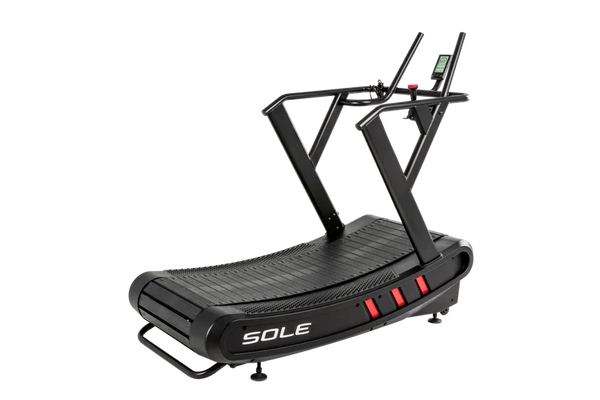
For cardiovascular conditioning that supports recovery between deadlift sessions, the SOLE Treadmill enables low-impact cardio while the SOLE SR550 Rowing Machine develops the pulling strength and posterior chain endurance that transfers directly to deadlift performance.
Shop the SOLE strength collection today!
Frequently Asked Questions (FAQs)
Can beginners safely perform sumo deadlifts?
Yes, beginners can safely perform sumo deadlifts, though they require more technical coaching than trap bar deadlifts. The sumo stance demands greater attention to hip positioning, toe angle, and knee tracking.
Which variation allows you to lift more weight?
For most lifters, the trap bar deadlift allows for the greatest absolute loads, typically 5–10% more than their strongest barbell style. This advantage stems from the centered load position and shortened range of motion with high handles. The sumo deadlift often permits heavier lifting than conventional for lifters with longer torsos and shorter arms, while those with longer arms typically excel at conventional deadlifts.
Is one variation better for preventing lower back pain?
The trap bar deadlift is demonstrably superior for minimizing lower back stress and preventing pain in susceptible individuals. The sumo deadlift offers significant improvements over conventional deadlifts for back health, but still places more stress on the lumbar spine than the trap bar variation. For lifters with recurrent back pain, start with trap bar deadlifts using high handles.
How do I know which deadlift is best for my body type?
Perform each variation with moderate loads of 60–70% of estimated max while focusing on technical execution. Pay attention to which variation feels most natural, allows the greatest range of motion without form breakdown, and produces the least discomfort. Those with longer torsos relative to their legs typically excel at sumo or trap bar variations.
How can I train deadlift variations effectively at home?
Home deadlift training requires equipment enabling progressive overload across posterior chain exercises. The SOLE Adjustable Dumbbells enable dumbbell Romanian deadlifts, dumbbell sumo deadlifts, and single-leg deadlift variations that build the same muscle groups as barbell deadlifts while developing unilateral strength and stability.