Key Takeaways
-
Neither treadmills nor ellipticals can spot-reduce belly fat; overall calorie deficit and consistency determine where you lose fat.
-
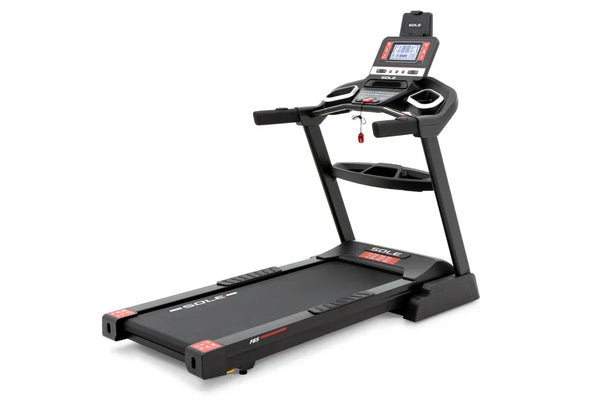
Treadmills burn more calories per session through weight-bearing exercise, with incline walking specifically engaging the lower abs and stabilizer muscles.
-
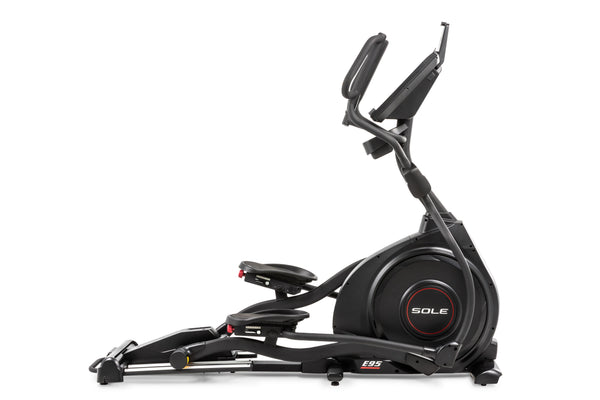
Ellipticals can help you burn calories and activate the core, arms, and legs at the same time, making them a strong full-body option for lower-impact training.
-
Posture, resistance, and interval training on either machine drive core engagement and belly fat reduction.
-
SOLE Fitness treadmills and ellipticals are built for home fat-loss training, with free shipping and a 30-day satisfaction guarantee so you can find your fit without risk.
What Happens to Fat When You Do Cardio?
During cardio, your body breaks stored fat into fatty acids that travel through your bloodstream to fuel your working muscles, and most of it eventually leaves your body as carbon dioxide you breathe out. That fat comes from stores across your whole body rather than the area you want to slim, so a treadmill or elliptical can't pull it from your stomach first.
Because the draw on fat is body-wide, your total energy use over several weeks matters more than any single workout. Harder efforts burn more per minute, but only if your joints let you repeat them across the week, which is where impact level starts to shape your results. A machine you avoid on sore days burns nothing at all.
SOLE Fitness offers both treadmills and ellipticals built for home use, so you can match the machine to the effort your body can sustain week after week.
|
Premium Home Gym Equipment with Award-Winning Quality! Complete Your Home Gym:
Why Choose SOLE: ✓ Commercial-grade quality for home use 30-Day Money-Back Guarantee: Love it or return it, no questions asked. |

Treadmill vs Elliptical: How Each Machine Burns Fat
Calorie Burn on a Treadmill

Running on a treadmill regularly while maintaining a calorie deficit can help you lose body fat.
Treadmills are among the highest calorie-burning cardio options available. The exact number depends on your body weight, speed, and incline. Supporting your own body weight with every stride, combined with full leg drive, makes treadmill running one of the most demanding forms of steady-state cardio you can do indoors.
A 155-pound adult burns around 288 calories in 30 minutes of running at 5 mph, and about 360 calories at 6 mph. Pick up the pace to 7.5 mph, and that figure climbs to roughly 450 calories. The more calories you burn per session, the larger your daily deficit, and that deficit drives fat loss across your entire body, including your midsection.
Calorie Burn on an Elliptical
Ellipticals, on the other hand, burn around 324 calories in 30 minutes for a 155-pound adult. Your own figure may be higher or lower because heavier users burn more at the same settings, and more mass moves through each stride.
Effort also decides whether the session counts. Coasting at light resistance and a slow cadence barely registers as training, while a high-resistance, high-cadence fat-burning workout pushes you well above that number. The advantage of an elliptical is that most people can hold the harder effort without joint pain ending the session early.
How Each Machine Works Your Core
Core Engagement on a Treadmill
When running, every stride requires your core to stabilize your torso, resist rotation, and transfer force between your upper and lower body. Your rectus abdominis, obliques, and deep transverse abdominis all fire continuously during a run to keep your form controlled.
The faster and more varied your pace, the harder those muscles have to work. This is why runners who maintain upright posture and strong form tend to develop visible core definition with minimal dedicated ab training.
Core Engagement on an Elliptical
Increasing resistance on the elliptical forces your core to work actively to stabilize your torso against the increased load moving through your arms and legs. At higher resistance levels, your obliques and transverse abdominis must contract continuously to keep your hips square and your spine neutral.
Letting go of the handles entirely and pedaling hands-free pushes this core demand even further, turning the elliptical into a genuine balance and stability challenge for your midsection.

Unlike the treadmill, which is primarily lower-body driven, the elliptical simultaneously engages your legs, glutes, arms, and core in a single fluid motion.
Joint Impact & Long-Term Consistency
Treadmill Impact
Running and walking are weight-bearing, so every stride sends ground reaction force up through the ankles, knees, and hips. That loading is the reason treadmills build bone density and recruit more stabilizer muscles than a fixed-path machine does, which is a real benefit rather than a side effect.
The same force accumulates, though, especially at running speeds and higher weekly mileage. Walking at an incline gives you most of the bone-loading benefit at a fraction of the joint cost, which is why it works well for people who want the treadmill without the pounding.
Elliptical Impact
The elliptical keeps your feet on the pedals through the whole cycle, so there is no ground contact and almost no impact force. Your legs still work through a full range of motion, but your knees and hips absorb a fraction of what they take during a run.
That makes it the more sustainable option for anyone over 40, returning from injury, carrying extra weight, or managing arthritis. It also lets you do back-to-back training days without the recovery time running demands, and that frequency often closes the calorie gap over a full week.
Treadmill vs Elliptical Feature Comparison
|
Feature |
Treadmill |
Elliptical |
|
Impact Level |
High-impact, weight-bearing |
Low-impact, joint-friendly |
|
Calorie Burn (per hour) |
Higher at running speeds |
300–800 calories depending on intensity |
|
Core Activation |
Dynamic stabilization during running and incline |
Sustained isometric engagement at high resistance |
|
Muscles Targeted |
Legs, glutes, abs, stabilizers |
Legs, glutes, arms, core simultaneously |
|
Best For |
Higher calorie burn, incline ab work |
Full-body engagement, low-impact consistency |
|
Joint Stress |
Higher, especially at running pace |
Minimal, suitable for injury recovery |
|
Interval Training |
Speed and incline intervals |
Resistance and cadence intervals |
|
Belly Fat Reduction |
Effective through high calorie deficit |
Effective through consistent full-body burn |
Which Machine Suits You?
Choose a Treadmill If…
You can run or walk briskly without knee, hip, or ankle pain, and you want the highest calorie burn available per session. It is also the better pick if lower ab work matters to you. Walking at 8 to 12% incline forces your hip flexors and lower abs to drive each step, which flat walking never does.
Choose an Elliptical If…
Your joints limit how often you can run, or you are returning from injury, managing arthritis, or carrying extra weight. It also suits anyone who wants the upper body involved. Actively pushing and pulling the handles brings your arms, back, and core into the session, which raises calorie burn without raising impact.
Using Both in One Week
Alternating gives you the treadmill's per-session burn and the elliptical's low recovery demand at the same time. A workable split is two or three treadmill days, with elliptical sessions on the days between, so your legs keep moving while your joints get a break from impact.
Put hard interval work on the treadmill and steady, longer sessions on the elliptical, since that pairing lets you accumulate weekly volume without stacking high-impact days back to back. If anything starts aching, shift the balance toward the elliptical rather than cutting training days.
How to Maximize Core Activation on Either Machine
Keep a Proper Posture
Slouching, gripping the rails, or leaning forward shifts the workload away from your abs and into your arms and lower back. Stand tall with a neutral spine throughout the session and engage your core before increasing speed or resistance.
Keep your shoulders relaxed and away from your ears; on the treadmill, drive through your heels to activate your glutes and lower abs; and on the elliptical, keep your hips square to avoid rocking side to side.
Incorporate Interval Training
Steady-state cardio burns calories during the session. Interval training does that and more, elevating your metabolic rate for hours after you finish through a phenomenon known as excess post-exercise oxygen consumption (EPOC). Short, intense bursts followed by active recovery periods push your cardiovascular system and your core harder than any sustained moderate effort can.
Use Incline & Resistance

When the treadmill is on an incline, your core is working almost continuously to keep your torso stable against the forward pull of the slope.
Incline on the treadmill and resistance on the elliptical are the two most direct ways to increase core demand without adding a single dedicated ab exercise to your routine. On the treadmill, every percentage point of incline shifts more load onto your hip flexors, lower abs, and glutes.
On the elliptical, dialing up resistance forces your obliques and transverse abdominis to brace harder against the increased load moving through the pedals and handles at the same time.
Reach Your Fat-Loss Goals on a SOLE Fitness Treadmill or Elliptical
Neither the treadmill nor the elliptical provides the isolated core stimulus of dedicated ab exercises. Both work best as calorie-burning tools that reduce the fat layer over your abs, while strength training and targeted core work tone what's underneath. The difference is in who they suit best and how they fit into a long-term training habit you can actually maintain.
At SOLE Fitness, we build treadmills and ellipticals designed for home training, where consistency determines results. Every machine ships free with a 30-day satisfaction guarantee, so you can know within a month whether it's the right fit. Shop SOLE Fitness equipment to find the machine that matches your fat-loss goals and your body.
Frequently Asked Questions (FAQs)
Is 30 minutes on the elliptical better than walking on a treadmill?
30 minutes on the elliptical at moderate-to-high resistance will typically burn more calories than 30 minutes of flat treadmill walking, because the elliptical engages both upper and lower body simultaneously. However, incline walking on a treadmill at 8–12% can close that gap considerably while also activating the lower abs more strongly.
Which exercise burns belly fat the most?
No single exercise targets belly fat directly. Fat loss is systemic, controlled by your overall calorie deficit and hormones. High-intensity interval training on either a treadmill or elliptical produces the greatest total calorie burn and elevates metabolism after the session, making it the most effective cardio strategy for accelerating belly fat reduction over time.
Is a treadmill or elliptical better for stomach fat?
The treadmill has a slight edge for raw calorie burn at high speeds, which contributes to faster overall fat loss, including stomach fat. The elliptical is the better choice if joint limitations prevent you from running consistently, since total training frequency matters more than which machine you use in any single session.
Does using an elliptical flatten your stomach?
The elliptical helps flatten your stomach by burning calories and reducing overall body fat, including the fat layer over your abdominal muscles. It also engages the core throughout each session, particularly at higher resistance levels and when training hands-free. However, visible ab definition requires both fat loss through cardio and core strengthening through dedicated training.
Which SOLE machine Is best for belly fat and core toning?
The right SOLE Fitness equipment depends on your joint health and training style. If you can run without joint pain and want maximum calorie burn with strong lower ab engagement through incline training, a SOLE treadmill is the stronger choice. If you prefer low-impact, full-body sessions that you can sustain more frequently, a SOLE elliptical delivers the consistent fat-burning stimulus your midsection needs.
*Disclaimer: Products and prices mentioned in this article are accurate as of the date of publication and are subject to change. Please visit the official SOLE website for the most current information.