

Key Takeaways
- Vertical climbers burn significantly more calories per hour than treadmills, making them among the most efficient cardio machines for time-pressed fitness enthusiasts.
- Treadmills offer greater versatility, from flat walking to sprint intervals to steep incline walking, giving beginners and advanced athletes more programming options.
- The vertical climber engages your entire body: arms, core, glutes, quads, and calves, all of which fire simultaneously, unlike the treadmill's lower-body-dominant movement pattern.
- Joint impact is a key differentiator; the vertical climber's smooth climbing motion puts less stress on your knees than running, but the treadmill wins for adjustability at low intensities.
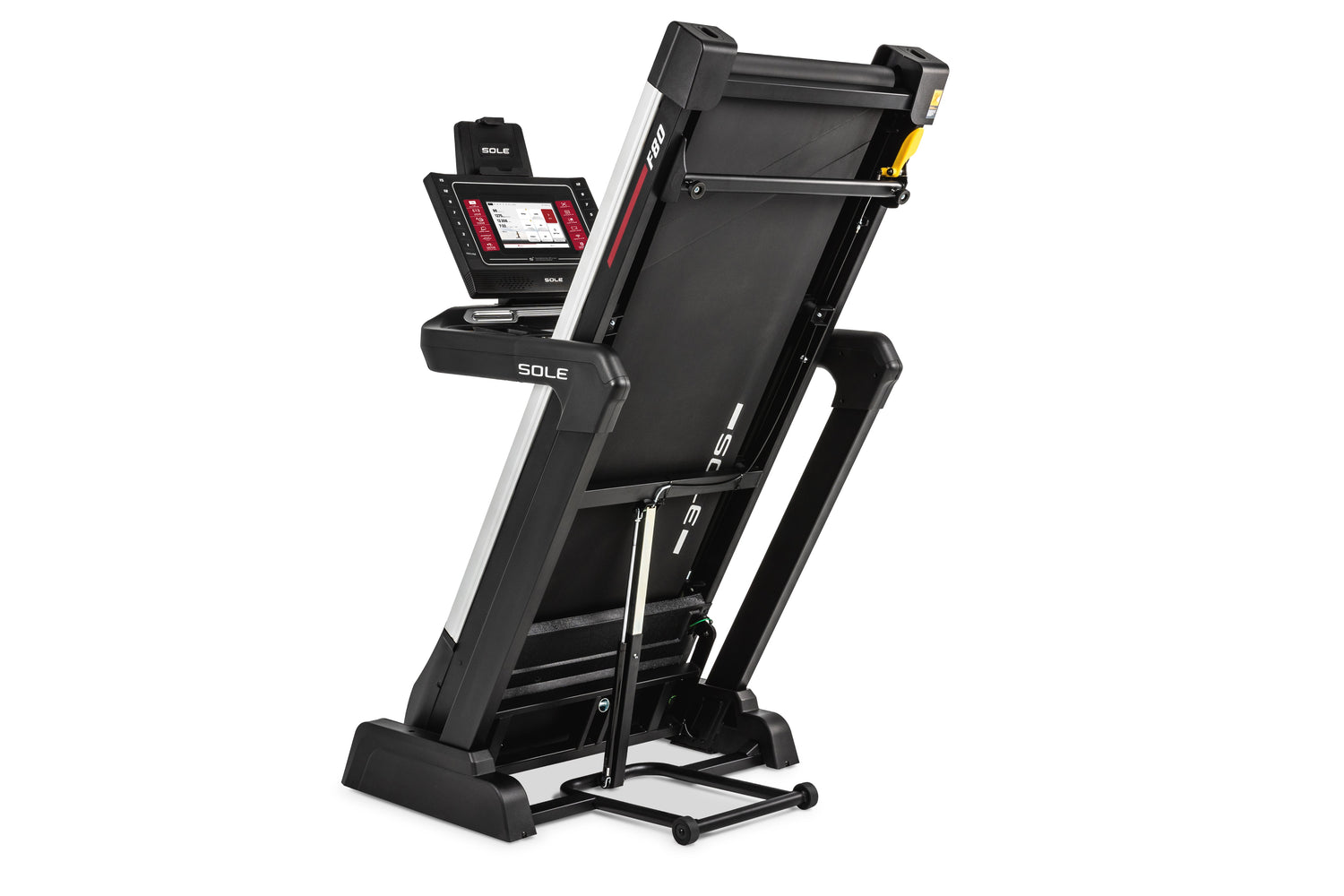
- The SOLE F80 treadmill delivers 15 levels of incline that match the vertical climber's calorie-burning intensity, Cushion Flex Whisper Deck technology that reduces joint impact, and the FREE SOLE+ App, providing hundreds of workouts without subscription fees.
Vertical Climber vs Treadmill: Which Cardio Machine Wins?
If you want to burn the most calories in the least amount of time, the vertical climber has a serious edge over the treadmill—but the full picture is more nuanced than that.
Both machines are legitimate cardio powerhouses. The question is which one matches your body, your goals, and your schedule. Whether you're deep into your fitness journey or just getting started, understanding how each machine actually works and what it does to your metabolism, muscles, and heart rate will help you train smarter.
|
Award-Winning Commercial-Grade Treadmills for Your Home
Why Choose SOLE: ✓ Commercial-grade steel frames with up to 4.0 HP motors 30-Day Money-Back Guarantee: Love it or return it, no questions asked. |

Calories Burned: Vertical Climber vs Treadmill

Calorie burn isn't just about which machine looks harder—it's about how much muscle mass is being recruited and how hard your cardiovascular system has to work to keep up.
How Many Calories Does a Vertical Climber Burn?
A 155-pound person using a vertical climber at moderate-to-vigorous intensity can burn approximately 300 to 800 calories per hour, depending on their pace, resistance, and conditioning level. At peak effort, some estimates push that number even higher, placing the vertical climber in the same calorie-burning tier as rowing and competitive cycling.
The reason the range is so wide comes down to effort. The vertical climber has no motor driving your movement—every inch of climb is powered entirely by you. Slow down, and the calorie burn drops quickly. Push hard with full arm and leg drive, and you're running one of the most metabolically demanding workouts possible.
A 125-pound person will burn on the lower end of that range, while a 185-pound person working at the same intensity will burn considerably more, since more body mass requires more energy to move. Intensity always matters more than duration on this machine.
How Many Calories Does a Treadmill Burn?
A 155-pound person burns roughly 240–600 calories per hour on a treadmill, with the lower end representing a brisk walk and the upper end reflecting sustained running at 6–7 mph. Adding incline dramatically increases that number; incline walking at 10–15% grade can raise calorie burn to levels close to jogging on flat ground, with significantly less joint impact.
Which Machine Burns More Calories Per Hour?
Head-to-head, the vertical climber wins on calories per hour at comparable effort levels. The full-body engagement simply demands more energy output than the treadmill's predominantly lower-body movement. That said, most people can sustain treadmill sessions longer, which means total calorie burn across a 45- or 60-minute workout can sometimes be about the same on both machines.
The smarter way to think about it: the vertical climber is the better tool for short, high-intensity sessions, while the treadmill supports longer, sustained efforts with more variety in programming.
What a Vertical Climber Does to Your Body

The vertical climber simulates the movement of scaling a wall or climbing a rope—a full-body, gravity-defying motion that your body isn't used to from everyday life. (Image courtesy of Amazon)
Muscles Worked on a Vertical Climber
The vertical climber is genuinely a full-body workout. In a single climbing stroke, you're engaging your quadriceps, hamstrings, glutes, and calves through the leg drive, while simultaneously pulling and pushing with your biceps, triceps, shoulders, and upper back. Your core acts as the stabilizing bridge between the two, working isometrically throughout every rep to keep your body aligned and transfer power efficiently between upper and lower body.
Cardiovascular Demand of Vertical Climbing
The cardiovascular demand of a vertical climber is exceptionally high—comparable to rowing or cross-country skiing in terms of how hard your heart and lungs have to work. Because so many muscle groups are firing simultaneously, your heart has to pump oxygenated blood to a much larger area than it does during a treadmill run.
That cardiovascular intensity is a double-edged sword. It makes the vertical climber extremely time-efficient for calorie burning and heart health. But it also means beginners may hit their limit quickly, especially in the first few weeks of training.
Full-Body Engagement vs Lower-Body Dominance
This is the vertical climber's biggest advantage over the treadmill. While the treadmill builds strong legs and an efficient aerobic base, it leaves your upper body largely passive. The vertical climber turns every cardio session into a simultaneous upper-body, lower-body, and core workout—which is why it burns more calories and builds functional strength across the body.
What a Treadmill Does to Your Body

The treadmill is the most widely used piece of cardio equipment in the world for a reason; it works.
Muscles Worked on a Treadmill
The treadmill primarily targets your lower body; quadriceps, hamstrings, glutes, and calves bear the majority of the workload during walking and running. At higher inclines, the glutes and hamstrings take on significantly more load, which is why incline treadmill training is frequently used as a glute-building tool alongside traditional strength work.
Your core engages to stabilize your torso during running, and your arms swing naturally to balance your stride, but neither the core nor the upper body is working anywhere near the same capacity as on a vertical climber. For upper-body conditioning, the treadmill simply isn't the right tool.
How Incline Changes the Workout
Incline is the treadmill's most powerful variable, and one that most casual gym-goers consistently underuse. Bumping the grade from 0% to just 5% increases calorie burn by roughly 50%, while simultaneously shifting more of the workload onto your glutes and hamstrings instead of your quads. The higher the incline, the more your posterior chain has to fire to push your body forward and upward with each step.
At steep inclines, think 10% to 15%, the treadmill workout begins to overlap with stair climbing in terms of muscle engagement and cardiovascular demand. Your heart rate climbs, your breathing gets heavier, and the calorie burn starts to approach what you'd see on a vertical climber at a moderate pace.
The key difference is that the treadmill still only works your lower body and core, while the vertical climber keeps your arms in the fight the entire time.
For anyone dealing with knee discomfort during running, high-incline walking is often the best alternative—you get comparable cardiovascular and calorie-burning benefits without the repetitive impact of foot strike at speed. It's one of the most underrated training tools in any gym.
Joint Impact: Which Machine Is Easier on Your Body?
Vertical Climber Impact on Knees & Hips
The vertical climber is a low-impact machine by design. Because your feet never leave the pedals, there's no foot strike, no ground reaction force, and no jarring impact traveling up through your ankles, knees, and hips with each rep. The climbing motion is smooth and continuous, which makes it surprisingly joint-friendly despite the high intensity.
People with mild knee issues often find the vertical climber more comfortable than running, provided they maintain proper form and don't hyperextend at the bottom of each stride.
Treadmill Impact on Knees & Hips
Running on a treadmill, even on a cushioned belt, still involves repetitive impact—each foot strike sends a force equivalent to two to three times your body weight through your joints. Over time and at high weekly mileage, this can contribute to runner's knee, IT band syndrome, shin splints, and hip flexor strain.
Walking on a treadmill is far gentler, and incline walking further reduces impact by slowing your stride and shifting the load to larger muscle groups rather than connective tissue. If running is part of your routine, proper footwear, adequate recovery, and surface variation are non-negotiable.
Vertical Climber vs Treadmill: Comparison Table
|
Factor |
Vertical Climber |
Treadmill |
|
Calories Burned/Hour |
300–800+ |
240–600 |
|
Calories/30 Min (155 lb, moderate) |
150–400 |
120–300 |
|
Primary Muscles |
Quads, glutes, hamstrings, calves, back, shoulders, arms, core |
Quads, hamstrings, glutes, calves, core |
|
Upper Body Engagement |
High (continuous push-pull) |
Minimal (arm swing only) |
|
Lower Body Engagement |
High |
High |
|
Core Engagement |
High (stabilization throughout) |
Moderate (running), Low (walking) |
|
Joint Impact |
Very low (no foot strike) |
Low (walking) to High (running) |
|
Bone Density Benefits |
Minimal |
Moderate to High (weight-bearing) |
|
HIIT Suitability |
Excellent |
Excellent |
|
Afterburn Effect (EPOC) |
Very high |
Moderate to High |
|
Time to Reach Target HR |
Very fast (60–90 seconds) |
Moderate (2–5 minutes) |
|
Heart Rate Control |
Less precise |
Highly precise (speed + incline) |
|
Learning Curve |
Moderate (coordination required) |
Very low (natural movement) |
|
Beginner Friendly |
Moderate |
Excellent |
|
Session Duration (typical) |
15–25 minutes |
30–60 minutes |
|
Workout Variety |
Limited |
Extensive (walk, jog, run, incline, intervals) |
|
Weight Loss Efficiency |
Excellent (time-efficient) |
Very good (sustained sessions) |
|
Endurance Building |
Moderate |
Excellent |
|
Noise Level |
Very quiet |
Moderate (motor + footfall) |
|
Maintenance |
Minimal |
Moderate (belt, lubrication) |
|
Best For |
Weight loss, time efficiency, full-body cardio |
Endurance, versatility, and beginners |
|
Ideal User |
Time-crunched, intermediate/advanced |
All fitness levels, runners |
Maximize Your Cardio Results With SOLE

Treadmills provide the versatility, endurance-building capability, and incline training that keep you progressing for years.
The SOLE F80 Treadmill delivers the incline capability serious cardio enthusiasts need. With 15 levels of incline, a powerful 3.5 HP motor, and a spacious 22" x 60" running surface, the F80 handles everything from recovery walks to steep hill climbs to all-out sprint intervals. The Cushion Flex Whisper Deck reduces joint impact by 40% compared to road running, protecting your knees through thousands of miles while still delivering the weight-bearing benefits that build bone density.
For those who want maximum incline training with complete terrain simulation, the SOLE TT8 Treadmill adds -6% decline capability to its 15% incline range. This commercial-grade machine, with a 4.0 HP motor and a 400-pound weight capacity, handles the most demanding interval sessions without hesitation. The non-folding design maximizes stability at steep inclines—no wobble, no flex, just a rock-solid platform for serious training.
The SOLE F85 Treadmill combines premium incline performance with space-saving convenience. The same 15 incline levels and 4.0 HP motor in a folding design with Easy Assist technology, perfect for home gyms where space is at a premium. The 15.6" touchscreen with built-in Netflix, YouTube, and Spotify streaming keeps you engaged through long sessions.
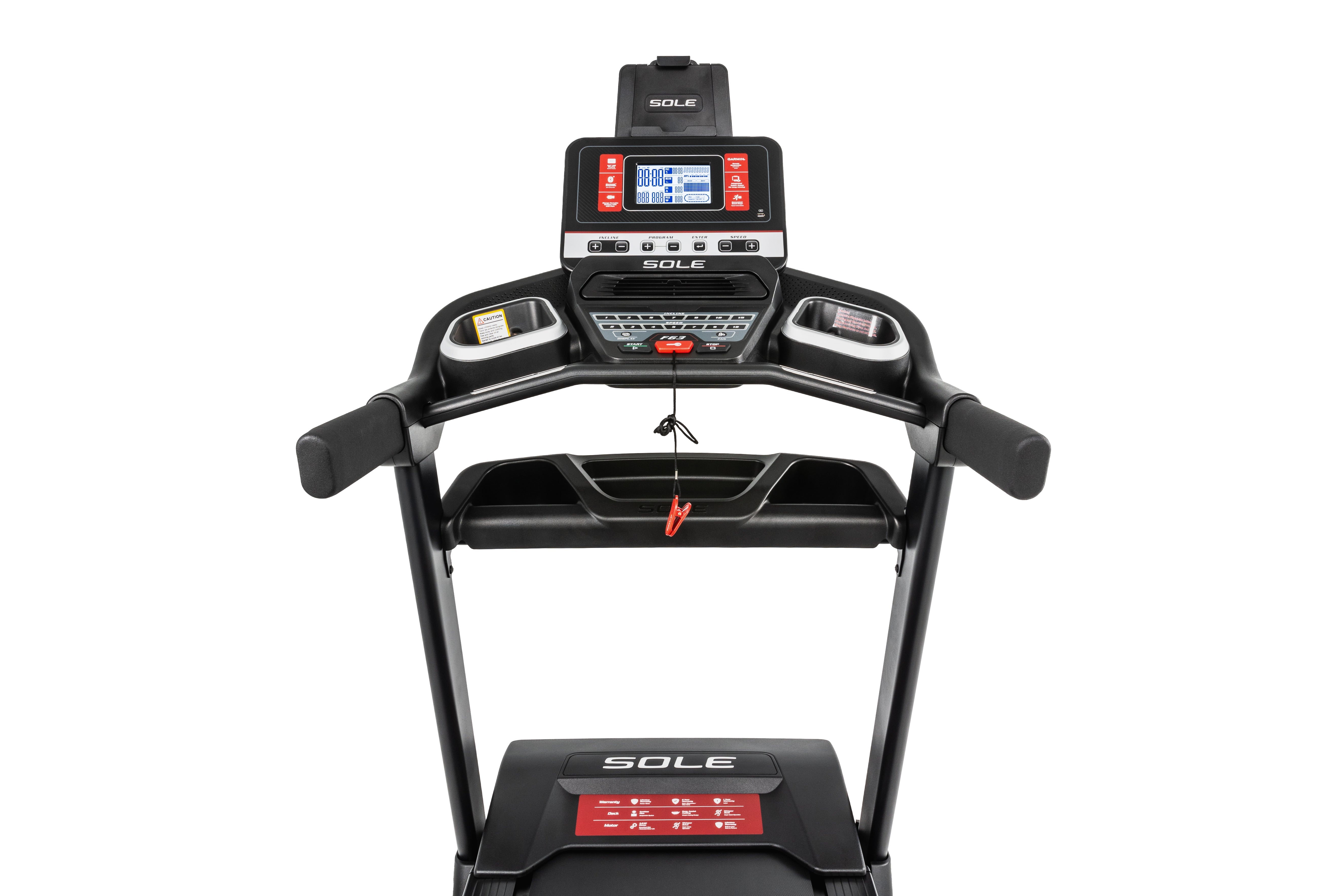
For budget-conscious buyers building their first serious home cardio setup, the SOLE F63 Treadmill delivers 15 incline levels and a 3.0 HP motor in an accessible package that outperforms competitors at its price point.
Every SOLE treadmill includes a lifetime warranty on frame and motor, reflecting the commercial-grade construction that's been trusted for years. Track your calories, distance, and incline workouts with the FREE SOLE+ App, no subscription fees, ever. While competitors lock features behind monthly payments, SOLE delivers complete functionality from day one.
Ready to maximize your cardio results? Shop SOLE treadmills today!
Frequently Asked Questions (FAQs)
Is a vertical climber better than a treadmill for weight loss?
For short, high-intensity sessions, yes; the vertical climber burns more calories per minute than a treadmill at moderate intensity, making it more time-efficient for weight loss. However, sustainable weight loss depends on consistency over weeks and months, not just calories burned in a single session. If you enjoy using the treadmill and will train on it regularly, it will outperform a vertical climber you only use occasionally.
Does incline treadmill walking burn as many calories as a vertical climber?
At steep inclines of 12% to 15%, treadmill walking significantly closes the calorie gap with the vertical climber. The popular 12-3-30 workout (12% incline, 3 mph, 30 minutes) burns roughly 200 to 300 calories for a 155-pound person, which overlaps with a moderate-intensity vertical climber session of the same duration.
Is a vertical climber or a treadmill machine better for beginners?
The treadmill is the more beginner-friendly machine—walking is intuitive, the speed is controlled by the belt, and you can step off easily if you need a break. The vertical climber has a steeper learning curve requiring simultaneous arm-leg coordination, and the cardiovascular demand hits harder than most beginners expect. Starting conservatively on either machine and building over two to three weeks produces far better long-term results than burning out in the first session.
How long should I use a vertical climber for a good cardio workout?
Due to its high cardiovascular demand, even 15 to 20 minutes on a vertical climber at moderate-to-high intensity constitutes a solid cardio session. Beginners should start with 10 to 15 minutes and build up gradually as their conditioning improves. More advanced users can work toward 25 to 30-minute sessions, particularly using interval formats that alternate high-effort and recovery periods.
Why should I choose a SOLE treadmill for home cardio?
SOLE treadmills deliver the incline capability that matches vertical climber intensity—15 levels that transform calorie burn and posterior chain engagement, plus the versatility for recovery walks, endurance runs, and structured interval programming.
The Cushion Flex Whisper Deck technology reduces joint impact compared to road running, protecting your knees through thousands of miles. Lifetime frame and motor warranties reflect commercial-grade construction trusted in homes and hotels for over 20 years.
*Disclaimer: Products and prices mentioned in this article are accurate as of the date of publication and are subject to change. Please visit the official SOLE website for the most current information.


Leave a comment
This site is protected by hCaptcha and the hCaptcha Privacy Policy and Terms of Service apply.