

Key Takeaways
- Walking on an incline increases workout intensity, helping you burn more calories.
- Begin with a low incline (1–5%) and gradually increase as your fitness improves.
- Intermediate inclines (6–10%) offer a balanced challenge for moderate fitness levels.
- Advanced inclines (11–15%) are ideal for seasoned walkers seeking a high-intensity workout.
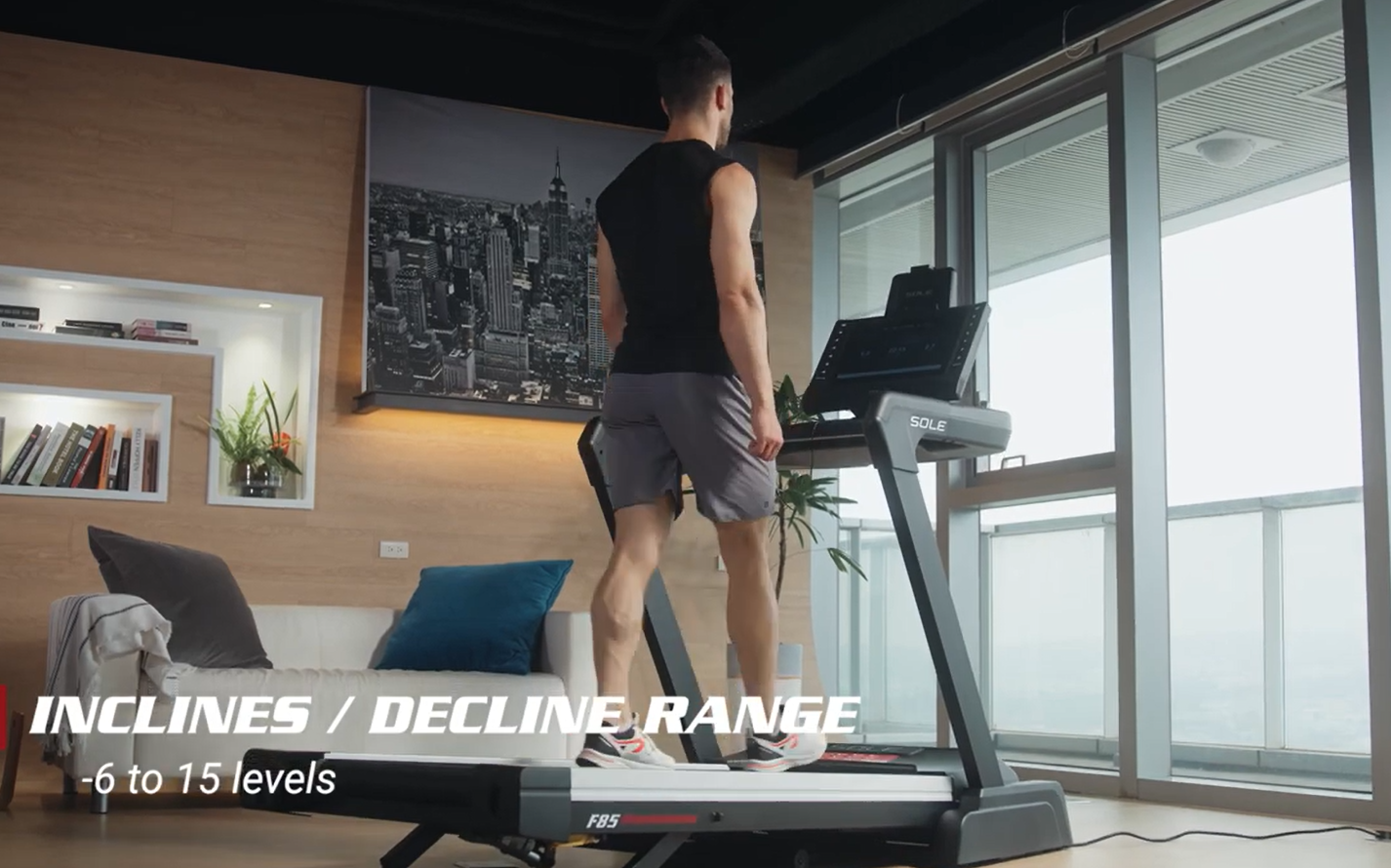
- SOLE treadmills provide 15-level incline precision with commercial-grade motors that handle demanding workouts for years.
Why is Incline Walking Good for You
Walking on an incline can do wonders for your fitness routine. By increasing the incline, you simulate walking uphill, which makes your muscles work harder. This boosts calorie burn and also helps in toning your legs and glutes.
Besides that, walking on an incline can improve cardiovascular health. The increased effort required to walk uphill strengthens your heart and lungs, leading to better overall fitness. Most importantly, it adds variety to your workout, making it more enjoyable and less monotonous.
How Incline Affects Calorie Burn
The steeper the incline, the more calories you burn. Studies show that walking on a 5% incline increases the metabolic cost by around 52% compared to walking on a flat surface. At a 10% incline, the metabolic cost jumps to 113%. Therefore, incorporating inclines into your treadmill routine can significantly enhance your weight loss efforts.
Consider this: if you weigh 150 pounds, walking at 4 mph on a flat surface burns approximately 270 calories per hour. On a 10% incline, the same person can burn over 500 calories per hour. This dramatic increase in calorie expenditure makes incline walking a powerful tool for weight loss.
|
Award-Winning Commercial-Grade Treadmills for Your Home
Why Choose SOLE: ✓ Commercial-grade steel frames with up to 4.0 HP motors 30-Day Money-Back Guarantee: Love it or return it, no questions asked. |

Choosing the Right Incline Level for Weight Loss

Starting with Low Incline Levels (1–5%)
If you're new to incline walking, start with a low incline between 1–5%. This range provides a gentle challenge without overwhelming your muscles or cardiovascular system. It's perfect for beginners who are just getting started with their fitness journey.
Beginner workouts can include walking at a 2% incline for 20 minutes, gradually increasing the incline by 1% each week. This gradual progression helps your body adapt to the increased intensity, reducing the risk of injury.
Intermediate Incline Levels (6–10%)
Once you've built some stamina, you can move on to intermediate incline levels between 6–10%. This range gives you a balanced challenge that can help you burn more calories and build endurance.
For instance, you might start with a 5-minute warm-up at a 3% incline, followed by intervals of 3 minutes at a 7% incline and 2 minutes at a 5% incline. This variation keeps your body guessing and maximizes calorie burn.
Advanced Workouts
For those who are already fit and looking to push their limits, advanced incline levels (11–15%) offer a high-intensity challenge. These inclines are ideal for seasoned walkers or runners who want to maximize calorie burn and build muscle strength.
Advanced workouts can include walking at a 12% incline for 30 minutes or performing interval training with inclines as high as 15%. For example, you might start with a 5-minute warm-up at a 5% incline, then alternate between 3 minutes at a 12% incline and 2 minutes at a 10% incline. This keeps the workout engaging while making sure you’re continually pushing your body to adapt.
The Popular 12-3-30 Workout

Benefits of the 12-3-30 Workout
The 12-3-30 workout can help you burn a significant number of calories in a relatively short amount of time. Walking at a 12% incline increases the intensity of the workout, leading to higher calorie expenditure compared to walking on a flat surface.
Besides calorie burn, this workout also strengthens the muscles in your legs and glutes. The incline forces these muscles to work harder, leading to better muscle tone and endurance. Additionally, the steady pace of 3 mph makes it accessible to most people, even those who may not be able to run.
Incorporating the 12-3-30 Workout into Your Routine
To incorporate the 12-3-30 workout into your routine, start by doing it 2–3 times a week. As you become more comfortable, you can increase the frequency to 4–5 times a week. Listen to your body and take rest days as needed to prevent overtraining.
For added variety, you can combine the 12-3-30 workout with other forms of exercise, such as strength training or yoga. This means that you’re getting a well-rounded fitness routine that addresses all aspects of your health.
Combining Speed and Incline for Maximum Effect

Why Varying Speed and Incline Matters
Varying speed and incline during your treadmill workouts can prevent plateaus and keep your body guessing. When you consistently challenge your muscles and cardiovascular system, you’re more likely to see continuous improvements in your fitness and weight loss.
Sample HIIT Treadmill Workouts
High-intensity interval training (HIIT) is an excellent way to combine speed and incline for maximum calorie burn. Here’s a sample HIIT treadmill workout:
- Warm-up: 5 minutes at 3 mph with a 0% incline
- Interval 1: 1 minute at 6 mph with a 5% incline
- Recovery: 2 minutes at 3 mph with a 0% incline
- Interval 2: 1 minute at 7 mph with a 6% incline
- Recovery: 2 minutes at 3 mph with a 0% incline
- Repeat intervals 3–5 times
- Cool-down: 5 minutes at 3 mph with a 0% incline
Tracking Progress with Speed and Incline
Tracking your progress is crucial to staying motivated and seeing results. Use a fitness tracker or treadmill console to monitor your speed, incline, and calorie burn. Set goals for yourself, such as increasing the incline by 1% each week or improving your speed by 0.5 mph every month.
Tips for Safe Incline Walking

Preventing Overtraining
Overtraining can lead to fatigue, injury, and burnout. To prevent overtraining, listen to your body and take rest days as needed. Incorporate a mix of high-intensity and low-intensity workouts into your routine to give your muscles time to recover.
Maintaining Proper Form
When walking uphill, it's natural to want to lean forward, but try to keep your posture upright. This engages your core muscles so that you're working the right muscle groups.
Keep your shoulders back and relaxed, and swing your arms naturally at your sides. Avoid gripping the handrails tightly. Instead, use them lightly for balance if necessary. This encourages your body to work harder and burn more calories.
Take shorter, quicker steps rather than long strides. This helps maintain balance and reduces the risk of overextending your muscles. Focus on landing softly with each step to minimize impact on your joints.
Keeping Your Workouts Interesting
Variety is the spice of life, and this applies to your treadmill workouts as well. Mixing up your routine can prevent boredom and keep you motivated. Try different incline levels, speeds, and workout durations to keep things fresh.

A lot of SOLE treadmills come with HD screens for you to entertain yourself during interval training and engage in workout lessons as well.
Consider incorporating interval training, where you alternate between high and low inclines or speeds. This keeps your workouts engaging and maximizes calorie burn. You can also try listening to music, podcasts, or watching TV shows to make your treadmill sessions more enjoyable.
Start Your SOLE Incline Walking Today

The F63 and F65 provide 15-level incline adjustment with 3.0 HP motors that handle demanding workouts without overheating. For premium features, the F85 and F89 add 6-level decline capability, creating comprehensive training options that simulate both uphill and downhill terrain.
What sets SOLE treadmills apart is the Cushion Flex Whisper Deck technology that reduces joint impact by 40% which is crucial for the higher-impact nature of incline walking.
The commercial-grade construction means your treadmill performs consistently no matter if you’re doing gentle 2% inclines or challenging 15% mountain climbs. With lifetime warranties on frames and motors, your investment supports years of progressive training.
The SOLE+ App provides guided incline workouts specifically designed for weight loss, taking the guesswork out of programming. No subscription fees; just expert instruction included with your equipment. From the budget-friendly F63 to the premium TT8 for serious athletes, there's a SOLE treadmill engineered for your incline walking goals.
Frequently Asked Questions (FAQ)
How Often Should I Walk on an Incline for Weight Loss?
For optimal weight loss, aim to walk on an incline 3–5 times a week. This frequency allows you to burn calories consistently while giving your muscles time to recover. Start with shorter sessions and gradually increase the duration as your fitness improves.
Can Incline Walking Replace Other Forms of Exercise?
While incline walking is highly effective for weight loss, it's best to combine it with other forms of exercise for a well-rounded fitness routine. Strength training, yoga, and flexibility exercises complement incline walking by addressing different aspects of your health and fitness.
Is Walking on a High Incline Safe for Everyone?
Walking on a high incline can be challenging and may not be suitable for everyone, especially those with joint issues or cardiovascular conditions. It's important to consult with a healthcare professional before starting any new exercise routine, especially if you have pre-existing health concerns.
Begin with lower inclines and gradually increase as your body adapts. Listen to your body and stop if you experience any pain or discomfort.
What Should I Eat Before and After an Incline Walk?
Fueling your body with the right nutrients before and after your workout can enhance performance and recovery. Before your incline walk, eat a light meal or snack that includes carbohydrates and protein, such as a banana with peanut butter or a small bowl of oatmeal.
After your workout, replenish your energy with a balanced meal that includes protein, healthy fats, and complex carbohydrates. Examples include a grilled chicken salad, a smoothie with protein powder, or a quinoa and vegetable bowl.
How Can I Measure My Progress Effectively?
Tracking your progress is key to staying motivated and seeing results. You can use your treadmill's console to monitor speed, incline, duration, distance, and calorie burn. SOLE treadmills feature comprehensive LCD displays that track all key metrics, while higher-end models like the F89 offer detailed workout summaries you can review after each session.


Leave a comment
This site is protected by hCaptcha and the hCaptcha Privacy Policy and Terms of Service apply.