

Key Takeaways
- The SOLE LCR's 31-pound flywheel and 40 resistance levels deliver smoother, more consistent pedaling momentum than the R92's 20-pound flywheel and 20 levels, making it the stronger choice for users with more acute knee conditions.
- The SOLE R92 offers a similar step-through frame and inward-pedal design, and uses an eddy-current brake-resistance system at a lower price, making it the better value for buyers whose primary concern is joint protection rather than display technology.
- The NordicTrack R35 offers a 14-inch touchscreen and automatic iFIT resistance adjustment but lacks SOLE's inward pedal design.
- Non-friction resistance systems on all three bikes deliver smooth, jerk-free pedaling that protects vulnerable knee structures from the sudden force spikes that friction-based systems produce as their pads wear unevenly over time.
- SOLE recumbent bikes feature patented 2-degree inward-sloping pedals that direct force straight through the knee joint, reducing the lateral stress that standard flat pedals create during every pedal stroke.
Low-Impact Cardio That Strengthens Rather Than Strains
Knee pain affects one in four American adults, yet giving up cardio only accelerates joint deterioration. Recumbent bikes flip the equation: the reclined seating position distributes body weight across your back and glutes rather than concentrating force through your knees, while the forward pedal placement reduces the knee flexion angle that triggers pain in arthritic or injured joints.
The SOLE LCR delivers light-commercial construction with a 31-pound flywheel, 40 resistance levels, and a 10.1-inch touchscreen for guided low-impact workouts. The SOLE R92 provides the same knee-friendly 2-degree inward pedal design. The NordicTrack Commercial R35 offers iFIT integration but requires a $39 monthly subscription.
This article covers the specs that matter for knee health, the differences between all three bikes, and the cost of ownership.
|
Smooth, Silent Rides for Every Fitness Level. Premium Home Fitness Bikes!
 Choose Your Perfect Style:
Why Choose SOLE Exercise Bikes: ✓ Whisper-quiet magnetic resistance won't disturb others 30-Day Money-Back Guarantee: Love it or return it, no questions asked. |
Specs That Matter for Bad Knees

Not all recumbent bikes protect knees equally. Certain design elements directly impact joint stress, while others are purely cosmetic.
Pedal Position & Angle
Why it matters: The angle at which your foot contacts the pedal determines how force travels through your knee joint. Pedals that angle outward force the knee into an unnatural alignment, creating lateral stress that aggravates existing conditions.
What to look for: Pedals with a slight inward slope (1 to 3 degrees) position the foot naturally and direct force straight through the knee rather than across it. SOLE's patented 2-degree inward design specifically addresses this biomechanical need.
Step-Through Frame Design
Why it matters: Traditional bike frames require lifting your leg over a horizontal bar to mount the seat. For anyone with knee pain, deep flexion and weight-bearing on one leg while lifting the other immediately triggers discomfort.
What to look for: A step-through or walk-through frame eliminates the horizontal bar entirely. You simply walk between the seat and console, turn, and sit down. All three bikes reviewed here feature this essential design element.
Flywheel Weight
Why it matters: A heavier flywheel stores more momentum during the pedal stroke. This momentum helps carry your legs through the "dead zones" at the top and bottom of each rotation, where your muscles must overcome inertia. Without sufficient flywheel weight, you experience a choppy, jerky motion that increases the instantaneous force on the knee.
What to look for: Minimum 20 pounds for smooth pedaling. The SOLE R92's 20-pound flywheel provides adequate momentum, while the LCR's 31-pound flywheel delivers commercial-grade smoothness.
Resistance Type
Why it matters: Friction-based resistance uses physical pads pressing against the flywheel. As these pads wear or accumulate dust, resistance becomes inconsistent, creating sudden spikes in force that jar the knee joint. Magnetic resistance uses magnets positioned near the flywheel to create smooth, consistent tension without physical contact.
What to look for: Magnetic or eddy current brake resistance systems. All three bikes reviewed here use non-friction resistance systems (magnetic on the LCR and R35, eddy current brake on the R92) for smooth, consistent, and silent operation.
Seat Adjustability
Why it matters: Proper leg extension prevents both overextension (which stresses the back of the knee) and underextension (which increases patella pressure). Your knee should maintain a slight bend of 25 to 35 degrees at full pedal extension.
What to look for: Multiple seat position settings with easy adjustment mechanisms. The SOLE LCR and R92 offer adjustable seating positions for a precise fit across a range of user heights.
3 Best Recumbent Bikes for Bad Knees in 2026
1. SOLE LCR: Best Premium Recumbent Bike for Bad Knees

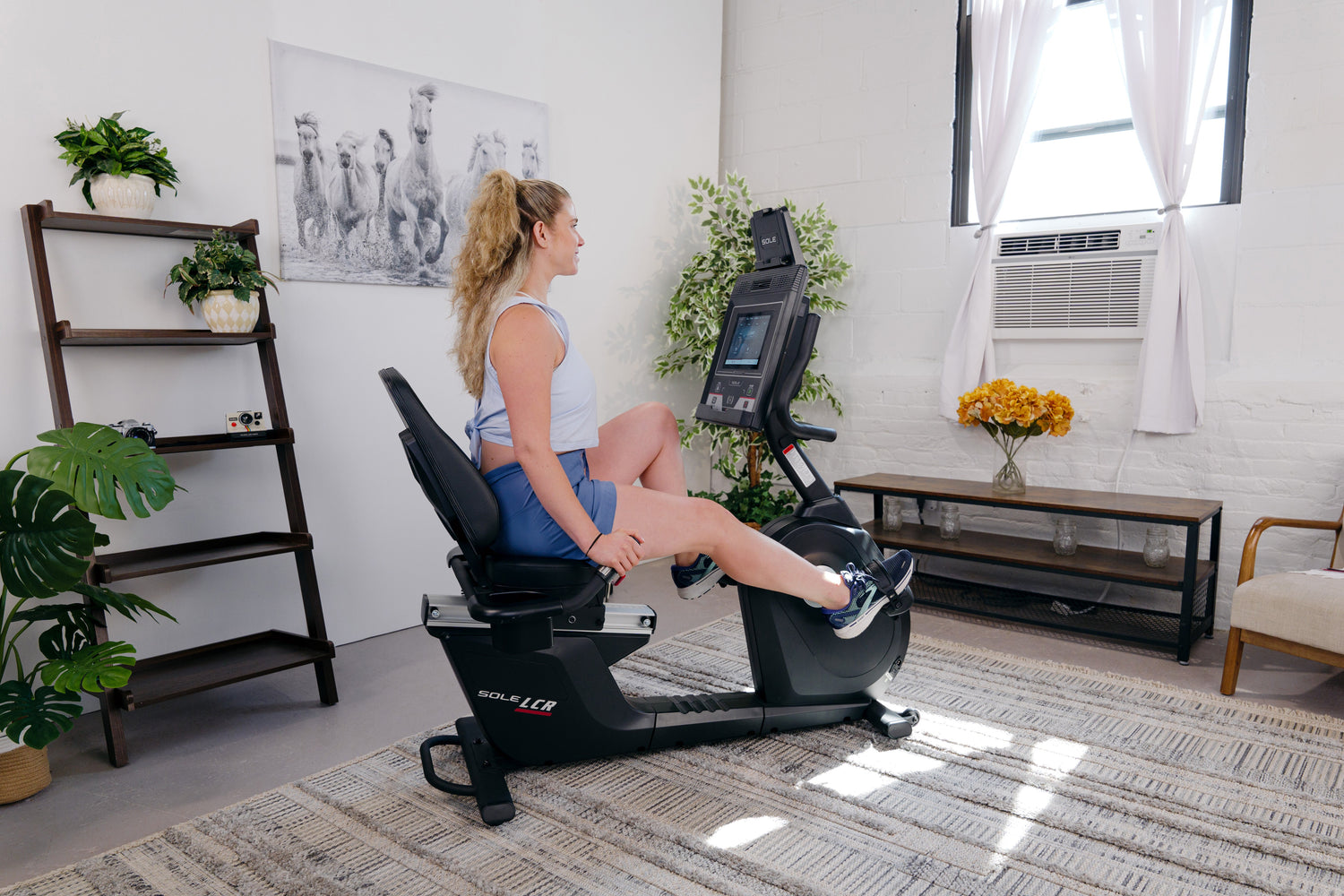
The LCR combines light-commercial construction, a 31-pound flywheel, and a 10.1-inch touchscreen with SOLE's patented 2-degree inward pedals for the smoothest, most joint-friendly ride.
The SOLE LCR earned its "light commercial" designation through construction quality that handles multiple daily users in physical therapy clinics and apartment fitness centers. For home users with knee concerns, this durability translates to rock-solid stability that eliminates the frame flex and wobble cheaper bikes exhibit under load. At 152 pounds assembled, the LCR stays planted during even vigorous pedaling.
The 31-pound flywheel, paired with 40 levels of magnetic resistance, delivers the smoothest pedaling motion in this price range. Knee joints thrive on consistency; they rebel against jerky, uneven force patterns. The LCR's heavy flywheel stores enough momentum to carry your legs through each rotation without the choppy transitions that stress vulnerable joint structures.
SOLE's patented 2-degree inward pedal slope appears on all their bikes but matters most for users with knee conditions. This subtle angle positions your foot so that force travels straight through the knee joint rather than creating the lateral stress that standard flat pedals produce. The oversized pedal platform with adjustable straps accommodates various foot sizes and allows you to reposition for your most comfortable alignment.
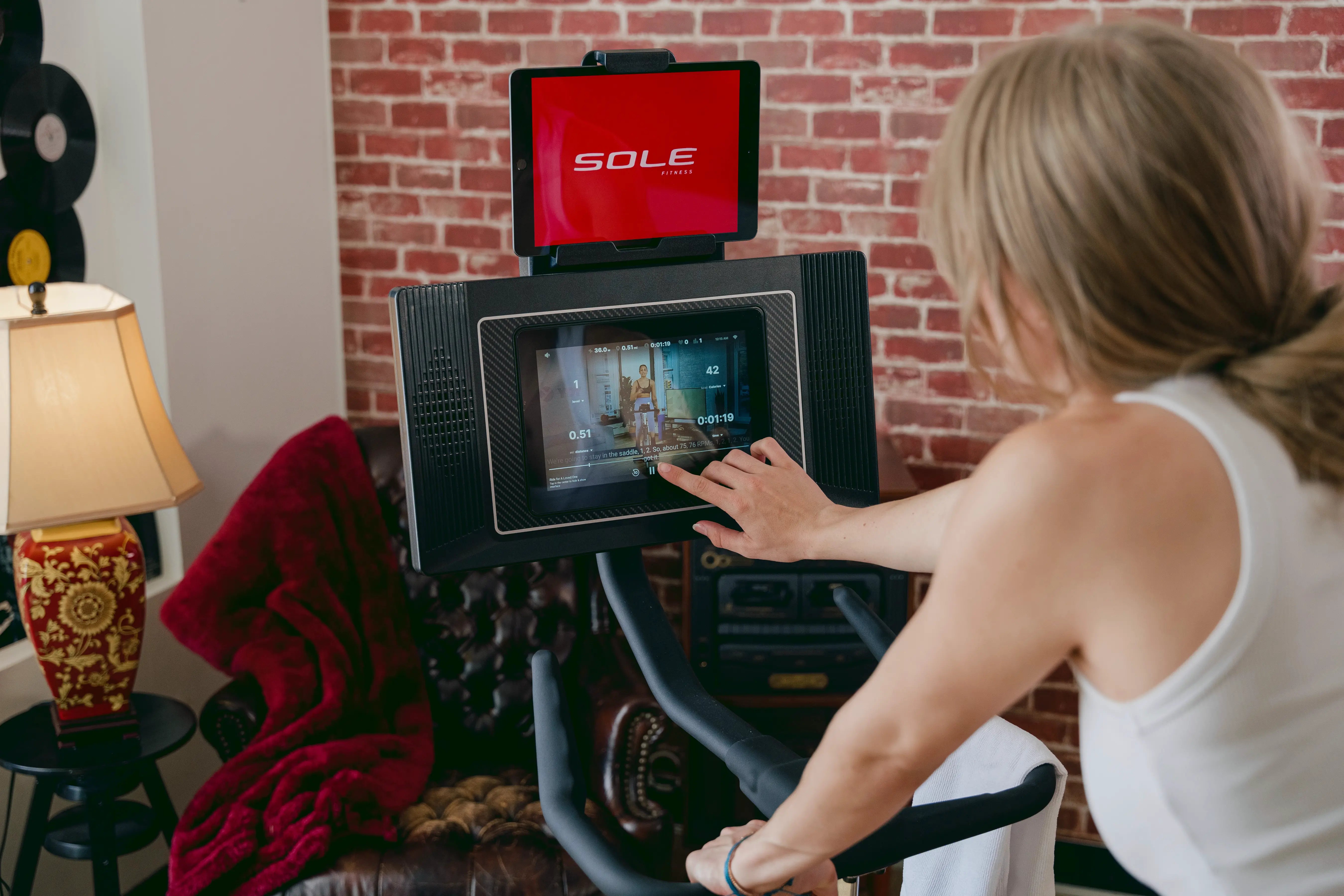
The 10.1-inch Android touchscreen provides guided workouts through the FREE SOLE+ App, with no subscription fees. For knee rehabilitation, the app's low-impact programs offer structured progression that gradually increases duration and resistance as your joint strength improves. Screen mirroring extends compatibility to any app on your phone or tablet, including Zwift and Kinomap for virtual rides.
2. SOLE R92: Best Value Recumbent Bike for Bad Knees

The R92 delivers the same 2-degree inward pedal design and step-through frame at $500 less, making joint-friendly cycling accessible to budget-conscious buyers.
The SOLE R92 represents SOLE's entry-level recumbent, though "entry-level" here means stripping the touchscreen and reducing flywheel weight rather than compromising on the biomechanical features that protect knees. The same patented 2-degree inward pedal slope, the same step-through frame design, and the same smooth magnetic resistance system appear on this bike.
The reclined seating position, forward pedal placement, and smooth resistance create conditions where joints move through their range of motion without bearing weight or experiencing impact. This motion stimulates synovial fluid production while strengthening the muscles that support and stabilize the knee.
The 20-pound flywheel provides adequate momentum for smooth pedaling at all 20 resistance levels. While lighter than the LCR's 31-pound flywheel, it exceeds budget competitors that often use 15-pound or lighter flywheels. The difference becomes apparent during longer sessions: heavier flywheels maintain consistent motion that reduces the micro-adjustments your body makes to compensate for choppy pedaling.
The 9-inch backlit LCD console displays all essential metrics while the integrated tablet holder positions your device at eye level for entertainment or app-based workouts. Bluetooth speakers, USB charging, and wireless chest strap compatibility round out features that make extended low-impact sessions enjoyable rather than tedious.
3. NordicTrack Commercial R35: Alternative with Subscription Content

The R35 offers iFIT integration and automatic resistance adjustment but requires a monthly subscription that significantly increases long-term cost.
The NordicTrack Commercial R35 features a 25-pound flywheel, 26 resistance levels, and a step-through design that provides adequate joint protection. The 14-inch HD touchscreen displays iFIT content, including trainer-led classes, global rides, and automatic resistance adjustment that responds to terrain and instructor cues.
For users who thrive on structured programming and virtual coaching, iFIT's extensive library provides motivation that standalone workouts cannot match. The automatic resistance feature means you focus on pedaling while the bike handles intensity changes, reducing the cognitive load that can distract from proper form.
However, the R35's value proposition depends entirely on iFIT usage. Without the monthly subscription, the touchscreen cannot access entertainment apps or third-party content.
*Note: SOLE does not manufacture or sell the NordicTrack Commercial R35. This is an independent review of a product for comparison purposes.
Side-by-Side Comparison
|
Feature |
SOLE LCR |
SOLE R92 |
NordicTrack R35 |
|
Flywheel Weight |
31 lbs |
20 lbs |
25 lbs |
|
Resistance Levels |
40 |
20 |
26 |
|
Display |
10.1" touchscreen |
9" LCD |
14" touchscreen |
|
2-Degree Inward Pedals |
Yes |
Yes |
No |
|
Step-Through Frame |
Yes |
Yes |
Yes |
|
FREE Workout Content |
Yes (SOLE+ App) |
Yes (SOLE+ App) |
No ($39/month) |
|
Screen Mirroring |
Yes |
No (tablet holder) |
No |
|
Automatic Resistance |
No |
No |
Yes (iFIT only) |
|
Weight Capacity |
350 lbs |
300 lbs |
350 lbs |
|
Machine Weight |
152 lbs |
130 lbs |
203 lbs |
|
Frame Warranty |
Lifetime |
Lifetime |
10 years |
|
HSA/FSA Eligible |
Yes |
Yes |
No |
Why SOLE Recumbent Bikes Protect Knees Better
We engineer our recumbent bikes with joint health as a primary design consideration, not an afterthought. The patented 2-degree inward pedal slope exists specifically because standard flat pedals force the knee into suboptimal alignment. When your foot angles slightly inward, force travels straight through the knee joint rather than creating the lateral stress that accelerates cartilage wear and aggravates existing conditions.
Our commitment to smooth operation goes beyond marketing language. The R92's 20-pound flywheel and LCR's 31-pound flywheel store enough momentum to maintain a consistent pedaling motion at any resistance level. This consistency matters because jerky, uneven force patterns cause microtrauma to joint structures. Smooth motion allows your knee to move through its range without sudden stress spikes.
Shop our bike collection today!
Frequently Asked Questions (FAQs)
Will cycling make my knee arthritis worse?
No. Research published in the Journal of Rheumatology shows that recumbent cycling actually reduces joint pain and stiffness in people with knee osteoarthritis. The smooth, low-impact pedaling motion stimulates synovial fluid production while strengthening the muscles that support the knee joint. The key is proper bike setup, appropriate resistance levels, and gradual progression.
How do I know if my seat is positioned correctly?
At full pedal extension (when the pedal is farthest from you), your knee should maintain a slight bend of 25 to 35 degrees. If your leg straightens completely, move the seat closer to the pedals. If your knee bends more than 35 degrees, move the seat farther back. This positioning prevents both overextension stress and excessive patella compression.
Can I use a recumbent bike after knee replacement surgery?
Yes, with your surgeon's clearance. Many orthopedic surgeons specifically recommend recumbent cycling as early rehabilitation exercise after total knee replacement. The seated position, forward pedal placement, and smooth resistance allow joint movement without weight-bearing stress. Start with minimal resistance and short sessions, gradually increasing as your surgical team advises.
Why do SOLE pedals angle inward?
The 2-degree inward slope positions your foot so that force travels straight through the knee joint during each pedal stroke. Standard flat pedals allow the foot to rotate outward, creating lateral stress that aggravates arthritis, ligament injuries, and other knee conditions. This patented design feature specifically addresses biomechanical needs that generic pedals ignore.
What is the difference between the SOLE LCR and SOLE R92 for someone with knee pain?
Both bikes feature the same patented 2-degree inward pedal design and step-through frame, making them suitable for knee conditions. The meaningful differences are flywheel weight, resistance range, and display. The LCR's 31-pound flywheel delivers smoother momentum than the R92's 20-pound flywheel, which matters most for users with more acute knee conditions.
Disclaimer: Products and prices mentioned in this article are accurate as of the date of publication and are subject to change. Please visit the official SOLE website for the most current information.


Leave a comment
This site is protected by hCaptcha and the hCaptcha Privacy Policy and Terms of Service apply.