Key Takeaways
-
Flywheel weight affects stride smoothness and stability, but it should match your fitness goals and workout frequency rather than always being the heaviest option available.
-
A 14–20 lb (6.8–9 kg) flywheel suits beginners and casual users, while 20–30 lb (9–13.6 kg) fits most home routines and 30 lb (13.6 kg) or more suits frequent, high-intensity training.
-
Magnetic resistance, a durable steel frame, and an 18–20 inch stride length matter as much as flywheel weight for a smooth, comfortable workout.
-
Heavier flywheels generally carry more consistent momentum through each pedal stroke, though overall build quality can outweigh flywheel weight on its own.
-
SOLE Fitness ellipticals pair precision-balanced flywheels in the 14.3–32 lb range with quiet magnetic resistance and adjustable stride lengths for a smooth fit at home.
Choosing the Right Elliptical Flywheel Weight
The best flywheel weight for most home ellipticals falls between 20 and 30 lb (9–13.6 kg), since this range balances smooth momentum with a price most buyers can justify. Many shoppers assume a heavier flywheel is automatically the better buy, when the right weight actually depends more on how often you train and how intense those sessions get.
Flywheel weight matters because it carries energy through the "dead spots" of each pedal rotation. A flywheel that is too light can feel jerky even at low resistance, while one that is too heavy can feel sluggish to get moving from a stop, especially on shorter workout sessions.
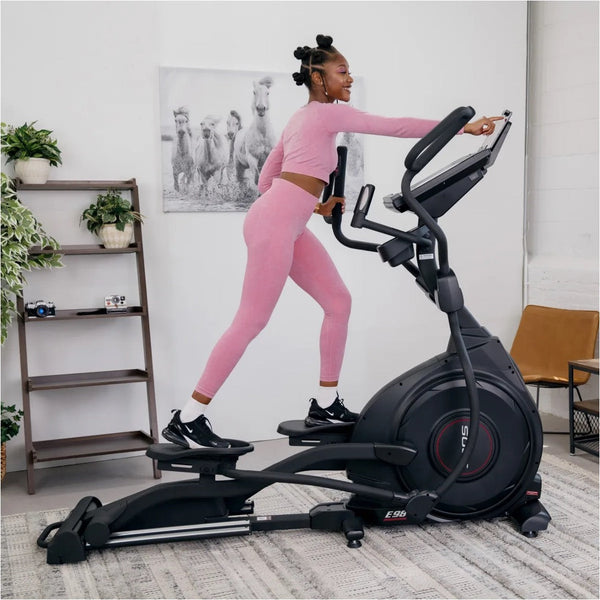
At SOLE Fitness, we design our ellipticals with precision-balanced flywheels across multiple weight ranges, paired with quiet magnetic resistance and adjustable stride lengths to deliver smooth, natural movement for different workout routines. That combination helps the machine feel right whether you're working out a few times a week or training daily.
|
Smooth, Natural Motion for Every Body. Top-Rated Home Fitness Ellipticals!
Why Choose SOLE Ellipticals: ✓ Whisper-quiet eddy current resistance system 30-Day Money-Back Guarantee: Love it or return it, no questions asked. |

Flywheel Weight: Different Option Recommendations by User Type
Flywheel weight plays a major role in how smooth and stable an elliptical feels. In general, a heavier flywheel stores more momentum, creating a more consistent stride and resistance.

The ideal flywheel weight depends on your fitness goals, workout frequency, and the overall design of the elliptical.
14–20 lb (6.4–9 kg): Best for Beginners & Casual Home Workouts
A 14–20 lb flywheel suits beginners and users who mainly do light to moderate cardio. It gives a comfortable workout with adequate momentum for regular home use. While the motion may not feel as refined as heavier models during high-intensity sessions, it gives a solid balance of performance and affordability.
20–30 lb (9–13.6 kg): Best for Most Home Users
A 20–30 lb flywheel is considered the sweet spot for most home fitness enthusiasts. The added weight creates a smoother, more stable stride with consistent resistance throughout each pedal stroke. This range suits regular cardio workouts, weight-loss programs, and longer endurance sessions several times per week.
30 lb (13.6 kg) & Above: Best for High-Performance Training
Flywheels weighing 30 lb or more are typically found on premium home and commercial ellipticals. They deliver excellent stability, smoother transitions between strides, and a more gym-like workout experience, especially during longer or higher-intensity sessions. While these models are generally more expensive, they're a great option for serious exercisers, frequent users, and anyone looking for commercial-level performance at home.
Recommended Elliptical Flywheel Weights by User Type
|
Flywheel Weight |
Best For |
Workout Experience |
|
14–20 lb (6.4–9 kg) |
Beginners and casual home users |
Comfortable for light to moderate cardio with good value for everyday use. |
|
20–30 lb (9–13.6 kg) |
Most home fitness users |
Smooth, stable stride that's ideal for regular cardio, weight loss, and endurance workouts. |
|
30 lb (13.6 kg)+ |
Advanced users and high-intensity training |
Premium, gym-like performance with excellent stability for frequent, demanding workouts. |
Things to Consider That Matter More Than Flywheel Weight
Flywheel weight is important, but it is not the only factor that determines how an elliptical feels. The resistance system, frame quality, and stride design all play a major role in creating a smooth, stable, and comfortable workout. A well-built machine with a slightly lighter flywheel can often outperform a poorly designed one with a heavier flywheel.

A sturdy steel frame minimizes vibration during workouts, improving both comfort and long-term durability.
Magnetic vs Belt Resistance Systems
Magnetic resistance is the better choice for most home users because it delivers smooth, quiet, consistent resistance with minimal maintenance. Belt or friction systems tend to be noisier and wear down over time, which can affect workout quality.
Frame Stability & Build Quality
A strong steel frame helps reduce wobbling and vibration, allowing the flywheel to perform as intended. Machines with higher user weight capacities are typically built with better structural stability, making them more durable for regular use.
Stride Length & Pedal Motion Consistency
A comfortable stride depends on choosing the right stride length for your height. Most home ellipticals offer 18–20 inch stride lengths, which suit most users. If you're particularly tall or short, an elliptical with an adjustable stride length can provide a more natural, comfortable motion and improve overall workout efficiency.
Find Your Ideal Flywheel Weight with SOLE Fitness

SOLE Fitness ellipticals combine balanced flywheels, quiet magnetic resistance, and durable construction for smooth, reliable home workouts.
Getting flywheel weight right means matching the machine to how you'll actually use it, not chasing the heaviest number on a spec sheet. Pair the right weight with solid resistance, a stable frame, and a stride length suited to your height, and the workout stays smooth for years, not just the first few sessions.
At SOLE Fitness, we design our ellipticals with these principles in mind. Our machines feature precision-balanced flywheels, whisper-quiet resistance systems, heavy-duty steel frames, ergonomic pedal motion, and Bluetooth connectivity with the free SOLE+ app. If you're just starting out or training several days a week, our ellipticals deliver the smooth, reliable performance serious home users expect. Browse SOLE Fitness ellipticals and find the right model for your home workout needs.
Frequently Asked Questions (FAQs)
What is the difference between flywheel weight and resistance levels?
Flywheel weight and resistance levels serve different purposes. The flywheel weight affects how smooth and natural the pedal motion feels, while resistance levels control how easy or challenging your workout is. Together, they shape the overall workout experience, but they aren't the same feature.
Can a light flywheel still work?
Yes, a lighter flywheel can still provide an effective cardio workout. However, the stride may feel less smooth and consistent, especially during longer or more intense sessions. For a more comfortable and natural workout, many users prefer an elliptical with a heavier flywheel.
Does a heavier flywheel make an elliptical harder to use?
No. A heavier flywheel does not make an elliptical harder to use because workout intensity is controlled by the resistance settings. Instead, a heavier flywheel helps create a smoother, more stable motion, making the workout feel more comfortable.
What flywheel weight do commercial gym ellipticals use?
Commercial gym ellipticals typically use heavier flywheels than home models to deliver exceptionally smooth performance and withstand frequent daily use. While most home users don't need commercial-grade equipment, choosing a well-built elliptical with a quality flywheel and durable construction can provide a similar workout experience at home.
How do SOLE Fitness ellipticals deliver a smoother workout?
SOLE Fitness ellipticals deliver a smooth, comfortable workout by combining balanced flywheel designs with magnetic resistance, durable steel frames, and ergonomic stride motion. Together, these features provide quiet, reliable performance that supports consistent home training.
*Disclaimer: Products and prices mentioned in this article are accurate as of the date of publication and are subject to change. Please visit the official SOLE website for the most current information.