Key Takeaways
-
Magnetic resistance is the best choice for most home riders, using magnets set near the flywheel without touching it, so the ride stays quiet and needs almost no upkeep across upright, recumbent, and indoor cycling bikes.
-
Air resistance fits high-intensity training, since a fan pushes back harder the faster you pedal, making it ideal for sprints and intervals, though it gets loud under heavy effort.
-
Friction resistance is the cheapest to build but the least practical, using a pad that presses on the flywheel to create drag, which is noisy and needs replacing as the pad wears down.
-
Choose magnetic for steady cardio and spin, air for HIIT, and friction for tight budgets.
-
Every SOLE exercise bike uses contact-free magnetic resistance for a near-silent ride, backed by a lifetime frame warranty and the free SOLE+ app.
Choosing the Right Resistance for Your Ride
Exercise bikes create resistance in three ways: magnetic, air, and friction, and for most home riders, magnetic is the one to buy. The magnets sit near the flywheel without touching it, which keeps the ride quiet and cuts maintenance down to almost nothing.
Air resistance works better for hard interval training, since it pushes back harder the faster you pedal. Friction is the cheapest option, though it is also the loudest, and its pads wear out over time. The right pick resistance type comes down to how you train, how much noise you can accept, and how much maintenance you want to handle.
|
Smooth, Silent Rides for Every Fitness Level. Premium Home Fitness Bikes!
 Choose Your Perfect Style:
Why Choose SOLE Exercise Bikes: ✓ Whisper-quiet magnetic resistance won't disturb others 30-Day Money-Back Guarantee: Love it or return it, no questions asked. |
How Each Exercise Bike Resistance Type Works
1. Friction (Contact) Resistance
Friction resistance uses a felt or leather pad that presses directly against the flywheel. Turning a knob tightens the pad, which raises the drag you feel while pedaling. Many basic spin bikes use this setup because it is simple and cheap to build.
The trade-off shows up in noise and upkeep. The pad rubs the flywheel with every stroke, so it wears down and needs replacing, and the contact makes a scraping sound. Riders who want a quiet session at home tend to skip friction bikes for that reason.

Exercise bikes use friction, air, or magnetic resistance, each affecting ride feel, noise, and long-term durability differently.
2. Air Resistance
Air resistance comes from a large fan that spins as you pedal. The faster you go, the more air the fan has to move, so resistance rises automatically with your effort. There are no levels to set, and you control intensity purely by how hard you push.
That makes air bikes a favorite for sprints, intervals, and conditioning work. Some models add moving arm handles for a full-body effort. The clear downside is volume, since a fan bike gets loud during hard efforts, which can be a problem in an apartment or an early-morning workout.
3. Magnetic Resistance
Magnetic resistance uses magnets positioned near the flywheel instead of a pad touching it. Moving the magnets closer raises the drag, and pulling them away lowers it. Because nothing makes contact, the ride stays smooth and close to silent.
Nothing rubs, so there are no pads to replace and very little wear over the years. That quiet, low-maintenance operation is why magnetic resistance has become the standard on quality home bikes.
4. Eddy Current Brake & Electromagnetic Resistance
Eddy current brake (ECB) and electromagnetic (EMS) systems are advanced forms of magnetic resistance. Both keep the contact-free design but control the magnets more precisely. An ECB system typically uses a dial or motor to shift the magnets, while an EMS system sets resistance electronically in defined levels.
The practical benefit is control. You can jump straight to an exact level, follow a guided program, or let a workout adjust the resistance for you, all without touching a knob mid-ride.

One of our best-selling exercise bikes, the R92, uses 20 lb ECB flywheel.
How to Choose the Right Resistance for Your Exercise Bike?
Type of Training
Start with the kind of training you do most. Your workout style points to a resistance type faster than any spec sheet:
-
Steady cardio and spin classes: magnetic resistance gives smooth, quiet control at every level.
-
HIIT and sprint intervals: an air bike matches your effort, pushing back harder the faster you pedal.
-
Low-impact or recovery rides: magnetic resistance on a recumbent keeps the ride gentle and silent.
Location
Next, think about where the bike will live. Noise is the deciding point for many buyers. Magnetic systems are the quietest and barely register in a shared room, an apartment, or an early-morning session. Air and friction bikes both climb in volume as you work harder, which can wake a household or bother neighbors.
Maintenance & Cost
Maintenance and long-term cost come after that. Friction bikes are the cheapest to buy, but the pads wear down and need replacing, and the rubbing adds noise as they age. Magnetic bikes ask for a little more upfront and then run for years with almost no upkeep, because nothing touches the flywheel.
Style
Finally, match the resistance to the bike style you want. Indoor cycles pair a heavy flywheel with dial-controlled magnetic resistance for spin work. Uprights suit steady cardio in a traditional riding position, and recumbents add back support for low-impact rides. Magnetic resistance fits all three, which is why it shows up on most home bikes today.

Choose exercise bike resistance based on workout style, noise level, maintenance needs, and preferred bike design.
The Resistance Systems in SOLE Exercise Bikes
We build every SOLE bike around contact-free magnetic resistance, so each model rides quietly and smoothly. Two systems run across the range, matched to the style of bike.
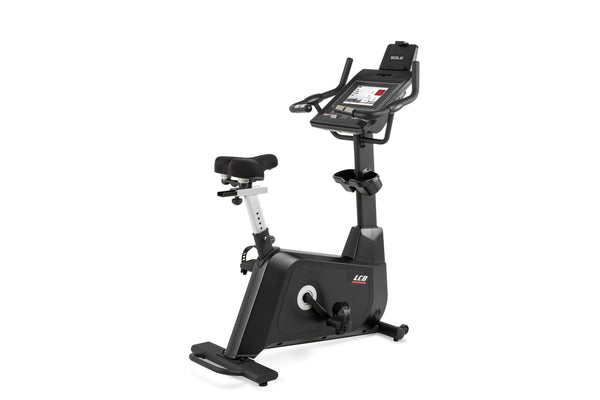
The B94 upright and the R92 recumbent bikes use an eddy current brake system with 20 set levels. The LCB upright and LCR recumbent step up to an electromagnetic system with 40 levels and a 10.1-inch touchscreen. That lets you set an exact level or follow guided workouts through the free SOLE+ app.
Every model carries a lifetime frame warranty.
Exercise Bike Resistance Types Compared
|
Resistance Type |
How It Works |
Noise |
Maintenance |
Best For |
|
Magnetic (incl. ECB & EMS) |
Magnets create drag without touching the flywheel |
Very quiet |
Very low |
Home cardio, spin, quiet spaces |
|
Air |
A fan meets your effort; harder pedaling adds resistance |
Loud under effort |
Low |
HIIT, sprints, conditioning |
|
Friction |
A pad presses on the flywheel to create drag |
Noisier, with a scraping sound |
Pads wear and need replacing |
Tight budgets |
SOLE Bikes Deliver the Quiet Resistance Most Riders Want
For nearly anyone setting up a bike at home, magnetic resistance is the type worth buying. It runs quiet enough for shared walls and early mornings, feels smooth from the first level to the last, and skips the pad replacements that friction bikes demand. Air bikes still earn their place for pure interval training, but they can't match a magnetic ride for everyday, low-noise cardio.
That quiet, contact-free ride is exactly what our eddy current and electromagnetic systems deliver on every SOLE bike, across our uprights and back-supported recumbents, with a lifetime frame warranty and free SOLE+ app behind each one. To find the system that fits how you train, take a look at the full SOLE bike range.
Frequently Asked Questions (FAQs)
Is magnetic or friction resistance better for a home exercise bike?
For most home use, magnetic resistance is the better choice. It runs far quieter, feels smoother at every level, and needs almost no maintenance since nothing touches the flywheel. Friction bikes cost less upfront but wear down their pads and create more noise, which is a real drawback in shared or quiet homes.
What is eddy current brake (ECB) resistance?
Eddy current brake resistance is a type of magnetic resistance. Magnets sit near a spinning metal flywheel and create drag without touching it, using induced electrical currents. Moving the magnets closer or farther changes the intensity. The result is a smooth, silent ride with no parts rubbing together, so wear stays very low.
Does a heavier flywheel make resistance higher?
A heavier flywheel does not add resistance, but it smooths out each pedal stroke. The extra momentum reduces the dead spots between strokes, so the ride feels closer to cycling outdoors. Most quality home bikes use flywheels around 20 to 35 pounds to balance that smoothness against a manageable overall weight.
Is air resistance good for weight loss?
Air resistance works well for weight loss because it rewards hard effort. The fan pushes back harder the faster you pedal, which makes it easy to spike your heart rate during intervals and burn more calories in less time. The trade-off is noise, since fan bikes get loud during intense sprints.
Which resistance system do SOLE exercise bikes use?
Every SOLE bike uses contact-free magnetic resistance for a quiet, smooth ride. The B94 and R92 use an eddy current brake system with 20 levels, and the LCB and LCR use an electromagnetic system with 40 levels. All models include the free SOLE+ app with no subscription and a lifetime frame warranty.
*Disclaimer: Products and prices mentioned in this article are accurate as of the date of publication and are subject to change. Please visit the official SOLE website for the most current information.