Key Takeaways
- Cardio climbers and ellipticals are both low-impact machines, but climbers use a constant incline that increases intensity, while ellipticals offer a smoother, easier motion for longer workouts.
- Muscle engagement is higher on climbers, especially in the glutes, hamstrings, quads, and calves, while ellipticals provide more balanced full-body activation with moderate upper- and lower-body involvement.
- Calorie burn is higher on climbers, averaging about 600–800 calories per hour, compared to ellipticals at roughly 270–378 calories in 30 minutes, depending on effort and body weight.
- Climbers focus on higher intensity, fat loss, and lower-body strength, while ellipticals are better for beginners, joint comfort, and steady cardio endurance.
- For reliable home fitness equipment across both styles, SOLE Fitness offers durable, performance-driven machines built for consistent training and long-term use.
Cardio Climber vs Elliptical: Which One Is Better for Your Fitness Goals?
The main difference between a cardio climber and an elliptical comes down to intensity: the climber's continuous incline keeps you working against gravity for harder muscle activation and faster fat loss, while the elliptical's gliding stride stays comfortable enough to sustain far longer. Neither machine is objectively better, so your training goals decide which one wins.
What sets the climber apart is posture. It holds you in a forward-leaning stance that blends stair-climbing with elliptical striding, keeping your muscles under tension instead of coasting on momentum. The elliptical, by contrast, keeps your feet planted through a flatter, smoother path that feels almost effortless in comparison.
|
Premium Home Gym Equipment with Award-Winning Quality! Complete Your Home Gym:
Why Choose SOLE: ✓ Commercial-grade quality for home use 30-Day Money-Back Guarantee: Love it or return it, no questions asked. |

What is a Cardio Climber?
A cardio climber is a cardio machine designed to mimic a climbing motion, combining elements of stair climbing and elliptical movement but with a constant incline that keeps your body working against gravity.
Unlike a traditional elliptical with a flatter stride path, a cardio climber keeps you in a forward-leaning position throughout the workout. This increases resistance naturally, making your glutes, quads, hamstrings, and calves work harder with every step while also elevating your heart rate more quickly.
Most cardio climbers are compact and suitable for home gyms, and many include moving handlebars so you can engage your upper body for a more complete full-body workout.

A cardio climber combines climbing and striding motions to create a more demanding lower-body workout while remaining low-impact on the joints.
Muscles Worked on a Cardio Climber
A cardio climber places strong emphasis on the lower body, especially the posterior chain, while still engaging stabilizing muscles throughout the body.
- Glutes: heavily activated by the uphill pushing motion
- Hamstrings: engaged throughout each backward drive of the stride
- Quadriceps: working against incline resistance during extension
- Calves: continuously involved in each step for propulsion
- Core: stabilizes the forward-leaning climbing posture
- Arms and shoulders: activated when using the moving handlebars
What is an Elliptical?
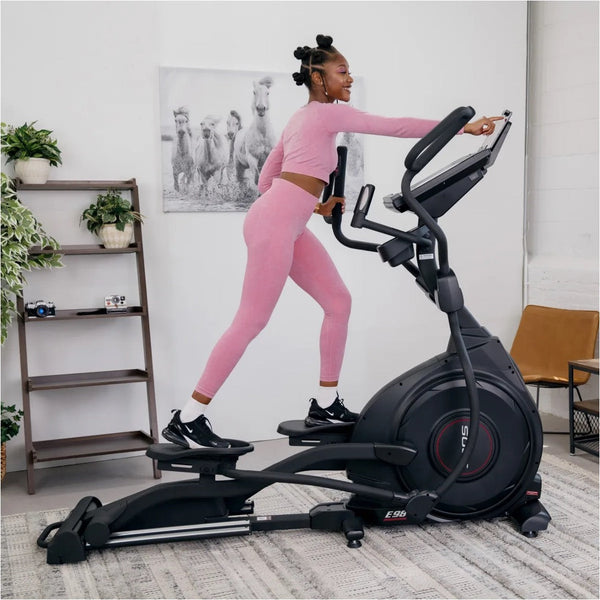
An elliptical trainer is a popular low-impact cardio machine used in both home and gym settings. It’s designed to replicate a walking or running motion without the harsh impact on your joints, making it a comfortable option for regular cardio workouts.
Because your feet stay in contact with the pedals throughout the movement, the motion feels smooth and continuous. This makes it especially appealing for beginners, people returning to exercise, or anyone looking for a joint-friendly way to stay active. Many ellipticals also include moving handlebars, allowing you to engage your upper body while you train.
Muscles Worked on an Elliptical
An elliptical provides a balanced full-body workout, with emphasis on both the lower and upper body, though at a moderate intensity compared to incline-focused machines.
- Quadriceps: involved in the forward stepping motion
- Hamstrings: engaged during the backward phase of movement
- Glutes: activated throughout the stride
- Calves: support each step
- Core: helps maintain posture and stability
- Upper body (chest, back, arms): engaged when using the moving handlebars
Calories Burned: Cardio Climber vs Elliptical
For most people deciding between a cardio climber and an elliptical, maximizing calorie burn is the top priority. However, achieving long-term fitness and weight loss goals is rarely a one-size-fits-all process. While many find success through routine exercise and nutrition alone, sustainable results often involve a broader strategy.
Recently, anyone seeking an overview of tirzepatide options or other medical weight loss treatments is advised to keep up with regular cardiovascular exercise. Pairing consistent workouts with a treatment plan ensures that as the weight comes off, you are also safeguarding your heart health and preserving vital muscle mass.
Here is a closer look at how both machines compare when it comes to torching calories during your workouts:
Calories Burned on a Cardio Climber
A cardio climber can burn roughly 600 to 800 calories per hour, depending on intensity, pace, and individual effort.
This higher output comes from the continuous climbing motion, which keeps your muscles under constant tension without relying on momentum, making every step more energy-intensive.
Calories Burned on an Elliptical
An elliptical typically burns about 270 to 378 calories in 30 minutes, depending on body weight and workout intensity.
For reference:
- ~270 calories for a 125-pound person
- ~324 calories for a 155-pound person
- ~378 calories for a 185-pound person
Actual burn can vary based on effort level, muscle mass, and workout duration, with more intense sessions increasing total calorie expenditure.
Why the Cardio Climber Burns More Calories
The main reason the cardio climber leads in calorie burn is its sustained uphill motion. Unlike the elliptical, it doesn’t allow your body to rely on momentum, so your muscles stay engaged throughout the entire workout, increasing overall energy demand and calorie use per minute.
Benefits of Cardio Climbers vs Ellipticals
Cardio Climber Benefits
The cardio climber combines cardio and strength training in one workout. Its climbing motion places greater emphasis on the glutes, hamstrings, calves, and core, while the moving handlebars help engage the upper body. Because your muscles remain active throughout the workout, it supports higher calorie burn, efficient fat-loss sessions, and long-term weight management.
Elliptical Benefits
The elliptical is a beginner-friendly machine that provides smooth, low-impact cardio for users of all fitness levels. Its natural stride is easy to learn, while the moving handlebars add upper-body engagement for a balanced full-body workout. Adjustable resistance also allows you to increase workout intensity gradually as your fitness improves.

Ellipticals provide a smooth, natural movement that makes them a popular choice for beginners and anyone seeking comfortable daily cardio.
Cardio Climber vs Elliptical: Key Differences in Muscles Worked, Calorie Burn & Training Benefits
|
Feature |
Cardio Climber |
Elliptical |
|
Movement Style |
Constant incline climbing motion |
Smooth, natural stride |
|
Lower Body Muscles |
High activation (glutes, hamstrings, quads, calves) |
Moderate full lower-body engagement |
|
Upper Body |
Active with handlebars |
Active with handlebars |
|
Core Engagement |
High due to forward lean |
Moderate for stability |
|
Calorie Burn |
~600–800 calories per hour (varies by intensity) |
~270–378 calories per 30 minutes (varies by body weight & effort) |
|
Workout Type |
Strength + cardio focused |
Endurance-focused cardio |
SOLE Fitness: Built for Home Cardio That Actually Performs

Durable home fitness equipment can make it easier to stay consistent with your exercise routine and support long-term fitness goals.
The best choice between a cardio climber and an elliptical ultimately depends on your fitness goals, but both require equipment that’s stable, durable, and built for consistent home use. At SOLE Fitness, we focus on delivering reliable cardio machines that support everything from steady endurance training to higher-intensity workouts.
We are recognized for our commercial-grade build quality across treadmills, ellipticals, bikes, rowers, and strength equipment. With powerful HP motors, advanced cushioning systems, Bluetooth connectivity, and integration with the free SOLE+ app, our machines are designed for long-term performance without unnecessary complexity or subscription fees. Check out the SOLE range to see what fits your home setup.
Frequently Asked Questions (FAQs)
Is a Cardio Climber Better Than an Elliptical for Weight Loss?
The cardio climber often has an edge for weight loss because it creates a more demanding workout with greater overall muscle engagement. Still, the most effective machine is the one you can use consistently, since regular activity over time matters more than short bursts of intensity. The climber may also support better long-term body composition, while the elliptical is easier to sustain for longer sessions.
Can Beginners Use a Cardio Climber?
Yes, beginners can use a cardio climber, but it’s best to start slowly and build up gradually due to its higher effort level. Most users adapt quickly to the movement, and short, consistent sessions help build endurance and confidence over time.
Does the Elliptical Work the Same Muscles as the Cardio Climber?
Both machines target similar muscle groups, including the legs and core, but the cardio climber places more emphasis on the lower body, especially the glutes and hamstrings. The elliptical provides a more balanced and moderate engagement, making it less demanding overall.
Which Cardio Machine Is Better for a Home Gym Setup?
Both the cardio climber and elliptical can fit well into a home gym, but the right choice depends on if you prefer higher-intensity, time-efficient workouts or smoother, more sustainable cardio sessions. For building a reliable home setup, SOLE Fitness offers durable, performance-focused ellipticals and other cardio equipment designed to support different fitness levels and long-term training goals.
Is the Elliptical or Cardio Climber Better for Bad Knees?
Both machines are low-impact, but the elliptical is generally gentler on the knees due to its smooth, continuous motion. The cardio climber can still be used safely with proper form, but it places more sustained demand on the lower body, so comfort level and existing conditions should guide the choice.
*Disclaimer: Products and prices mentioned in this article are accurate as of the date of publication and are subject to change. Please visit the official SOLE website for the most current information.