Key Takeaways
-
CHP (Continuous Horsepower) is a lab measurement taken under steady voltage and fixed load, while HP (Horsepower) shows what the motor delivers during a real home workout.
-
Household voltage swings, belt friction, and deck resistance always lower the power reaching the belt, so real output sits below the CHP figure on the spec sheet.
-
CHP testing isn't standardized across brands, so two treadmills with matching CHP ratings can feel noticeably different once they're set up at home.
-
HP is the more reliable number for comparison shopping; pair it with motor warranty length, frame construction, and weight capacity before deciding.
-
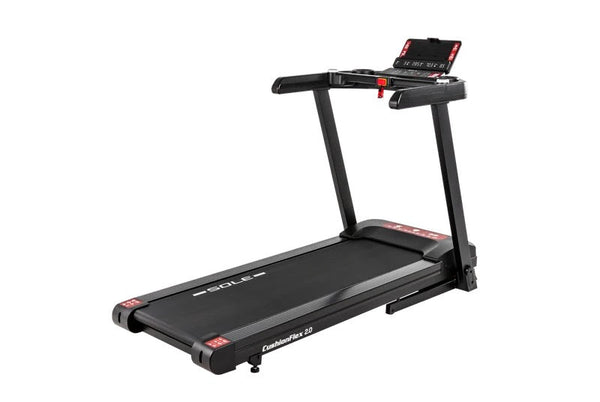
SOLE Fitness lists motor power in HP, from the 3.0 HP F63 for walking and jogging to the 4.0 HP F89 for daily running, with lifetime frame and motor warranties available on select models.
HP, Not CHP, Predicts Real Treadmill Performance
HP predicts how a treadmill performs in your home better than CHP does, because HP is measured under a real user on a standard outlet, while CHP comes from a lab bench. Most shoppers assume a higher number always means a stronger machine, but the two ratings aren't measured the same way, so lining them up side by side compares a controlled test to real-world use.
Picking a motor based on CHP alone can backfire in small ways that add up. A rating that looks strong on paper can still lag on incline changes, run warmer in a closed room, or wear down faster under a heavier stride, and none of that shows up in a steady lab test.
SOLE Fitness addresses this by publishing HP instead of CHP across its lineup, so shoppers can match motor strength to their actual routine, from casual walking to daily running.
|
Award-Winning Commercial-Grade Treadmills for Your Home
Why Choose SOLE: ✓ Commercial-grade steel frames with up to 4.0 HP motors 30-Day Money-Back Guarantee: Love it or return it, no questions asked. |

CHP vs HP: The Core Difference
Both CHP (Continuous Horsepower) and HP (Horsepower) describe motor power, but they come from different places.
CHP is a controlled testing figure produced under laboratory conditions. HP, often called working horsepower, is the practical measure of what a motor delivers in a home setting, under a real user, on a real floor, plugged into a standard household outlet.

The motor and control system work together to maintain consistent treadmill performance.
Definition
HP is the motor's horsepower in everyday use. It's the number most closely tied to what you actually feel underfoot: how the belt holds speed when you step on, how it responds to incline, how it behaves on a normal 120V home circuit.
CHP is the output a motor sustains in a manufacturer's controlled test environment: steady voltage, regulated temperature, standardized load. It's a useful engineering benchmark, but it describes a test bench, not a bedroom or a garage. Because testing conditions aren't standardized across the industry, CHP figures also aren't always directly comparable from one brand to the next.
Power Output
HP reflects the power available after real-world losses: household voltage fluctuation, belt friction, deck resistance, and drive-system inefficiency. Even small losses at each point add up, which is why the power reaching the belt is always lower than the power leaving the motor.
CHP reports output under optimized conditions where those variables are minimized or removed, which is why a CHP figure can read higher than what the same motor produces in a home.
Operating Duration
HP covers the full range of how a treadmill is actually used, short walks, interval workouts with speed and incline changes, and longer steady runs.
CHP is specifically a sustained-load measurement, based on continuous operation at a fixed rate. Most home workouts aren't fixed-rate, so the testing scenario rarely mirrors a real session. A typical 30-minute workout involves repeated acceleration, deceleration, and incline shifts that a steady-state test never captures.
Workout Performance
HP better predicts belt stability, responsiveness during speed changes, and how the treadmill handles heavier users or steep inclines. It's also what determines whether the belt feels steady during your foot strike instead of hesitating under load.
CHP doesn't account for those variables, so two treadmills with identical CHP ratings can feel noticeably different once they're in a home. Deck design, roller size, and belt quality all influence the experience in ways the rating never reflects.
Heat & Motor Strain
HP relates directly to how hard the motor works in your environment, where airflow, ambient room temperature, and dust all affect cooling and long-term wear. A motor running comfortably within its working range stays cooler and lasts longer over years of use.
CHP is measured with controlled cooling and ventilation, so it can't tell you how a motor will handle a warm upstairs room or an unventilated basement. Placement and airflow in your space often matter more than a few tenths of a point on a spec sheet.
Usefulness for Buyers
HP is the more practical figure for comparison shopping, because it's grounded in the conditions you'll actually use the machine in. Match it to your routine: light walking asks far less of a motor than daily running.
Treat CHP as supporting technical data worth noting, but not the number to base a purchase decision on. Pair the HP rating with motor warranty length, frame construction, and weight capacity for a fuller picture of durability, since a strong warranty often signals more about long-term confidence than any horsepower figure alone.
How to Verify a Treadmill's Motor Rating?
A treadmill's advertised motor rating doesn't always tell the full story. Before buying, take a few extra steps to confirm what the motor actually delivers in a home setting.

Checking the manufacturer's specifications helps verify the treadmill's advertised motor rating.
Check the Motor Label Directly
If you can inspect the treadmill in person, look at the motor label under the motor cover. It lists the manufacturer's own rating for that specific motor, which is more dependable than a headline figure on a spec sheet. For online purchases, ask the retailer for a photo of the motor label or the official motor specifications.
What to Ask the Retailer Before You Buy
Ask directly: "What horsepower is this motor, and what does that rating mean in normal home use?" A retailer who can answer clearly is a good sign. One who can only point to a short-burst peak figure, or who can't explain the rating at all, isn't giving you enough to compare on. Ask about the motor warranty too; the length of coverage often says more about a manufacturer's confidence than the horsepower number itself.
Why SOLE Lists HP
At SOLE, we list motor power in HP because it describes the motor as you'll actually use it: at home, on a standard circuit, under a real user. That makes it the more practical figure for comparing machines.
The motor is only part of the picture, though. We back our treadmills with a lifetime warranty on the frame and motor, plus a 30-day satisfaction guarantee when you buy direct. Add cushioned decks and cooling fans, free curbside shipping, and the SOLE+ app, and that combination says more about durability than horsepower alone.
Keep in mind that warranty coverage, included extras, and other features can vary by model, so check the specific treadmill’s details before deciding.
CHP vs HP Treadmill Motor: Comparison Table
|
Aspects |
HP (Working Horsepower) |
CHP (Continuous Horsepower) |
|
What It Measures |
Motor output in everyday home use |
Sustained output in a controlled test environment |
|
Test Conditions |
Standard 120V household circuit, real user, real floor |
Steady voltage, regulated temperature, standardized load |
|
Power Reported |
Accounts for real-world losses: voltage fluctuation, belt friction, deck resistance |
Measured with those variables minimized, so the figure often reads higher |
|
Workout Type Reflected |
Full range: walks, intervals with speed and incline changes, steady runs |
Continuous operation at a fixed rate |
|
Predicts Real Performance |
Belt stability, responsiveness to speed changes, handling of inclines and heavier users |
Doesn't account for these; identical ratings can feel different in practice |
|
Heat & Motor Strain |
Tied to your actual space: airflow, room temperature, dust |
Measured with controlled cooling and ventilation |
|
Cross-Brand Comparison |
Grounded in conditions every buyer shares |
Testing isn't standardized industry-wide, so figures aren't always comparable |
|
Use When Buying |
Primary figure, match it to your routine |
Supporting technical data, not the deciding number |
SOLE Fitness Lists HP So You Know What You're Buying

SOLE Fitness treadmills are designed for long-term performance with durable construction and powerful motors for home workouts.
Choosing a treadmill motor comes down to one question: how will this machine perform in your home, during the workouts you'll actually do? A rating measured on a test bench can't answer that. What matters is the power the motor delivers on your floor, on a standard outlet, under your body weight, week after week.
That's the standard we build to at SOLE. Our lineup runs from the 3.0 HP F63 for walking and jogging up to the 4.0 HP F89 for running. Each treadmill includes a frame warranty and is available with financing at checkout. Browse our full treadmill range and find the HP rating that fits your training.
Frequently Asked Questions (FAQs)
What's the difference between HP and CHP on a treadmill?
HP describes what the motor delivers in real home use, on a standard household circuit, under an actual user. CHP is a rating produced under controlled test conditions. Both describe the same motor, but HP is the more practical figure when you're comparing machines you'll use at home.
Does a bigger motor make a treadmill last longer?
Generally yes. A motor with capacity above what your routine demands doesn't have to work as hard, which reduces heat and wear over years of use. Motors are expensive to replace, so it's worth choosing carefully, and a long motor warranty signals the manufacturer's confidence in its workmanship.
Is 3.0 HP enough for running?
For most runners, yes. 3.0 HP is the common threshold recommended for running rather than walking. If you run daily, train at higher speeds, or weigh more, stepping up to 3.5 HP or higher gives the motor more headroom and reduces strain over time.
Is a higher HP treadmill louder?
Not necessarily. Noise depends more on motor type and build quality than the rating itself. Brushless motors and heavier frames typically run quieter, so a well-built 3.5 HP treadmill can be quieter than a cheaper 2.5 HP one.
Why choose SOLE Fitness treadmills?
At SOLE Fitness, we build treadmills you own outright, no subscription to press start. The lineup covers every routine, from the 3.0 HP F63 for walking and jogging to the 4.0 HP F89 for serious daily running, all on commercial-grade steel frames with cushioned decks.
Coverage varies by model, and many of our treadmills include lifetime frame and motor warranties. For example, the ST90 carries 5-year coverage on both, and the motor-free C80 has a lifetime frame warranty. All SOLE treadmills come with a 30-day satisfaction guarantee when you buy direct, and financing is available at checkout; the SOLE+ app is also free.
*Disclaimer: Products and prices mentioned in this article are accurate as of the date of publication and are subject to change. Please visit the official SOLE website for the most current information.