Key Takeaways
-
Every elliptical heart rate zone is calculated as a percentage of your maximum heart rate (MHR), which is estimated using the 220-minus-age formula.
-
The fat-burning zone (50–70% MHR) supports fat loss, the aerobic zone (70–80% MHR) builds endurance, and the anaerobic zone (80–90% MHR) supports short intervals.
-
A man in his 30s targets 91–133 bpm for fat-burning, 127–152 bpm for aerobic fitness, and 145–171 bpm for anaerobic intervals.
-
You can monitor heart rate with built-in handlebar sensors for casual training or Bluetooth chest straps and wearables for higher accuracy.
-
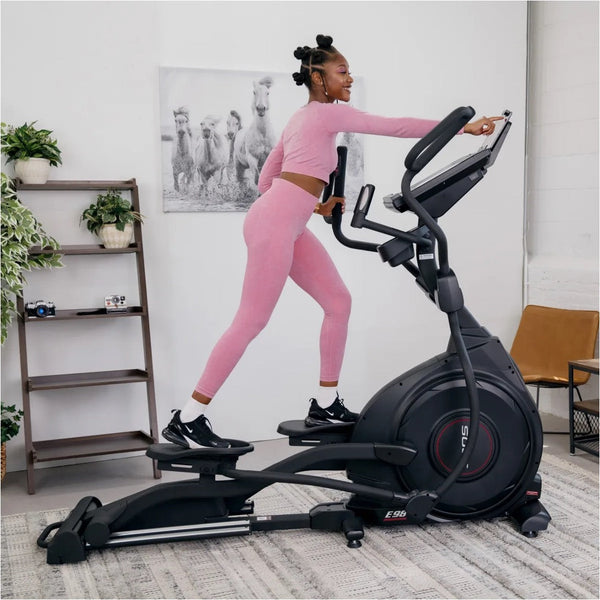
At SOLE Fitness, our ellipticals include integrated heart rate sensors, chest strap compatibility, and Bluetooth connectivity to the free SOLE+ app for heart rate monitoring and instructor-led workouts.
What is the Right Elliptical Heart Rate for Each Age Group?
Your target heart rate on the elliptical depends on your age and your session goal. A 25-year-old man doing anaerobic intervals may safely work near 170 bpm, while that same reading for a 50-year-old would mean training at his estimated maximum, a pace his body can't safely sustain. The difference is not fitness level. It is physiology: maximum heart rate declines by roughly 10 bpm every decade, regardless of how well-conditioned the heart is.
Two formulas estimate your maximum heart rate (MHR). The standard formula is 220 minus your age: a 35-year-old gets 185 bpm, a 55-year-old gets 165 bpm. The Tanaka formula (208 minus 0.7 times your age) tends to run slightly higher for older adults.
Whichever you use, the three training zones sit at fixed percentages of that number. The chart below breaks each zone into exact BPM ranges for every decade from the 20s through 60 and above.
|
Smooth, Natural Motion for Every Body. Top-Rated Home Fitness Ellipticals!
Why Choose SOLE Ellipticals: ✓ Whisper-quiet eddy current resistance system 30-Day Money-Back Guarantee: Love it or return it, no questions asked. |

The Three Heart Rate Zones Every Man Should Know
Fat-Burning Zone: 50–70% of MHR

In the fat-burning zone, you’re working out at about 50 to 70% of your maximum heart rate.
This is an easy, conversational effort you can hold for 45–60 minutes. Your body burns stored fat for energy instead of carbs, making this zone the go-to for fat loss and overall heart health. It also builds the aerobic base that makes harder sessions more effective, so most of your elliptical time should live here.
Aerobic Zone: 70–80% of MHR
This is where cardio fitness actually gets built. You can still talk in short sentences, but it takes real effort. Over time, this zone improves endurance, recovery, and overall stamina. Most men drift below this range at default resistance settings, so turn up the resistance until your monitor confirms you're in the right zone, then hold that pace.
Anaerobic Zone: 80–90% of MHR
This is the hardest zone. Your body can't take in oxygen fast enough to keep up, so you can only push here in short bursts. It's for intervals, sprints, and maximum-effort work. It delivers results fast but demands longer recovery.
Men over 50 should limit this zone to one or two sessions per week, and younger men can use 30-to-60-second hard efforts followed by two to three minutes of recovery in the fat-burning zone.
Elliptical Heart Rate for Men by Age Group
The chart below breaks down estimated MHR and the three primary training zones, fat-burning, aerobic, and anaerobic, for men across five age decades. All zones are calculated from the standard 220-minus-age formula.
Ages 20–29: MHR 191–200 bpm
Men in their twenties have the highest maximum heart rates of any age group, so their training zones sit at the upper end of the bpm spectrum. The fat-burning zone runs from roughly 96 to 140 bpm, the aerobic zone from 134 to 160 bpm, and the anaerobic zone from 153 to 180 bpm.
At this age, the elliptical is an excellent tool for building a strong aerobic base while protecting joints from the cumulative wear of high-mileage running.
Ages 30–39: MHR 181–190 bpm
The drop from the 20s to the 30s is modest, typically just 10 bpm off the MHR ceiling, but the training zones shift enough to matter. Fat-burning falls between 91 and 133 bpm, aerobic between 127 and 152 bpm, and anaerobic between 145 and 171 bpm.
A 30-minute session locked into the aerobic zone (70–80% MHR) delivers meaningful cardiovascular stimulus without the recovery demands of a hard run or a high-intensity interval session on a treadmill.
Ages 40–49: MHR 171–180 bpm
MHR drops to the 171–180 bpm range, and recovery between hard sessions starts taking noticeably longer. The fat-burning zone runs from 86–126 bpm, aerobic from 120–144 bpm, and anaerobic from 137–162 bpm. Staying within these ranges, rather than chasing the numbers from a decade earlier, keeps progress consistent and sustainable.
Ages 50–59: MHR 161–170 bpm
By the fifties, the elliptical's low-impact design shifts from a preference to a genuine physical advantage. Joint cartilage has absorbed decades of stress, and the elliptical's low-impact stride lets men maintain high cardiorespiratory output without aggravating the knees, hips, or ankles. The fat-burning zone is 81–119 bpm, aerobic from 113–136 bpm, and anaerobic from 129–153 bpm.
Ages 60 & Above: MHR 151–160 bpm
Men over 60 benefit enormously from consistent elliptical training. Even at moderate effort, the machine can push cardiovascular output into the aerobic zone (106–128 bpm) without a single footstrike pounding the joints. The fat-burning zone sits between 76 and 112 bpm, which is achievable and sustainable for 30- to 60-minute sessions.
Elliptical Heart Rate Chart for Men
|
Age Group |
Est. MHR (bpm) |
Fat-Burning Zone 50–70% |
Aerobic Zone 70–80% |
Anaerobic Zone 80–90% |
|
20–29 |
191–200 bpm |
96–140 bpm |
134–160 bpm |
153–180 bpm |
|
30–39 |
181–190 bpm |
91–133 bpm |
127–152 bpm |
145–171 bpm |
|
40–49 |
171–180 bpm |
86–126 bpm |
120–144 bpm |
137–162 bpm |
|
50–59 |
161–170 bpm |
81–119 bpm |
113–136 bpm |
129–153 bpm |
|
60+ |
151–160 bpm |
76–112 bpm |
106–128 bpm |
121–144 bpm |
How Do You Track Your Heart Rate on an Elliptical?
Built-In Elliptical Handlebar Sensors

Premium ellipticals, such as SOLE Fitness ellipticals, feature handlebar sensors that make it easier to track your heart rate while you exercise.
Most mid-range and premium ellipticals include contact heart rate sensors embedded in the handlebars. You grip the metal contacts, and within 10 to 15 seconds the machine displays your current BPM on the console.
The tradeoff is accuracy. Handlebar sensors pick up a faint electrical signal through your palms, and any movement, moisture variation, or loose grip can introduce error.
Chest Straps & Wrist Wearables
When accuracy matters, the chest straps and wrist wearables are better options. Chest straps use electrocardiography to detect the electrical signal from each heartbeat directly, which makes them the most accurate option.
Wrist wearables read blood flow optically, so they sit between grip sensors and chest straps for accuracy. If you're doing steady-state fat-burning or aerobic zone sessions, a quality wrist wearable paired to your elliptical's console can also be sufficient.
Heart Rate Training Made Simple With SOLE Fitness

SOLE Fitness ellipticals come with curbside shipping and are backed by a 30-day satisfaction guarantee.
Heart rate is the most reliable signal your body sends during cardio, and on the elliptical, it's easier to track than on almost any other machine. When you know your zone, every minute you spend training becomes intentional.
At SOLE Fitness, our ellipticals include integrated heart rate sensors on the handlebars, giving you live BPM readings without switching to a separate device. Bluetooth pairing supports chest straps for the higher accuracy that interval training requires, and every reading syncs with the free SOLE+ app for post-session review. Plus, every purchase includes a 30-day satisfaction guarantee. Shop SOLE Fitness ellipticals today.
Frequently Asked Questions (FAQs)
What heart rate should you be at on an elliptical?
Your target heart rate on the elliptical depends on your goal and your age. For fat loss, aim for 50–70% of your maximum heart rate (220 minus your age). For cardiovascular fitness and endurance building, target 70–80% of MHR. For high-intensity interval work and peak performance, push into the 80–90% range for short bursts.
Do elliptical exercises strengthen the heart?
Yes, and the elliptical is particularly effective because its low-impact design lets men sustain an elevated heart rate longer than higher-impact modalities without accumulating joint stress. Sustained aerobic training in the 70–80% MHR range drives cardiovascular adaptation through increased stroke volume and improved capillary density in working muscles.
Is a heart rate of 170 while using an elliptical healthy?
Whether 170 bpm is healthy on the elliptical depends entirely on your age. For a 25-year-old man with an estimated MHR of 195 bpm, 170 bpm is about 87% of maximum, which is a solid anaerobic-zone effort. For a 50-year-old man with an estimated MHR of 170 bpm, that same reading means you're at 100% of your estimated maximum, which is not a sustainable or advisable training intensity for extended durations.
Is it better to go fast or slow on an elliptical?
Neither speed nor pace is the right variable to optimize; heart rate zone is. A slow stride at high resistance can push your heart rate into the aerobic zone more effectively than a fast stride at minimal resistance, while also recruiting more muscle mass and burning more calories per minute. The most effective elliptical approach for most men is a moderate, controlled stride rate with resistance adjusted actively to maintain the target heart rate zone for the session's goal.
Can I sync heart rate data from a SOLE Fitness elliptical to the SOLE+ app?
Yes. At SOLE Fitness, our ellipticals sync heart rate data automatically to the free SOLE+ app via Bluetooth. Session heart rate averages, peak BPM, and time spent in each training zone are stored in your training log, so you can track progress across weeks and months. The app also includes instructor-led workouts and requires no monthly subscription.
*Disclaimer: Products and prices mentioned in this article are accurate as of the date of publication and are subject to change. Please visit the official SOLE website for the most current information.