Key Takeaways
-
Ellipticals keep the legs loaded through a gliding, weight-bearing stride that engages the glutes, hip flexors, quads, and hamstrings without ground impact, suiting mild to moderate hip pain.
-
Recumbent bikes remove weight from the hips entirely by seating the rider in a supported, reclined position, making them the safer choice for severe arthritis, bursitis, or post-surgery recovery.
-
The elliptical moves the hip through a larger arc of flexion, extension, and slight rotation, which builds mobility over time, while the bike limits motion to a narrower, more controlled range.
-
Neither machine is universally better for bad hips. The right pick depends on your current pain level, whether you can tolerate weight-bearing movement, and what your recovery phase allows.
-
At SOLE Fitness, we offer commercial-grade ellipticals and bikes engineered for hip-friendly performance, backed by lifetime frame warranties, free shipping, and free access to the SOLE+ app.
How Ellipticals & Bikes Handle Hip Stress Differently
Ellipticals and stationary bikes both protect the hip from ground impact, but they suit different stages of hip pain. An elliptical is the stronger option when the joint can tolerate weight-bearing movement, while a recumbent bike is the safer choice when it cannot.
The deciding factor is load. How much mechanical stress your hip can handle right now determines which machine helps and which one aggravates the problem. Severity, diagnosis, and recovery phase all shift that threshold, which is why the same person may need a different machine six months from now than they do today.
Throughout this comparison, "bike" refers to a recumbent bike. Upright bikes put the rider in a forward lean that increases hip flexion and loads the front of the joint, making them a poorer fit for most hip conditions, so the recumbent is a fairer comparison against an elliptical.
SOLE Fitness builds both ellipticals and recumbent bikes with durable frames, adjustable settings, and the kind of low-impact engineering that hip-sensitive users need to train consistently at home.
|
Premium Home Gym Equipment with Award-Winning Quality! Complete Your Home Gym:
Why Choose SOLE: ✓ Commercial-grade quality for home use 30-Day Money-Back Guarantee: Love it or return it, no questions asked. |

How the Elliptical Affects Your Hips
An elliptical trainer moves your legs in a smooth, oval path that removes ground impact while keeping your legs engaged. Each stride keeps your foot in constant contact with the pedal, which eliminates the jarring heel strike that makes treadmills and outdoor jogging so problematic for hip joints.
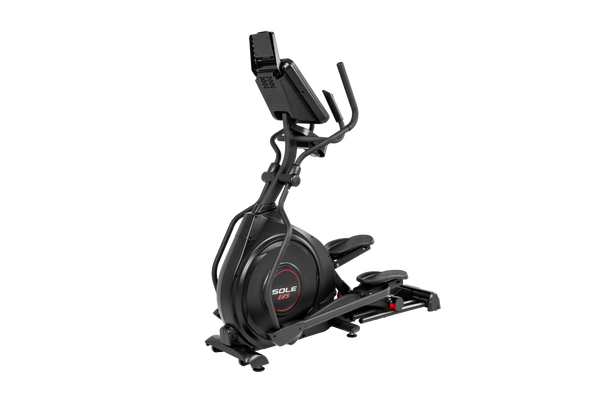
The three-position adjustable pedals on machines like the SOLE E35 Elliptical let you shift your foot placement if a full stride feels uncomfortable on your hips, and if you need to change the stride length itself, our E95S elliptical comes with an adjustable 18–24 inch stride.

What sets the elliptical apart is that it is weight-bearing. Your legs are supporting your body throughout the motion, which places more mechanical load on the hip than a seated bike does.
How the Stationary Bike Affects Your Hips
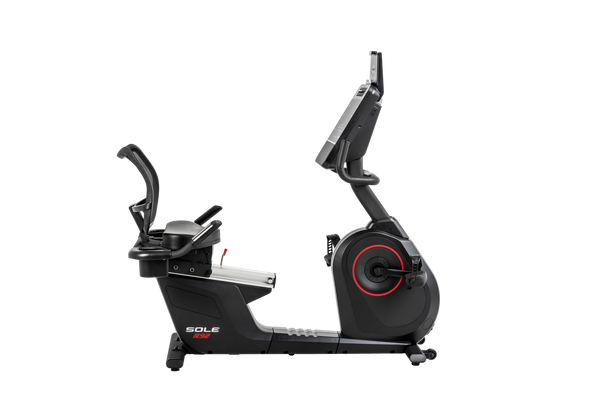
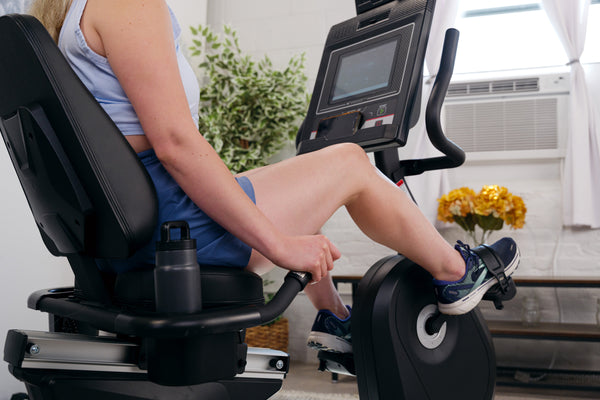
Stationary bikes are widely used in hip rehabilitation. Exercise cycling is recommended after hip replacement to help regain muscle strength and hip mobility or during flare-ups of hip arthritis. On a recumbent bike like the SOLE R92, your weight is distributed across a wide, chair-like seat with back support, keeping your hips in a comfortable, neutral position while you pedal.
Pedaling on a stationary bike is a repetitive, circular motion that gently moves the hip through a controlled range of flexion and extension. This can help maintain joint mobility and lubricate the cartilage without overloading it. However, because the bike is non-weight-bearing, it does not provide the bone density benefits that an elliptical does.

The seated position of a recumbent bike reduces the load placed on the hip joint compared to any standing exercise.
Elliptical vs Bike: Joint Load & Impact
Elliptical Joint Load
The elliptical is weight-bearing, which means your legs support your body mass through every stride. That load is what stimulates bone remodeling and strengthens the connective tissue around the hip, a benefit a non-weight-bearing machine cannot replicate. For someone with mild to moderate hip pain, this level of mechanical stress is manageable and often therapeutic over time.
The key is that the load arrives without impact. Your feet never leave the pedals, so there is no heel strike, no landing force, and no sudden compression through the joint.
Recumbent Bike Joint Load
A recumbent bike removes nearly all load from the hip by distributing the rider's weight across a wide, supported seat. The joint still moves through flexion and extension with each pedal stroke, but without bearing the body's mass, mechanical stress on the cartilage and connective tissue drops to near zero.
That makes it the safer option during phases when the hip cannot tolerate weight-bearing movement, such as acute arthritis flare-ups, early post-surgical recovery, or active bursitis.
Muscle Groups Targeted Around the Hip
Muscles Worked on the Elliptical
The elliptical engages the glutes, hip flexors, quadriceps, and hamstrings through each stride, distributing the work across the muscles that stabilize and protect the hip joint. Pedaling in reverse shifts more of the load toward the quadriceps and changes the recruitment pattern around the hip, which is useful for targeting weak points without switching machines.
The moving handles also bring the core and upper body into the session. That full-body engagement raises calorie burn, but more importantly for hip health, it reduces how much each stride depends on the hip joint alone to drive the movement.

Ellipticals provide a more varied range of motion for the hips, which may improve flexibility.
Muscles Worked on the Bike
The stationary bike primarily targets the quadriceps and hamstrings through a repetitive pedaling cycle. Glute activation is lower than on the elliptical, though it increases when you raise the resistance and position the seat so your leg reaches near-full extension at the bottom of each stroke.
Because the upper body stays stationary, the bike isolates the lower limbs almost entirely. That makes it a narrower workout overall, but for someone in early hip recovery, the controlled, predictable muscle demand is an advantage rather than a limitation.
Ease of Use & Accessibility
Getting On & Off the Elliptical
Mounting an elliptical means stepping up onto elevated foot pedals and finding your balance before you start moving. For users with stable hips and reasonable mobility, this is straightforward.
For anyone with significant pain, stiffness, or balance concerns, that initial step-up and the standing position throughout the session add difficulty the workout itself does not require.
Getting On & Off the Recumbent Bike
A recumbent bike sits low to the ground with a wide, walk-through frame that requires no step-up and no balance check. The rider lowers into a supported seat, adjusts the position, and begins pedaling from a fully stable base.
For seniors, post-surgery patients, or anyone whose hip limits how confidently they can stand and balance, the recumbent bike removes the access barriers that keep people off the machine entirely.
Elliptical vs Bike for Bad Hips: Comparison Table
|
Category |
Elliptical |
Recumbent Bike |
|
Impact Level |
Low-impact, weight-bearing |
Low-impact, non-weight-bearing |
|
Joint Load on Hip |
Moderate (body weight supported by legs) |
Minimal (weight fully supported by seat) |
|
Range of Motion |
Larger, flexion, extension, slight rotation |
Narrower, controlled flexion and extension |
|
Bone Density Benefit |
Yes, weight-bearing stimulates bone remodeling |
No, non-weight-bearing provides no bone stimulus |
|
Muscles Targeted |
Glutes, hip flexors, quads, hamstrings, abductors |
Quads, hamstrings (less glute activation) |
|
Ease of Access |
Moderate, requires stepping up and balancing |
High, low step-through, fully supported seating |
|
Best For |
Moderate hip pain, full-body workout, bone health |
Severe hip pain, post-surgery recovery, limited mobility |
|
Upper Body Engagement |
Yes, handles engage arms and core |
Minimal |
|
Adjustability for Hip Comfort |
Incline, foot pedal position and angle |
Seat position, resistance level |
Get Hip-Friendly Cardio Equipment at SOLE Fitness
Users with mild to moderate hip issues typically benefit from the elliptical's weight-bearing motion, while users with severe arthritis, hip impingement, or post-surgery recovery generally do better on a recumbent bike. Neither machine is universally best. Match the machine to your current hip status and adjust as you recover.
At SOLE Fitness, we build ellipticals and bikes that meet users at every stage of hip health. Our ellipticals offer quiet ECB magnetic resistance, adjustable pedal positions, and an adjustable 18–24 inch stride on the E95S, while our recumbent bikes deliver 20 levels of resistance on the R92 and 40 on the LCR, with supported seating that removes load from the hip joint. Shop SOLE Fitness today.
Frequently Asked Questions (FAQs)
What is the best exercise machine for people with bad hips?
The best exercise machine for bad hips depends on how severe your condition is. A recumbent stationary bike is generally the safest option for severe hip pain or post-surgical recovery because it is non-weight-bearing and fully supported. For moderate hip pain, an elliptical trainer with adjustable stride length offers a more complete workout while still keeping impact low. Always consult your doctor or physical therapist before starting a new exercise program if you have a diagnosed hip condition.
What type of bike is best for people with bad hips?
A recumbent bike is significantly better for bad hips than an upright stationary bike. The reclined seating position reduces hip flexion angle, eliminates compression at the front of the hip joint, and distributes your body weight across the seat rather than concentrating it through the hip. Upright bikes require more forward lean and greater hip flexion, which can aggravate conditions like hip impingement, bursitis, and arthritis.
Can an elliptical machine be bad for hips?
An elliptical can aggravate hip pain if used incorrectly or before the hip is ready for weight-bearing exercise. Using too long a stride length, too high a resistance, or too steep an incline too soon can overload the hip joint and surrounding muscles. Start conservatively, adjust stride length to keep the motion comfortable, and increase intensity gradually over several weeks.
What exercises should be avoided with hip arthritis?
With hip arthritis, exercises most likely to increase pain and stiffness involve high impact, deep hip flexion, or repetitive twisting. This includes running and jogging on hard surfaces, deep squats and lunges that push the hip past 90 degrees of flexion, high-impact aerobics and jump training, and high-intensity stair climbing or stair climbing with excessive forward lean.
What SOLE Fitness equipment is best for people with bad hips?
At SOLE Fitness, we offer ellipticals and bikes built for low-impact use. The R92 recumbent bike suits severe hip pain or post-surgery recovery, with reclined seating that removes weight from the joint, a patented 2° inward pedal design, and 20 levels of eddy current brake resistance. For moderate hip pain, the E35 elliptical pairs a 20-inch stride with a 20-level power incline and three-position adjustable pedals, while the E95S offers a power-adjustable 18–24 inch stride.
*Disclaimer: Products and prices mentioned in this article are accurate as of the date of publication and are subject to change. Please visit the official SOLE website for the most current information.