Key Takeaways
-
Stationary bikes burn more calories minute-for-minute than outdoor cycling, making them the more time-efficient option for weight loss when effort levels are matched.
-
HIIT and REHIT protocols are significantly easier to execute indoors because you control resistance, intervals, and effort without weather, traffic, or terrain interference.
-
Outdoor cycling feels easier and encourages longer sessions, so total duration and social riding dynamics can drive real weight loss even at lower per-minute intensity.
-
Consistency is the biggest predictor of weight loss success, and stationary bikes remove the weather, safety, and scheduling barriers that often derail outdoor riders.
-
At SOLE, we offer a full lineup of stationary bikes built specifically for the structured, results-driven training that produces measurable weight loss over time.
Which Burns More Calories: Stationary Bike or Outdoor Cycling?
Stationary bikes burn more calories per minute than outdoor cycling when effort is matched, which makes them the more efficient choice for weight loss. Most riders assume outdoor cycling burns more simply because it feels harder on hills or into the wind. In reality, the numbers favor indoor training once coasting, traffic stops, and terrain are removed from the equation.
The catch is that outdoor riders often overestimate their effort while indoor riders underestimate theirs, since a fixed bike removes the visual feedback of speed and distance. That gap in perception can lead someone to think a leisurely outdoor ride matches an indoor session when it doesn't. Knowing the difference matters more once you start tracking real progress instead of how a workout feels.
At SOLE, our upright and recumbent bikes give riders exact control over resistance and intervals, so effort on the display matches effort in the legs.
|
Smooth, Silent Rides for Every Fitness Level. Premium Home Fitness Bikes!
 Choose Your Perfect Style:
Why Choose SOLE Exercise Bikes: ✓ Whisper-quiet magnetic resistance won't disturb others 30-Day Money-Back Guarantee: Love it or return it, no questions asked. |
Benefits of Stationary Bikes for Weight Loss
1. Indoor Cycling Is More Time-Efficient
Every second on a stationary bike is an active effort. There's no coasting downhill, no waiting at intersections, and no easing off because of traffic. You control the resistance, the pace, and the output the entire time. This ultimately makes it more time-efficient than cycling outdoors, where unexpected factors come into play.

Stationary cycling burns substantially more calories than walking in the same time window.
2. HIIT & REHIT Are Easier to Execute Indoors
High-Intensity Interval Training (HIIT) and Reduced Exertion HIIT (REHIT) are two of the most effective weight loss protocols available, and both are much easier to execute on a stationary bike. You can dial in exact resistance levels, set precise interval lengths, and hit repeatable effort targets without environmental interference.
During interval training, you burn more calories and increase aerobic fitness faster than you would during a standard steady-state outdoor ride. For example, our SOLE B94 upright bike is built for this kind of training, featuring eddy-current magnetic resistance across 20 levels and a heavy-duty 20 lb flywheel that holds its target intensity through every interval.
3. Consistent Training Leads to Faster Results
Consistency is one of the biggest drivers of weight loss, and stationary bikes remove most of the barriers to it. Bad weather, unsafe roads, and limited daylight can’t interrupt an indoor workout. If you're targeting 10 to 15 minutes of intense cycling three times a week as a beginner, that goal is far easier to protect on a stationary bike than on a road bike.
4. Calorie Burn Is Higher Indoors, Minute for Minute
Indoor cycling is more physically demanding than it looks. A static body posture, restricted airflow that raises body temperature, and the mental monotony of staying in one place all make indoor riding feel harder than an equivalent outdoor ride. Because effort feels higher for the same work, calorie burn per minute ultimately tracks the power you actually produce, so an indoor session matches an outdoor one when the workload is equalized.
Benefits of Outdoor Cycling for Weight Loss
1. Outdoor Cycling Feels Easier
Because outdoor cycling feels less intense, riders consistently log more total time on the bike. A two-hour scenic ride burns a significant number of calories simply through duration, even if the per-minute burn rate is lower than an indoor HIIT session. For people who struggle with the mental grind of intense interval work, outdoor cycling offers a sustainable alternative that still moves the needle on weight loss.
2. Social Rides Keep You Motivated
Group cycling is one of the most underrated weight loss tools available. Riding with others creates a natural accountability structure. You show up because people are expecting you, and you push harder because others are beside you. That social dynamic is nearly impossible to replicate on a stationary bike at home.
For weight loss, long-term consistency beats short-term intensity every time. If joining a local cycling club or weekend group ride is what keeps you moving, that's a legitimate and powerful weight loss strategy.
Stationary Bike vs Outdoor Cycling for Weight Loss: Head-to-Head
Calorie Burn Comparison
Sometimes, outdoor cyclists produce more mean power outdoors than they do indoors. That power difference exists largely because outdoor riders are dealing with real-world variables: wind resistance, terrain changes, and momentum. Indoors, without those variables, riders often underperform compared to their outdoor effort without realizing it.
However, when effort is truly equalized, indoor cycling matches outdoor riding for calorie burn per minute, especially during structured interval sessions.
Which Is Better for Beginners?
For beginners, stationary bikes offer a more controlled and safer introduction to cycling for weight loss. There's no traffic to deal with, no balance concerns at speed, and no unpredictable terrain.
You can start with just 10 to 15 minutes three times per week and build gradually. Outdoor cycling, on the other hand, offers a gentler perceived effort that can make longer sessions feel accessible even for beginners. The most important factor for a beginner is the more sustainable option. Pick that one, build the habit, and then optimize intensity once movement becomes part of your routine.

Stationary bikes can help beginners build more consistent cycling routines free of distractions.
Stationary Bike vs Outdoor Cycling: Comparison Table
|
Factor |
Stationary Bike |
Outdoor Cycling |
|
Calorie Burn (per minute) |
Higher (with matched effort) |
Moderate (varies with terrain) |
|
HIIT Suitability |
Excellent, full control |
Difficult, terrain-dependent |
|
Convenience |
High, no weather or traffic |
Low, weather and route dependent |
|
Session Duration |
Shorter, more intense |
Longer, more leisurely |
|
Motivation |
Requires discipline |
Natural variety keeps it engaging |
|
Bone Density |
May offer limited benefit |
May offer more benefit due to dynamic, weight-bearing movement |
|
Mental Health Boost |
Can support mood through routine and consistency |
Can offer added mood benefits from fresh air and scenery |
|
Beginner Friendly |
Very safe and controlled |
Yes, easier perceived effort |
|
Cost |
Upfront equipment investment |
Ongoing gear and maintenance |
|
Weather Dependent |
No |
Yes |
Train with Purpose & Track Real Progress with SOLE Bikes

SOLE Fitness offers a range of high-grade fitness equipment, including stationary bikes.
Weight loss comes from committing to whichever style you can consistently sustain, then dialing in the intensity, duration, and structure that fit your body and your schedule. For riders who want the fastest path to measurable results, that usually means training indoors where you can control every variable and turn every session into a productive one.
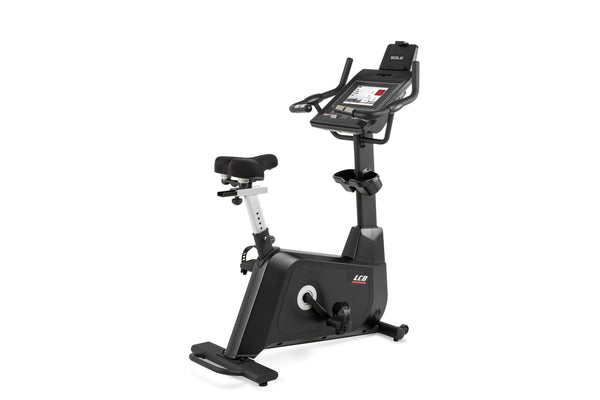
Our bike lineup is designed for structured training that delivers results. Our upright bikes, like the LCB, give you a traditional cycling posture with up to 40 levels of magnetic resistance for structured HIIT work, while our recumbent bikes deliver joint-friendly cardio for longer, lower-impact sessions. Shop the SOLE Bike Collection today.
Frequently Asked Questions (FAQs)
Can outdoor cycling reduce belly fat?
Yes, outdoor cycling can contribute to reducing belly fat, but not through spot reduction. No exercise targets fat loss in a specific area of the body. What outdoor cycling does is create a calorie deficit over time, and as your overall body fat percentage drops, belly fat reduces along with it. To maximize belly fat loss through outdoor cycling, ride at moderate-to-high intensity, choose hilly routes, ride consistently, and manage nutrition alongside training.
Which burns more fat, walking or a stationary bike?
A stationary bike burns more fat than walking in the same time window. Cycling engages larger muscle groups at a higher intensity, generating greater cardiovascular demand and a higher calorie burn per minute. Walking has real health benefits, but as a fat-burning tool, a stationary bike at even moderate effort outperforms walking at a meaningful rate.
What type of cycling burns the most fat?
HIIT on a stationary bike burns the most fat in the shortest amount of time. The combination of intense effort intervals followed by short recovery periods creates a significant afterburn effect, meaning your metabolism stays elevated for hours after the workout ends and continues to burn calories while you rest. One of the most effective fat-burning approaches combines HIIT sessions on a stationary bike two to three times a week with one longer outdoor ride on the weekend.
How long should I cycle to burn fat?
It depends on your intensity. At high intensity, as little as 10 to 20 minutes produces meaningful fat-burning results, especially when you factor in the afterburn effect that extends calorie burn for hours post-workout. At moderate intensity, 30 to 45 minutes is the sweet spot, but for beginners, starting with 10 to 15 minutes three times a week and building toward 30-minute sessions over four to six weeks is both realistic and effective.
Can I find stationary bikes at SOLE Fitness?
Yes, at SOLE Fitness, we offer a full range of stationary bikes designed for the structured, results-driven training that produces real weight loss over time. Our lineup covers recumbent bikes for lower-impact sessions and studio-style indoor cycling bikes for high-intensity interval work. Every model is built with precision magnetic resistance, heavy-duty steel frames, and free access to the SOLE+ app for instructor-led workouts.
*Disclaimer: Products and prices mentioned in this article are accurate as of the date of publication and are subject to change. Please visit the official SOLE website for the most current information.