Key Takeaways
- Elliptical and walking compare across three factors for weight loss: calories burned, muscles worked, and joint impact.
- Elliptical training burns 323 to 401 calories per hour from light to vigorous intensity, while flat walking burns 136 to 340 calories per hour; uphill walking at a 6 to 15% grade can reach up to 573 calories per hour, exceeding even vigorous elliptical work.
- The elliptical engages the upper and lower body simultaneously, hitting the quads, hamstrings, glutes, latissimus dorsi (lats), chest, and biceps, while walking concentrates engagement in the legs and glutes with minimal upper-body involvement.
- The elliptical is zero-impact since feet never leave the pedals, whereas walking produces ground reaction forces of 1.2 to 1.5 times body weight per step; consistency ultimately matters more than which exercise is theoretically superior.
- SOLE Fitness offers the E95 elliptical with a 27-pound flywheel, 20 power incline levels, and 400-pound capacity, plus the F80 and F85 treadmills with 15% incline and Cushion Flex deck cushioning, all backed by lifetime frame warranties and the FREE SOLE+ App.
Elliptical vs Walking for Weight Loss: Which Is Better?
Both elliptical training and walking effectively support weight loss, with the elliptical winning on full-body muscle engagement and zero joint impact, while incline walking on a treadmill can actually burn more calories per hour than even vigorous elliptical work.
The two exercises differ in three areas that matter for weight loss. Elliptical training burns roughly 323 to 401 calories per hour at light to vigorous intensities through a dual-action motion that recruits the quads, hamstrings, glutes, lats, chest, and biceps simultaneously. Flat walking burns 136 to 340 calories per hour, depending on pace. Walking costs nothing outdoors and requires no learning curve, while ellipticals offer weather-proof consistency and zero ground reaction force.
We will break down calorie burn, muscle engagement, and joint impact in detail below. SOLE Fitness supports both modalities, with the E95 elliptical for full-body zero-impact training and the F80 treadmill for high-incline walking, each backed by lifetime frame warranties and the FREE SOLE+ App.
|
Smooth, Natural Motion for Every Body. Top-Rated Home Fitness Ellipticals!
Why Choose SOLE Ellipticals: ✓ Whisper-quiet eddy current resistance system 30-Day Money-Back Guarantee: Love it or return it, no questions asked. |

How Many Calories Do Elliptical & Walking Actually Burn?

Calorie expenditure varies based on intensity, incline, and body weight, with elliptical training and incline walking producing comparable results at the higher end.
Elliptical Calorie Burn
Elliptical calorie expenditure varies based on resistance level, stride rate, and whether you actively use the moving handles. Typical ranges for a 155-pound person:
|
Intensity |
Calories/Hour |
|
Light (easy conversation) |
323 |
|
Moderate (slightly breathless) |
353 |
|
Vigorous (difficult to talk) |
401 |
Heavier individuals burn more calories at the same intensity.
Walking Calorie Burn
Walking calorie expenditure depends heavily on speed and incline. Flat walking burns fewer calories than most people expect:
|
Activity |
Calories/Hour |
|
Slow walk (2.0 MPH, flat) |
136 for 150-lb |
|
Moderate walk (3.0 MPH, flat) |
224 for 150-lb |
|
Brisk walk (3.5 MPH, flat) |
258 for 150-lb |
|
Fast walk (4.0 MPH, flat) |
340 for 150-lb |
|
Brisk walk 2.9 to 3.5 mph, uphill, 6% to 15% grade |
Up to 573 |
Incline walking significantly increases calorie burn. Walking at 3.5 MPH on a 15% incline burns calories comparable to elliptical training while remaining genuinely low-impact.
Muscles Worked: Full-Body vs Lower-Body Focus

The elliptical engages upper- and lower-body muscles simultaneously through its dual-action design, while walking focuses engagement on the legs and glutes.
Elliptical Muscle Engagement
The elliptical's dual-action design, with pedals for legs and moving handles for arms, creates comprehensive muscle activation. The lower body works through the quadriceps as the primary drivers of the forward stride, the hamstrings during the backward portion of each stride, the glutes are activated throughout the motion (especially at higher resistance), the calves stabilize the ankle and assist push-off, and the hip flexors lift the leg through each stride cycle.
When the moving handles are engaged, the upper body comes into play: the latissimus dorsi pulls the handles during the backward motion; the biceps assist the pulling motion; the chest and shoulders push the handles during the forward motion; the triceps assist the pushing motion; and the core stabilizes the torso throughout. Using the moving handles actively engages muscles across both the upper and lower body simultaneously, producing notably greater overall muscle activation than walking or cycling.
Walking Muscle Engagement
Walking primarily targets the lower body muscles with minimal upper-body involvement. The quadriceps extend the knee during each step, hamstrings control leg swing and assist hip extension, glutes act as primary hip extensors (especially on inclines), calves push off with each step, hip flexors lift the leg forward, and the tibialis anterior controls foot placement.
The core provides light stabilization through the abdominals and back muscles, but the arms swing naturally without working against resistance, contributing minimal muscle engagement or development. Walking primarily engages the lower-body muscle groups (legs and glutes), with the upper body contributing little to the workload.
Muscle Development Implications
Elliptical training, with its upper body component, produces more balanced muscle development. Walking, while excellent for leg conditioning, does not meaningfully challenge or develop upper body muscles. For weight loss specifically, more muscle engagement means more calories burned both during exercise and at rest, since muscle tissue is metabolically active.
Impact on Joints

Both exercises protect joints from the repetitive shock of running, with the elliptical eliminating impact entirely and walking producing far less force than higher-impact alternatives.
Elliptical: True Zero Impact
The elliptical eliminates impact entirely. Your feet never leave the pedals, with no foot strike, no ground reaction force, and no jarring. The smooth, continuous motion glides through each stride without the repetitive shock that damages joints over time.
This zero-impact nature makes ellipticals particularly valuable for individuals with knee osteoarthritis, people recovering from lower-limb injuries, those with significant excess weight, where impact forces multiply, and anyone with chronic joint pain that running or even walking aggravates.
Walking: Low Impact (Not Zero)
Walking produces impact, but far less than running. Each step generates ground reaction forces of approximately 1.2 to 1.5 times body weight, compared with 2.0 to 2.9 times body weight during running. This reduced impact makes walking sustainable for most people, but it is not truly impact-free.
Several factors influence walking's joint impact: heavier individuals experience proportionally greater forces; concrete surfaces are harder than trails or treadmill decks; quality walking shoes absorb some impact; faster walking increases impact slightly; and uphill walking reduces impact, while downhill walking increases it.
When Impact Matters Most
For individuals with existing joint problems or significant excess weight, the elliptical's complete impact elimination provides a meaningful advantage. For healthy individuals without joint concerns, walking's low impact is typically well-tolerated and sustainable.
Head-to-Head Comparison: Elliptical vs Walking For Weight Loss Benefits
|
Weight Loss Benefit |
Elliptical |
Walking |
|
Calories burned per hour (moderate effort) |
353 |
224 flat / up to 573 on a 6–15% incline |
|
Upper body involvement |
Yes: arms, chest, back, shoulders |
Minimal |
|
Lower body engagement |
Quads, hamstrings, glutes, calves, hip flexors |
Quads, hamstrings, glutes, calves, hip flexors |
|
Joint impact |
Zero: feet never leave the pedals |
Low (1.2–1.5x body weight per step) |
|
Suitability for joint issues or excess weight |
Excellent: complete impact elimination |
Good for most, less ideal for heavier users or those with knee pain |
|
Time efficiency for calorie burn |
High |
Moderate on flat ground; high on a 6–15% incline |
|
Weather independence |
Full indoor only |
Limited outdoors, full indoors on a treadmill |
|
Beginner accessibility |
Short 1–2 session learning curve |
Immediate, no learning required |
|
Cardiovascular benefit |
Strong |
Strong, especially on inclines |
|
Equipment cost |
Higher upfront |
Free outdoors, moderate indoors |
|
Long-term consistency |
High for indoor users |
High when integrated into daily life |
|
Best role in a weight loss program |
Time-efficient, full-body, zero-impact training |
Accessible daily movement; incline walking for higher burn |
Why Choose SOLE for Elliptical or Treadmill Walking?
The choice between elliptical and walking for weight loss depends less on calorie mathematics and more on what you will actually do consistently. Elliptical training suits individuals who want time efficiency, full-body engagement, complete joint protection, and indoor consistency that does not depend on the weather. Walking, particularly on an incline treadmill, suits individuals who want accessibility, lower upfront cost on the equipment side, and the ability to integrate movement into daily life through outdoor walks.
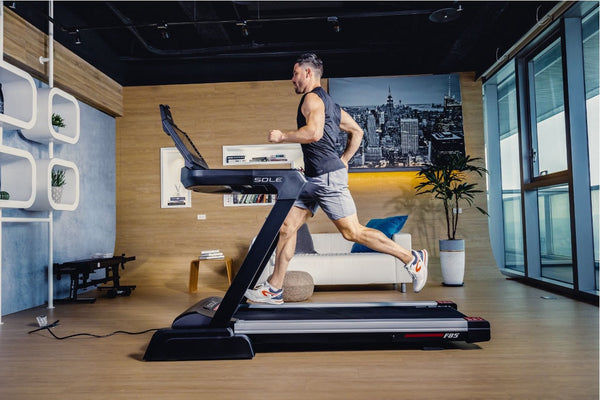
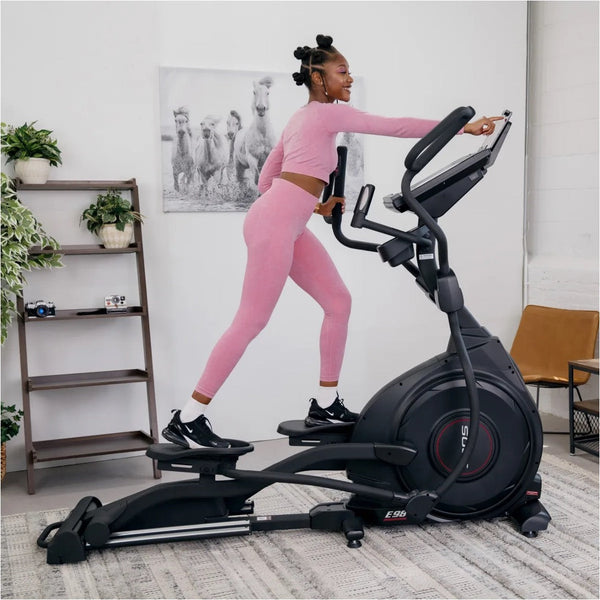
SOLE produces equipment for both exercise modalities. The E95 provides serious elliptical training with a 27-pound flywheel, 20 power incline levels, and 400-pound weight capacity. The F80 supports incline walking that approaches elliptical calorie burn at a 15% grade, with Cushion Flex deck cushioning that protects joints during high-volume sessions. The F85 adds 6% decline for individuals managing joint sensitivity. All three include lifetime frame warranties and FREE SOLE+ App access at no ongoing subscription cost.
Shop the SOLE elliptical collection today!
Frequently Asked Questions (FAQs)
Which is better for belly fat specifically? Walking or Ellipticals?
Neither exercise targets belly fat specifically, as spot reduction is a myth. Both elliptical and walking create calorie deficits that lead to overall fat loss, including abdominal fat. Genetics determines where your body loses fat first, and exercise selection does not change this pattern.
Can I lose weight by walking alone?
Yes. Walking creates calorie expenditure that contributes to weight loss when combined with appropriate nutrition. Millions of people have lost significant weight through walking programs. Adding an incline dramatically increases effectiveness.
How long should I exercise on an elliptical vs walking for weight loss?
Aim for 150 to 300 minutes of moderate-intensity cardio weekly for weight loss, regardless of exercise type. At moderate intensity, 30 minutes of elliptical roughly equals 40 to 45 minutes of flat walking in calorie burn. Adjust duration based on intensity and your available time.
Is elliptical or walking better for beginners?
Walking is typically easier for absolute beginners because it requires no learning. Elliptical has a short learning curve of 1 to 2 sessions, but it may feel awkward initially. Both are appropriate for beginners. Start with whichever feels more comfortable.
Which SOLE machine is best for someone with knee sensitivity?
For severe knee sensitivity, the E95 elliptical is the strongest choice because it eliminates impact entirely. For moderate knee sensitivity where some impact is acceptable, the F85 treadmill's Cushion Flex deck cushioning absorbs impact during walking, while its incline range up to 15% lets you reduce joint stress further through uphill walking. Both options support sustained training without the joint stress associated with running or hard-surface outdoor walking.
Disclaimer: Products and prices mentioned in this article are accurate as of the date of publication and are subject to change. Please visit the official SOLE website for the most current information.