Key Takeaways
- Treadmill training burns 280 to 1,000 calories depending on intensity, creating immediate calorie deficits, while weightlifting burns 180 to 400 per hour during sessions but elevates metabolism for up to 48 hours afterward through Excess Post-exercise Oxygen Consumption (EPOC).
- Each pound of muscle burns 6 to 10 calories daily at rest, meaning 10 pounds of added muscle from weightlifting burns 21,900 to 36,500 additional calories annually without extra exercise, a metabolic advantage treadmill training cannot replicate.
- Cardio-only weight loss produces a smaller but less defined physique, because fat loss without muscle development doesn't improve body composition.
- Combined training produces visible muscle definition alongside fat loss at the same scale weight.
- The SOLE treadmills and SOLE SW116 adjustable weight bench together provide a complete home training system covering both calorie-burning cardio and metabolism-building strength work.
Treadmill vs Weightlifting for Weight Loss: Which Is Better?
The most effective approach to weight loss combines treadmill training and weightlifting rather than choosing between them, because each produces benefits that the other cannot.
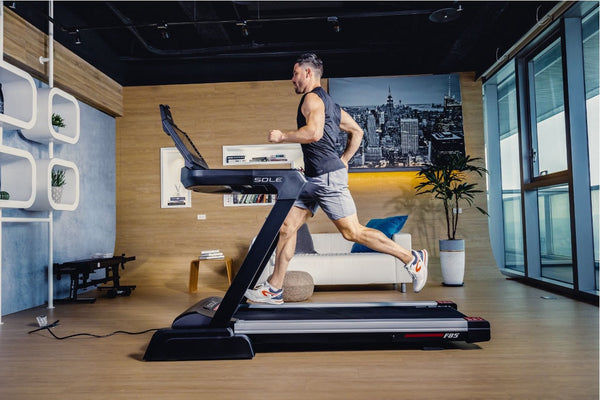
Treadmill training burns more calories during exercise and develops cardiovascular health. Weightlifting builds muscle that increases resting metabolic rate and improves body composition beyond what the scale shows. The SOLE treadmill and SOLE SW116 adjustable weight bench together create a complete home weight loss system covering both components.
This article compares the two approaches across calorie burn, metabolism, body composition, and research evidence, then provides specific workout strategies and a combined weekly program for maximum results.
|
Premium Home Gym Equipment with Award-Winning Quality! Complete Your Home Gym:
Why Choose SOLE: ✓ Commercial-grade quality for home use 30-Day Money-Back Guarantee: Love it or return it, no questions asked. |

How Many Calories Does Each Approach Burn During Exercise?

For calorie expenditure during the workout itself, treadmill training significantly outpaces weightlifting.
Treadmill Calorie Burn
Treadmill exercise sustains an elevated heart rate continuously, burning calories throughout the session with no rest periods.
|
Activity |
Calories per 30 min (155 lb person) |
Calories per hour |
|
Walking 3.5 MPH, flat |
140 to 150 |
280 to 300 |
|
Walking 3.5 MPH, 10% incline |
200 to 220 |
400 to 440 |
|
Walking 3.5 MPH, 15% incline |
250 to 280 |
500 to 560 |
|
Jogging 5.0 MPH |
280 to 300 |
560 to 600 |
|
Running 6.0 MPH |
350 to 380 |
700 to 760 |
|
Running 7.5 MPH |
420 to 450 |
840 to 900 |
|
HIIT intervals |
400 to 500 |
800 to 1,000 |
Weightlifting Calorie Burn
Weightlifting involves brief, intense efforts separated by rest periods, which reduces overall calorie burn per hour.
|
Activity |
Calories per 30 min (155 lb person) |
Calories per hour |
|
Light weights, high reps |
90 to 110 |
180 to 220 |
|
Moderate intensity |
110 to 140 |
220 to 280 |
|
Vigorous circuit training |
180 to 240 |
360 to 480 |
|
Heavy compound lifts |
150 to 200 |
300 to 400 |
Even intense weightlifting burns roughly half the calories of moderate treadmill training when measured during the session. However, judging exercise solely by calories burned during the session ignores what happens in the hours and days that follow.
What Is the Afterburn Effect & Why Does It Matter?

Both exercises elevate metabolism after the session ends, but weightlifting produces substantially more post-exercise calorie burn.
Understanding EPOC
EPOC describes elevated calorie burn as your body recovers from exercise, covering replenishment of energy stores, muscle tissue repair, clearance of metabolic byproducts, restoration of hormonal balance, and reduction of elevated body temperature. More intense exercise and greater muscle damage produce larger EPOC responses.
Treadmill EPOC
Steady-state treadmill exercise produces modest EPOC. Light walking adds approximately 10 to 20 calories. Moderate jogging adds 30 to 50 calories. Intense running adds 50 to 100 calories. HIIT treadmill intervals produce larger effects of 80 to 150 calories due to higher intensity.
Weightlifting EPOC
Resistance training produces substantially more EPOC due to muscle repair demands. A light circuit adds 50 to 80 calories. A moderate session adds 100 to 150 calories. Heavy compound lifts add 150 to 250 calories. Critically, this elevated metabolism persists for up to 48 hours post-workout rather than just the few hours following treadmill training.
Treadmill Workout Tips for Weight Loss
Embrace Incline Walking
Walking at 15% incline burns calories comparable to running while remaining genuinely low-impact. The popular 12-3-30 workout (12% incline, 3.0 MPH, 30 minutes) provides intense training accessible to nearly everyone.
Progressive incline program:
- Weeks 1 to 2: 8% incline, 3.0 MPH, 20 minutes
- Weeks 3 to 4: 10% incline, 3.0 MPH, 25 minutes
- Weeks 5 to 6: 12% incline, 3.0 MPH, 30 minutes
- Weeks 7 to 8: 12% incline, 3.2 MPH, 30 minutes
- Week 9 onwards: 15% incline, 3.0 MPH, 30 minutes
Incorporate HIIT Intervals
Basic HIIT protocol: 5-minute warm-up, then 30 seconds hard effort at 85 to 95% maximum heart rate, followed by 90 seconds recovery at 60 to 70% maximum heart rate, repeated 8 to 10 times, then a 5-minute cool-down, provides maximum weight loss benefits. Advanced HIIT uses 1 minute of hard and 1 minute of recovery for 10 to 15 rounds.
Use Built-In Programs
SOLE treadmills include programmed workouts that automatically vary speed and incline, creating the intensity variation that maximizes calorie burn without constant manual adjustment.
Do Not Hold the Handrails
Gripping handrails reduces calorie burn by 20 to 25% by supporting body weight that your legs should carry. Use handrails only for balance checks.
Track Heart Rate
Zone 2 at 60 to 70% maximum heart rate, burns primarily fat. Zone 4, at 80 to 90% maximum heart rate, develops cardiovascular capacity. Alternate based on goals and recovery status.
Which Weightlifting Strategies Work Best for Weight Loss?

Compound movements, moderate rep ranges, and progressive overload deliver the strongest body composition results from weightlifting.
Prioritize Compound Movements
Essential compound movements: squats targeting quadriceps, glutes, hamstrings, and core; deadlifts targeting the entire posterior chain; bench press targeting chest, shoulders, and triceps; rows targeting back and biceps; overhead press targeting shoulders, triceps, and core; lunges targeting quadriceps and glutes. These six movements train the entire body efficiently and produce the greatest metabolic and hormonal response per session.
Use Moderate Rep Ranges
For body composition improvement, 8 to 12 repetitions balance the muscle-building stimulus with metabolic demand. Heavy sets of 3 to 5 reps primarily develop strength with less hypertrophy. Light sets of 15 to 20 reps develop muscular endurance with a reduced growth stimulus.
Progressively Overload
Add weight when the current weight feels manageable across all prescribed reps. Increase by 5 lbs for upper body exercises and 10 lbs for lower body. If form deteriorates, reduce weight and build back up rather than continuing with compromised technique.
Minimize Rest Between Sets
Rest periods of 60 to 90 seconds maintain an elevated heart rate, increasing calorie burn while still allowing adequate recovery for muscle performance.
Train Each Muscle Group Twice Weekly
Full-body workouts three times weekly or upper and lower splits four times weekly both achieve the training frequency that research identifies as optimal for muscle development.
Head-to-Head Comparison: Treadmill vs Weightlifting Weight Loss Benefits
|
Weight Loss Benefit |
Treadmill |
Weightlifting |
|
Calories burned during a session |
400–800/hour |
200–400/hour |
|
Afterburn (EPOC) |
10–150 calories, lasts a few hours |
50–250 calories, lasts 48 hours |
|
Builds calorie-burning muscle |
Minimal |
High |
|
Resting metabolism boost |
Negligible |
+6–10 calories/day per pound of muscle gained |
|
Cardiovascular health improvement |
Excellent |
Limited |
|
Body composition change (toning) |
Fat loss only; softer look |
Fat loss plus visible muscle definition |
|
Bone density preservation |
Moderate |
High |
|
Functional strength for daily life |
Limited |
Excellent |
|
Beginner accessibility |
Very high; walk and go |
Moderate; requires form practice |
|
Joint impact |
Low to moderate (incline walking lowest) |
Low to moderate |
|
Long-term weight maintenance |
Good while training continues |
Strong, elevated metabolism persists |
|
Best role in a weight loss program |
Fast initial calorie deficit |
Sustainable fat loss and body recomposition |
Why Choose SOLE Equipment for Combined Weight Loss Training?
The treadmill-versus-weightlifting question isn't actually a choice; you need both. Treadmill training delivers higher per-session calorie burn and cardiovascular health, while weightlifting builds the muscle that raises resting metabolism, improves body composition, and drives greater EPOC afterburn.
The SOLE F80 and the SOLE SW116 Adjustable Weight Bench together cover both halves of that equation in one home setup. The F80 offers 15% incline capability, a 3.5 HP motor, and free SOLE+ App-guided workouts with no ongoing subscription cost — everything you need for high-calorie cardio sessions and low-impact incline walking. The SW116 pairs with it through 9 back positions, 5 seat positions, and a 550-pound capacity, anchoring a full free-weight setup that builds the calorie-burning muscle cardio alone can't produce. Shop the SOLE treadmill collection and the SW116 bench today.
Shop the SOLE collection today!
Frequently Asked Questions (FAQs)
Should I do cardio or weights first?
Weights first, when possible. Strength training requires more precision and power than cardio; fatigue from prior cardio compromises lifting performance and increases injury risk. If combining in one session, lift first while fresh. Ideally, separate them into different sessions entirely.
How much cardio is too much when also lifting weights?
More than 4 to 5 hours of moderate cardio weekly can interfere with muscle recovery and growth. For weight loss while building muscle, 2 to 3 treadmill sessions of 30 to 45 minutes provide sufficient cardio without compromising strength gains.
Will weightlifting make me bulky?
No. Building significant muscle mass requires years of dedicated training, progressive overload, adequate protein, and often favorable genetics. Women especially lack the testosterone levels for substantial muscle bulk. What weightlifting produces is a toned, defined appearance, the opposite of "bulky."
Can I lose weight with just weightlifting?
Yes. Weightlifting burns calories during sessions, elevates metabolism afterward, and builds calorie-burning muscle. However, combining weights with treadmill training produces faster results. If choosing only one, weightlifting is arguably the better choice for body composition, but both together is optimal.
What warranty does SOLE offer on the F80 treadmill?
The F80 carries a lifetime warranty on the frame and motor. The F80 also includes a 3-year warranty on parts and electronics, and 1 year of labor coverage. Lifetime frame and motor coverage on the F80 means the treadmill components most critical to daily training performance are protected for the life of the equipment, regardless of use intensity.
Disclaimer: Products and prices mentioned in this article are accurate as of the date of publication and are subject to change. Please visit the official SOLE website for the most current information.