

Key Takeaways
- Ellipticals provide a low-impact, joint-friendly workout ideal for beginners or those recovering from injuries while maintaining effective cardiovascular conditioning.
- Vertical climbers maximize calorie burn through zero-momentum, full-body movements that force muscles to work constantly without any mechanical assistance.
- Choosing between machines depends on goals; climbers excel at high-intensity fat burning, while ellipticals allow for longer, more sustainable endurance sessions.
- While both machines target the lower body, vertical climbers offer superior upper body and core activation by simulating a continuous climbing motion.
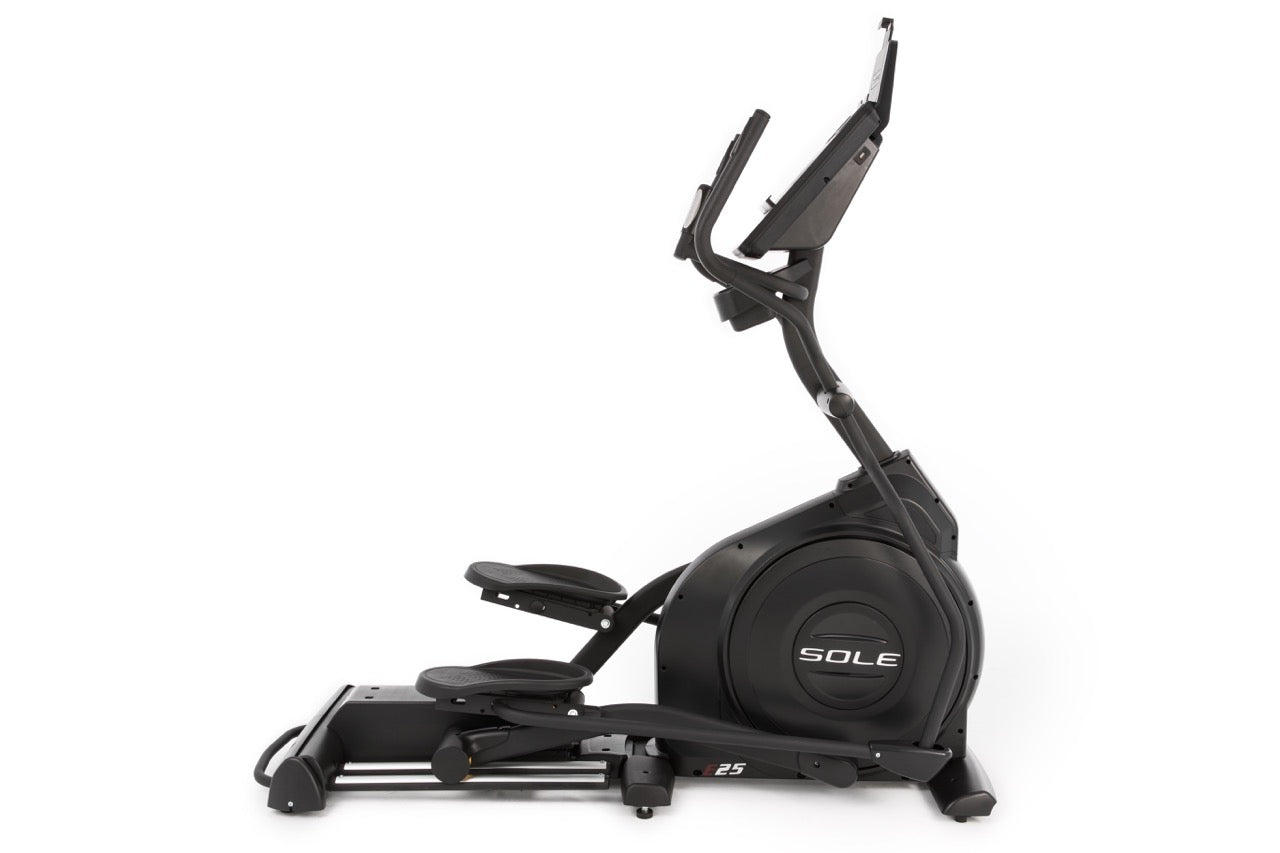
- SOLE E25 Elliptical, like the E25, feature PT-designed pedals with an inward slope to reduce joint stress and offer commercial-grade durability for home users.
The Verdict on Weight Loss: Climber vs Elliptical
If you want to lose weight faster and you are already in decent shape, the vertical climber has the edge. It demands more from your body every single second you are on it, with no coasting, no momentum, and no shortcuts. That intensity translates directly into higher calorie burn and faster muscle development.
However, if you are just starting out, dealing with joint issues, or need a machine you can sustain for longer sessions, the elliptical is the smarter long-term tool.
Both machines work. The real question is which one works best for you, and that comes down to your current fitness level, your body, and your specific weight loss goals.
|
Smooth, Natural Motion for Every Body. Top-Rated Home Fitness Ellipticals!
Why Choose SOLE Ellipticals: ✓ Whisper-quiet eddy current resistance system 30-Day Money-Back Guarantee: Love it or return it, no questions asked. |

Elliptical

The elliptical trainer is one of the most popular cardio machines in any gym, and for good reason. It delivers a solid cardiovascular workout while keeping the impact on your joints extremely low.
How an Elliptical Works
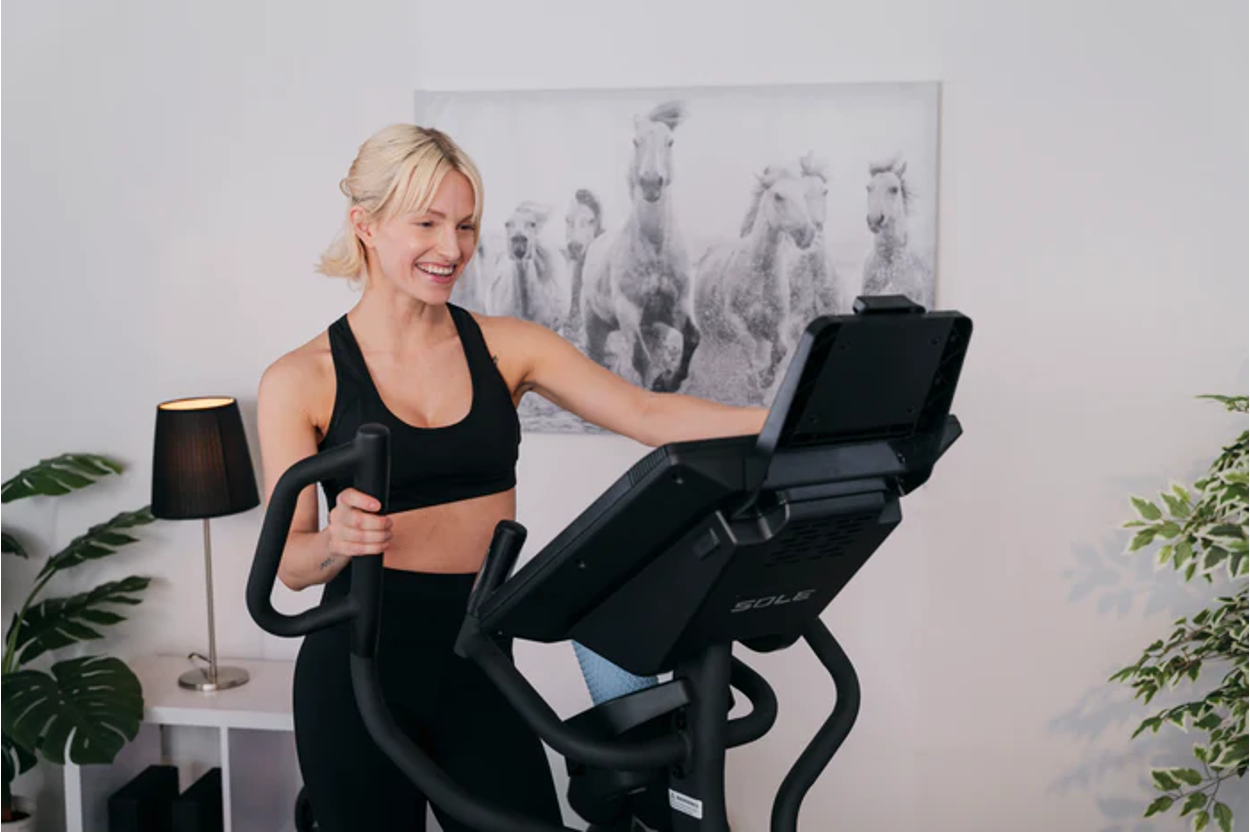
You stand on two large foot pedals and either hold the stationary center handles or grip the moving handlebars. As you push the pedals in their elliptical path, the machine's flywheel creates momentum that helps carry the pedals through their rotation.
You control the resistance level and, on many models, the incline as well. The smoother the motion, the lower the perceived exertion, which is both its greatest strength and its biggest limitation for weight loss.
Muscles Targeted by an Elliptical
The elliptical primarily targets the lower body, with the degree of upper body involvement depending on how actively you use the moving handles.
- Quadriceps and hamstrings: The primary drivers of the pedaling motion.
- Glutes: Engaged especially when the incline is increased.
- Calves: Active throughout the stride cycle.
- Chest, back, and arms: Recruited when actively pushing and pulling the moving handles.
- Core: Mildly engaged for balance, though less than on a vertical climber.
Vertical Climber

A vertical climber is an upright exercise machine that simulates the motion of climbing, such as rock climbing or scaling a ladder. (Image courtesy of Amazon)
How a Vertical Climber Works
The mechanics are straightforward but brutally effective. You stand on the foot pedals and grip the handles, then drive one knee up while pulling the opposite handle down—alternating sides in a continuous climbing motion. The resistance comes entirely from your own bodyweight, which means every rep requires real muscular effort from start to finish.
This is the key distinction fitness experts point to: there is no momentum on a vertical climber. As soon as you stop moving, the machine stops. That means your cardiovascular system and your muscles are under constant demand throughout the entire workout. There is no "easy" phase where the machine carries you.
Muscles Targeted by a Vertical Climber
The vertical climber is one of the few cardio machines that genuinely qualifies as a full-body workout. The climbing motion recruits multiple major muscle groups simultaneously, which is a big part of why the calorie burn is so high.
- Lower body: Glutes, quadriceps, hamstrings, and calves drive the stepping motion.
- Core: Your abs and obliques stabilize your body throughout every rep.
- Upper body: Biceps, triceps, shoulders, and back muscles engage with every arm pull.
- Cardiovascular system: The combined demand on all these muscles spikes your heart rate quickly and keeps it elevated.
Which Machine Burns More Calories: Vertical Climber or Elliptical?
Why the Vertical Climber Burns More Calories Per Minute
The vertical climber demands constant muscular effort with zero mechanical assistance. Because the machine provides no momentum, your body cannot take shortcuts. Every second of your workout requires active energy output from your legs, arms, and core simultaneously. This combination of full-body engagement and zero-rest mechanics makes the calorie-per-minute burn on a vertical climber exceptionally high compared to most cardio machines.
The intensity is also driven by bodyweight resistance. You are essentially lifting and lowering your own body mass with every single repetition, which places a significant demand on both your muscular and cardiovascular systems.
How Elliptical Momentum Affects Calorie Burn

A 40-minute moderate-intensity elliptical session can match or exceed the total calories burned in a shorter, high-intensity vertical climber session.
The elliptical's biggest limitation for weight loss is the same thing that makes it so comfortable: momentum. Once the flywheel is spinning, it actively assists the pedaling motion, which means your muscles are doing less work than they would on a machine with no mechanical assistance. Many elliptical users unknowingly let the machine carry them through portions of their workout, reducing their actual calorie expenditure without realizing it.
This does not mean the elliptical is ineffective. It means you have to be intentional. Increasing resistance, using the incline feature, and actively pushing and pulling the handlebars rather than just resting your hands on them can dramatically increase how hard your body is actually working.
Muscle Engagement and Strength Gains
Weight loss is not just about calories burned during a workout. Muscle tissue burns more energy at rest than fat tissue does, which means building more muscle directly accelerates your resting metabolism. This is why muscle engagement matters so much when choosing a cardio machine.
Full-Body Activation on a Vertical Climber
The vertical climber's simultaneous upper and lower body demand is genuinely rare among cardio machines. Most people are surprised to discover how sore their biceps, shoulders, and upper back are after their first few sessions.
This cross-body activation pattern, where the opposite arm and leg move together, also engages the core in a functional, rotational way that builds real stabilizer strength over time.
Because the resistance is your own bodyweight, the vertical climber also delivers meaningful muscular endurance gains, particularly in the glutes, quads, and hamstrings. Fitness professionals who prioritize strength alongside cardiovascular conditioning consistently rate the vertical climber higher for muscle development than the elliptical.
Upper and Lower Body Balance on an Elliptical
The elliptical provides a reasonable balance between upper and lower body engagement, but the distribution is not always equal. Most users naturally lean on the lower body to drive the pedals, with the arms doing relatively passive work on the handlebars.
The machine's smooth, guided motion also means the stabilizing muscles, particularly the core and the smaller muscles around the hips and knees, are not challenged the way they would be on a more dynamic machine.
That said, the elliptical is an excellent tool for maintaining muscle tone during periods when joint health limits more intense exercise. It keeps the major lower body muscles active without the strain of high-impact movement.
How Do Climbers and Ellipticals Affect Joint Impact and Injury Risk?
One of the most important factors in choosing a cardio machine, especially for weight loss, is sustainability. A machine that hurts your joints will sideline you, and time off means no progress. This is where the two machines differ most dramatically.
Why the Elliptical Is Easier on Your Joints
The elliptical was specifically engineered to replicate the cardiovascular benefits of running while eliminating the impact that causes joint stress. Your feet never leave the pedals, which means there is no landing force transmitted through your ankles, knees, and hips.
Key joint-protection features:
- Zero impact: Feet remain in contact with pedals throughout the entire motion
- Joint-guided movement: The fixed oval path prevents awkward or harmful joint angles
- Adjustable incline: Allows users to shift load away from sensitive joints like the knees
- Low perceived exertion: Makes it easier to sustain longer sessions without overloading vulnerable areas
The elliptical is also forgiving of poor form, which matters for beginners who have not yet developed body awareness or strength. For anyone carrying extra body weight, this is especially relevant because the more weight you carry, the more stress each workout places on your joints.
Who Should Avoid High-Impact Climbing Workouts
The vertical climber, while low-impact compared to running, does place a meaningful load on the knees, hips, and shoulders through the repetitive climbing motion. People with active knee injuries, significant hip problems, or shoulder joint issues should approach the vertical climber cautiously and consult a healthcare professional before starting.
The lack of momentum also means there is no "easy phase" for your joints to recover mid-session; the demand is continuous from start to finish.
Vertical Climber vs Elliptical: Comparison Table
|
Factor |
Elliptical |
Vertical Climber |
|
Calories Burned/Hour |
450–700 |
400–1,000+ |
|
Muscle Activation |
~60% (balanced) |
~85% (full body) |
|
Primary Muscles |
Quads, hamstrings, glutes, calves, arms (with handles) |
Arms, shoulders, back, core, glutes, quads, hamstrings, calves |
|
Upper Body Engagement |
Moderate (with moving handles) |
Very high (continuous push-pull) |
|
Lower Body Engagement |
High |
High |
|
Core Engagement |
Low to moderate |
High (stabilization throughout) |
|
Joint Impact |
Very low |
Low to moderate |
|
Best for Knee Issues |
Excellent |
Moderate (use caution) |
|
Best for Shoulder Issues |
Good |
Poor (high shoulder demand) |
|
HIIT Suitability |
Good |
Excellent |
|
Steady-State Cardio |
Excellent |
Moderate (hard to sustain) |
|
Time to Reach Target HR |
Moderate (2–4 minutes) |
Very fast (60–90 seconds) |
|
Afterburn Effect (EPOC) |
Moderate |
Very high |
|
Momentum Assistance |
Yes (flywheel) |
None |
|
Learning Curve |
Very low |
Moderate (2–3 sessions) |
|
Beginner Friendly |
Excellent |
Moderate |
|
Ideal Session Length |
30–60 minutes |
15–30 minutes |
|
Weight Loss Efficiency |
Very good (sustained sessions) |
Excellent (time-efficient) |
|
Muscle Building |
Low to moderate |
Good (full body) |
|
Endurance Building |
Excellent |
Moderate |
|
Incline/Resistance Options |
Extensive (resistance + incline) |
Limited |
|
Built-In Programs |
Extensive on quality models |
Limited on most models |
|
Space Required |
Moderate (~6' x 2.5') |
Compact (~2' x 3') |
|
Noise Level |
Quiet |
Quiet |
|
Best For |
Beginners, joint protection, endurance |
HIIT, full-body efficiency, time-crunched |
|
Ideal User |
All levels, injury recovery, sustained cardio |
Intermediate/advanced, weight loss focused |
Maximize Your Weight Loss With SOLE Ellipticals

A quality elliptical can approach the cardiovascular demand of climbing, with far better joint protection and session sustainability.
The SOLE E25 Elliptical delivers the incline capability and construction quality that budget ellipticals lack. With 20 levels of power incline, double what most competitors offer, you can progressively challenge your body as fitness improves, targeting glutes and hamstrings at steep angles that mimic climbing mechanics.
The foot pedals were designed in collaboration with a leading physical therapist, featuring a 2-degree inward slope that reduces ankle and knee stress during extended sessions. For users with joint concerns or anyone planning thousands of hours on the machine, this attention to ergonomic detail makes a measurable difference.
The 350-pound weight capacity and heavy-duty steel frame handle serious users and high-intensity interval training without wobble or flex. The 20 lb flywheel delivers smooth, consistent resistance throughout each stride. Lifetime warranty on frame and flywheel protects your investment indefinitely.
The SOLE E35 Elliptical steps up with a 10.1" touchscreen featuring WiFi connectivity, screen mirroring, and built-in third-party apps, transforming cardio sessions into entertainment. The heavier 25 lb flywheel creates even smoother motion, and wireless charging keeps your devices powered.
The SOLE E95 delivers commercial-grade performance with a heavy 27 lb flywheel, while the SOLE E98 boasts the heaviest 32 lb flywheel in the lineup and is built for light commercial environments or serious home athletes demanding the absolute best.
Every SOLE elliptical includes the FREE SOLE+ App with thousands of FREE workout classes with no subscription fees, ever. Track your calories, monitor your incline progression, and access guided workouts that keep you challenged as your fitness improves.
Ready to maximize your weight loss with joint-friendly cardio? Shop SOLE ellipticals today!
Frequently Asked Questions (FAQs)
Is a vertical climber or a SOLE elliptical better for weight loss?
Both machines are genuinely effective for weight loss, but they work differently and suit different people. The vertical climber produces a higher calorie burn per minute and engages more muscle groups simultaneously, while the elliptical allows for longer, more sustainable sessions with lower joint stress. Your personal fitness level, injury history, and how hard you are willing to push during each session will determine which machine delivers better results for you specifically.
Can you lose belly fat specifically by using a vertical climber or elliptical?
Spot reduction, the idea that you can burn fat from one specific area of your body by exercising that area, is a myth that has been thoroughly debunked by exercise science. Neither the vertical climber nor the elliptical will exclusively target belly fat. What both machines do is contribute to overall calorie deficit, which over time reduces total body fat, including the fat stored around your midsection.
How long should I work out on a vertical climber or elliptical to lose weight?
For meaningful weight loss, aim for at least 150 to 300 minutes of moderate-intensity cardio per week. On the elliptical, that typically translates to sessions of 30 to 50 minutes, five days per week. On the vertical climber, because the intensity is higher, you can achieve comparable cardiovascular benefits in shorter sessions. Just 20 to 30 minutes of genuine effort on a vertical climber can be equivalent to a much longer elliptical session.
Is a vertical climber harder to use than an elliptical?
Yes, the vertical climber is significantly harder to use than an elliptical, particularly for beginners. The zero-momentum design means there is no mechanical assistance at any point during your workout. Your muscles are doing 100% of the work, 100% of the time. Most new users find the vertical climber genuinely challenging within the first few minutes, while the elliptical allows for a much more gradual warm-up and a more manageable overall effort level.
Which machine is better for someone with bad knees?
The elliptical is the clear winner for anyone with knee problems. Its oval, guided pedal path eliminates the impact forces that typically aggravate knee conditions, and the smooth, continuous motion keeps the joint moving without compression or jarring.
Quality ellipticals like the SOLE E25 feature foot pedals designed with a physical therapist, offering a 2-degree inward slope that specifically reduces ankle and knee stress during extended sessions. The vertical climber places more dynamic load on the knee joint through the repetitive stepping and pushing motion. Anyone with diagnosed knee conditions should seek medical clearance before using one.
*Disclaimer: Products and prices mentioned in this article are accurate as of the date of publication and are subject to change. Please visit the official SOLE website for the most current information.


Leave a comment
This site is protected by hCaptcha and the hCaptcha Privacy Policy and Terms of Service apply.