Key Takeaways
- Most individuals see optimal results with 3–5 cardio sessions per week while cutting, with beginners starting at 2–3 sessions, intermediate trainees at 3–4 sessions, and advanced lifters at 4–5 sessions.
- Combining both HIIT and LISS provides the best balance for fat loss while preserving muscle mass, with HIIT for metabolic boost and LISS for recovery-friendly fat burning.
- Maintain strength training as your highest priority since each pound of muscle burns approximately 6–10 calories per day at rest, and declining performance in the weight room indicates cardio volume may be exceeding recovery capacity.
- Effective cardio programming during a cut requires the SOLE Treadmill for both HIIT intervals and LISS incline walking, the SOLE Elliptical for low-impact steady-state sessions, and the FREE SOLE+ App to track workouts and daily steps.
The Ideal Cardio Balance for Cutting
The ideal cardio approach for cutting phases balances effective fat loss with muscle preservation. While nutrition creates the caloric deficit necessary for fat loss, properly programmed cardio accelerates results without compromising your gains.
For most individuals, this means incorporating 3–5 weekly cardio sessions while maintaining a moderate caloric deficit.
Your baseline activity level plays a crucial role. Someone with an active job naturally burns more calories throughout the day than someone with a desk job. This means the sedentary individual might benefit from more formal cardio sessions, while the active person may need less structured cardio.
|
Premium Home Gym Equipment with Award-Winning Quality! Complete Your Home Gym:
Why Choose SOLE: ✓ Commercial-grade quality for home use 30-Day Money-Back Guarantee: Love it or return it, no questions asked. |

Cardio Frequency by Experience Level

Cardio frequency during a cut should be tailored to your experience level, current body composition, and recovery capacity.
Beginners (2–3 Sessions Weekly)
Start with just 2–3 weekly cardio sessions evenly spaced (Monday, Wednesday, Friday). This moderate approach gives your body time to adapt without overwhelming recovery systems. Beginners often see significant results with minimal cardio because their bodies respond quickly to new training stimuli. Monitor progress for 2–3 weeks before considering changes.
Intermediate (3–4 Sessions Weekly)
Those with 1–3 years of consistent training typically benefit from 3–4 weekly sessions. Include 1–2 HIIT sessions and 2 LISS workouts per week. This variation prevents adaptation and offers complementary benefits. You should separate HIIT sessions by at least 48 hours to ensure proper recovery.
Advanced (4–5 Sessions Weekly)
Advanced trainees may need 4–5 weekly sessions during aggressive cutting phases. A well-structured plan might include 2 HIIT sessions, 2–3 LISS sessions, and potentially moderate-intensity cardio. Consider implementing periodization with some weeks featuring higher volume (5 sessions) followed by deload weeks (3 sessions).
When to Adjust
Increase cardio when fat loss plateaus for 2+ weeks despite adherence to nutrition. Reduce when strength performance declines significantly, persistent fatigue occurs, or sleep becomes disrupted.
HIIT vs LISS: Intensity Considerations
HIIT Benefits & Implementation
High-intensity interval training delivers maximum calorie burn in minimal time by alternating between near-maximal effort and active recovery. Limit HIIT to 2–3 sessions per week, lasting 20–25 minutes, including warm-up and cool-down.
Do 30 seconds all-out effort (85–95% max heart rate) followed by 90 seconds active recovery, repeated for 8–10 rounds. Progress to 1:1 intervals as conditioning improves.
LISS Benefits & Implementation
Low-intensity steady-state cardio involves maintaining consistent moderate effort (60–70% max heart rate) for extended periods. LISS excels at burning fat during the session while placing minimal stress on recovery systems; sessions can be performed 3–5 times weekly for 30–60 minutes.
The Perfect Mix
For a typical 4-session cardio week, include 2 HIIT sessions (48–72 hours apart) and 2 LISS sessions, scheduled around strength training.
Heart Rate Zones
During HIIT workouts, your work intervals should push you into Zones 4 or 5, which correspond to 85–95% of your maximum heart rate.
Between these intense bursts, your recovery periods should bring you down to Zone 2, around 60–70% of your max heart rate. For LISS sessions, you'll want to maintain Zone 2 throughout the workout, as this is the ideal fat-burning zone.
Session Duration Guidelines

Rather than arbitrarily extending cardio sessions, focus on quality and appropriate duration based on intensity level, with HIIT sessions remaining relatively short and LISS sessions extending longer as needed.
HIIT Duration
HIIT sessions should consist of 15–25 minutes of actual interval work, not including your warm-up and cool-down. Extending HIIT beyond this range typically leads to declining performance quality and increased injury risk.
LISS Duration
LISS sessions can last anywhere from 30 to 60 minutes at 60–70% of your maximum heart rate. The lower intensity allows you to sustain effort for extended periods without technical breakdown or excessive recovery demands.
Moderate-Intensity Duration
Moderate-intensity cardio is ideal for 25–45 minutes at 70–80% of your max heart rate. This balances meaningful calorie burn with sustainable effort.
Signs of Excessive Cardio
There are several signs that indicate you may be doing excessive cardio. These include declining performance in the weight room, persistent soreness lasting more than 48 hours, an elevated resting heart rate upon waking, disrupted sleep patterns, and decreased motivation for training.
How to Balance Cardio With Strength Training When Cutting
Strength training provides the stimulus your body needs to maintain muscle tissue even in a caloric deficit. Without this stimulus, your body has little incentive to preserve metabolically expensive muscle when energy is restricted.
Priority Guidelines
When balancing cardio and strength training, always prioritize preserving your scheduled strength sessions if you're forced to choose between the two. Cardio should be scheduled after lifting or on separate days entirely, never before a strength workout.
If a cardio session might interfere with a crucial lifting day, reduce its intensity or duration accordingly. Your strength performance serves as the clearest indicator of whether you're maintaining muscle, so monitor it closely.
Lifting Volume Adjustments
Maintain lifting intensity (weight used) while potentially reducing total volume by 15–20% compared to bulking phases. Reduce working sets from 4–5 per exercise to 3–4 while maintaining intensity on compound lifts.
Optimize Your Cutting Cardio Sessions With SOLE

The optimal cardio approach for cutting balances effectiveness with sustainability, focusing on finding your minimum effective dose rather than viewing cardio as more is better.
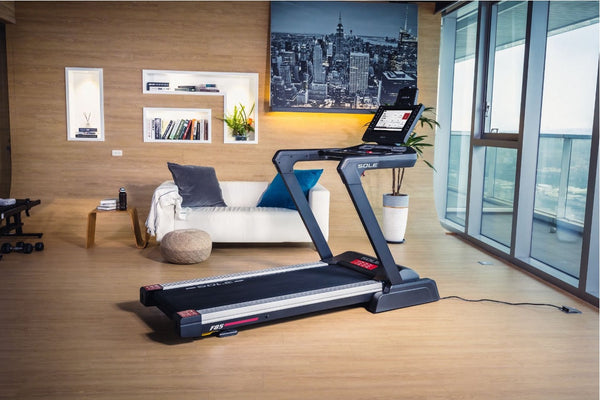
The SOLE Treadmill delivers the versatility your cutting phase demands. Use it for high-intensity sprint intervals that trigger the afterburn effect, then switch to incline walking for recovery-friendly LISS sessions that burn 300–400 calories per hour while targeting the ideal fat-burning zone.
The powerful motor handles rapid speed changes for interval training, while the Cushion Flex Whisper Deck on select models (F80, F85, F89, TT8) protects joints during longer steady-state sessions.
The SOLE Elliptical offers a low-impact option essential during caloric restriction, when joint stress should be minimized. The smooth, natural stride pattern allows extended LISS sessions without the pounding that can compromise recovery between lifting sessions.
For cycling-based intervals, the SOLE Bike delivers intense HIIT sessions with adjustable resistance that challenge fitness levels of all levels while keeping impact at zero.
Track every session and monitor daily steps with the FREE SOLE+ App—no subscription fees required. The data-driven approach enables precise adjustments based on measured results, helping you find your minimum effective cardio dose for maximum fat loss.
Ready to optimize your cut? Shop SOLE collection today!
Frequently Asked Questions (FAQs)
Will doing cardio every day speed up my cut?
Daily cardio does not necessarily accelerate fat loss and often leads to diminishing returns. Your body adapts to continuous high-volume cardio by becoming more efficient and potentially increasing hunger signals.
Most individuals achieve optimal results with 4–5 weekly cardio sessions, with non-exercise activity, such as increased daily steps, providing consistent calorie burn on non-cardio days.
Can I lose fat without doing any cardio?
Absolutely. Fat loss fundamentally requires a caloric deficit, which can be created entirely through nutritional adjustments. Many physique competitors achieve stage-ready condition using minimal formal cardio. While cardio can enhance fat loss, it is an optional tool rather than a requirement for successful cutting phases.
How do I know if cardio is causing muscle loss?
The most reliable indicator is consistently declining strength on key compound lifts. Additional warning signs include increased muscle soreness, longer recovery times, and visible changes in muscle fullness. Ensure protein intake remains sufficient and consider reducing cardio frequency if nutrition is optimized.
What equipment supports effective cardio programming during a cut?
For effective cutting cardio, the SOLE Treadmill enables HIIT intervals and LISS incline walking, the SOLE Elliptical provides low-impact steady-state options, and the SOLE Bike supports cycling-based intervals.
*Disclaimer: Products and prices mentioned in this article are accurate as of the date of publication and are subject to change. Please visit the official SOLE website for the most current information.