Key Takeaways
-
An under-desk elliptical is a compact pedal unit used while seated at work, while a treadmill is a motorized belt for walking or running with adjustable speed and incline.
-
Treadmill walking and running are weight-bearing and reach moderate to vigorous intensity, burning about 214 to 672 calories an hour for a 125 to 185-pound person. Seated pedaling burned a median of about 179 calories an hour in a Penn State study and is not weight-bearing.
-
An under-desk elliptical fits beneath a desk and adds movement during calls, typing, or TV time, but its light intensity limits cardiovascular gains and offers no bone-loading benefit.
-
A treadmill adjusts speed and incline for anything from recovery walks to steep incline sessions and counts as weight-bearing exercise, but it needs dedicated floor space and its own block of time.
-
SOLE Fitness treadmills offer motorized models from 2.0 to 4.0 HP, up to 15 incline levels, a lifetime frame warranty on every model, and the free SOLE+ app, giving desk workers a weight-bearing workout an under-desk elliptical can’t provide.
*Note: SOLE does not manufacture or sell under-desk ellipticals. This is an independent comparison for informational purposes.
How Much Desk Movement Counts as Exercise?
Desk movement builds fitness when it reaches a moderate intensity, so a treadmill does far more for fitness than an under-desk elliptical, which keeps your legs moving at a light intensity. Many people assume any leg motion at a desk offsets a sedentary job, but these two machines work in very different intensity ranges.
Choosing the wrong one can stall your goals without you noticing. Someone hoping to improve heart health or protect bone density can pedal through months of video calls without real results, while someone who only wants to break up long stretches of sitting may buy a treadmill they rarely use because it needs its own floor space and time.
The better choice depends on which fitness goal comes first.
|
Award-Winning Commercial-Grade Treadmills for Your Home
Why Choose SOLE: ✓ Commercial-grade steel frames with up to 4.0 HP motors 30-Day Money-Back Guarantee: Love it or return it, no questions asked. |

What Are Treadmills and Under-Desk Ellipticals?

Treadmills offer adjustable speed and incline for walking or running, while under-desk ellipticals keep your legs moving during seated tasks.
What Are Treadmills?
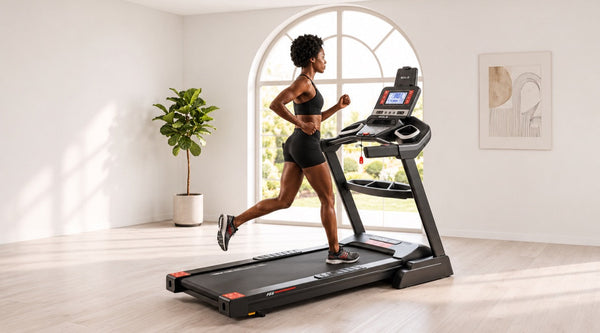
A treadmill is a motorized machine with a moving belt that lets you walk, jog, or run in place, with adjustable speed and incline controls on nearly every home model. Across SOLE’s current lineup, motors range from 2.0 HP on the entry-level F50 to 4.0 HP on the TT8, built for runners who want more durability at higher speeds, and most models offer 15 incline settings for added training intensity.
What Are Under-Desk Ellipticals?
An under-desk elliptical is a compact pedal unit placed beneath a desk, letting someone move their legs while sitting and working, watching TV, or handling other seated tasks. The category focuses on convenience and low-impact movement rather than vigorous training, since the upper body stays stationary and all motion comes from seated leg pedaling.
How Do Treadmills and Under-Desk Ellipticals Differ?
Calorie Burn and Workout Intensity
A Penn State study measured energy use in 32 physically inactive adults while they sat in an office chair and while they pedaled a compact under-desk elliptical at a pace they chose themselves. Pedaling burned a median of about 179 calories an hour, roughly 88 more than sitting still, though results varied widely, from about 108 to 269 calories an hour.
Treadmill exercise climbs well past that. Harvard Health’s 30-minute estimates, doubled to an hourly rate, put walking at 3.5 mph at about 214 to 318 calories an hour for people weighing 125 to 185 pounds, and running at 5 mph at about 480 to 672.
The difference comes down to intensity: seated pedaling at a self-chosen pace is light activity, while walking and running require you to carry your full body weight.
Bone and Joint Impact
The National Institute of Arthritis and Musculoskeletal and Skin Diseases (NIAMS) lists weight-bearing exercise as part of the best combination for building and maintaining healthy bones.
Brisk walking at 3 to 4 miles per hour, jogging, running, and climbing stairs all appear on that list because they put force on the bones, making them work harder. Brisk treadmill walking and treadmill running fall into this category, since the body’s full weight presses through the legs with every step.
Seated exercise does not appear on NIAMS’ list of weight-bearing activities. An under-desk elliptical keeps the body's weight supported by a chair, which removes the bone-loading stimulus that comes from standing movement.
Anyone with low bone density, osteoporosis, or other physical limitations should speak with a health care provider before starting any new exercise routine, regardless of which machine they choose.
Space and Everyday Use
SOLE’s motorized treadmills range from a 20” x 55” running surface on the compact F50 to 22” x 60” on models like the F83, F85, and F89. The full machine takes up more room than the belt, about 75” x 34” for the F63 and 77” x 36” for the F80 when unfolded. Most models fold for storage with a kick-release mechanism, and the F63 adds hydraulic assist.
An under-desk elliptical, by contrast, slides beneath a desk and takes up almost no separate floor space, which is why it appeals to people working in tight home offices or shared spaces.
Pros of Treadmills and Under-Desk Ellipticals

Treadmills handle everything from easy walks to tough incline runs, while under-desk ellipticals add movement during work or screen time.
Treadmill Pros
-
Treadmills let users control speed and incline independently, which means a single machine can support an easy recovery walk one day and a demanding incline session the next.
-
Modern consoles add further flexibility. For example, the SOLE F80 model includes a 10.1-inch tilt-and-swivel touchscreen with WiFi and Bluetooth, while the F63 adds an integrated tablet holder and a built-in cooling fan, so you can watch your own content and stay comfortable during walking breaks.
Under-Desk Elliptical Pros
-
An under-desk elliptical asks nothing of your schedule, since it works while you sit, type, or watch television during stretches of the day that would otherwise involve zero movement.
-
Penn State researchers chose a compact elliptical for their study because it costs less than a treadmill desk, runs quietly, and needs only a small floor area.
Cons of Treadmills and Under-Desk Ellipticals
Treadmill Cons
-
Treadmills require dedicated floor space, and standard models need a treadmill desk setup and a slow, steady pace before you can work while walking.
-
Treadmill workouts demand a separate block of time rather than blending into desk work.
Under-Desk Elliptical Cons
-
Under-desk ellipticals keep effort light. In the Penn State study, median heart rate rose from 76 bpm while sitting to 92.5 bpm while pedaling, and participants rated the effort as fairly light, which limits the machine’s contribution to cardiovascular fitness.
-
Under-desk ellipticals are not classified among weight-bearing activities that support bone health.
Treadmill vs Under-Desk Elliptical Comparison Table
|
Feature |
Treadmill |
Under-Desk Elliptical |
|
Body Position |
Standing, upright |
Seated |
|
Typical Intensity |
Moderate to vigorous, depending on speed and incline |
Light; median heart rate rose from 76 to 92.5 bpm in a Penn State study |
|
Weight-Bearing |
Yes, at a brisk walking pace (3 to 4 mph) or faster, per NIAMS guidance on bone health |
No, not listed among weight-bearing activities |
|
Measured Calorie Burn |
About 214 to 318 calories burned walking at 3.5 mph; about 480 to 672 calories burned running at 5 mph (125 to 185-pound person, Harvard Health) |
Median about 179 (range about 108 to 269), about 88 more than sitting (Penn State study) |
|
Use During Desk Work |
Requires a treadmill desk setup and a slower, steady pace |
Designed for use while sitting, typing, or watching TV |
|
Space Needed |
Dedicated floor space, about 75 to 77 inches long by 34 to 36 inches wide when unfolded on the SOLE F63 and F80 |
Minimal, fits beneath most desks |
Add Weight-Bearing Cardio to Your Workday with a SOLE Fitness Treadmill

SOLE treadmills support everything from gentle walking breaks to 15-level incline workouts, backed by a lifetime frame warranty.
Treadmills and under-desk ellipticals solve different problems. An under-desk elliptical adds light movement to hours you would otherwise spend sitting still, while a treadmill delivers the heart rate response and weight-bearing load tied to long-term heart and bone health. Your main goal should decide which machine you bring home.
SOLE Fitness treadmills let desk workers move from easy walking breaks to steep incline sessions, with motorized models from 2.0 to 4.0 HP and up to 15 incline levels. Each one carries our lifetime frame warranty and 30-day satisfaction guarantee. Shop SOLE treadmills today to find the right fit for your home office.
Frequently Asked Questions (FAQs)
Can you lose weight using an under-desk elliptical?
Weight loss is possible, but progress is slow. In one Penn State study, seated pedaling on a compact elliptical burned a median of about 88 more calories an hour than sitting still, and the researchers estimated that an hour of daily use could add up to about 5.2 pounds of weight loss a year if diet stays the same. Pairing the machine with diet changes or more vigorous exercise makes a noticeable difference in results.
Can you use an under-desk elliptical and a treadmill together?
Yes, and the two machines cover different needs well. The under-desk elliptical keeps your legs moving during seated tasks like emails and video calls, while the treadmill handles separate workouts that raise your heart rate and load your bones. Together, they reduce sitting time and build fitness.
Is an under-desk elliptical easier on the joints than a treadmill?
An under-desk elliptical puts less stress on the joints because the chair holds your body weight while your legs pedal. On a treadmill, your full weight travels through your legs with every step. Anyone with joint pain or low bone density should check with a health care provider first.
Can you walk on a treadmill while working at a desk?
You can, but it takes a treadmill desk setup and a slow, steady walking pace that still lets you type comfortably. Standard treadmills are built for focused workouts, so most people get more from short walking breaks between tasks than from trying to work and walk at once.
Which SOLE treadmill works well for a home office?
The SOLE F80 suits a home office well, since its 10.1-inch touchscreen tilts and swivels and connects through WiFi and Bluetooth for streaming workouts and screen mirroring mid-walk. If you’d rather use your own tablet, the SOLE F63 pairs an integrated tablet holder with a built-in cooling fan, so you can watch your own content and stay comfortable during walking breaks between tasks.
*Disclaimer: Products and prices mentioned in this article are accurate as of the date of publication and are subject to change. Please visit the official SOLE website for the most current information.