Key Takeaways
-
The 28-day calisthenics challenge is four weeks of daily bodyweight workouts at home, using push-ups, squats, lunges, planks, and table rows with no equipment beyond a floor and sturdy table.
-
Progress comes from rising volume, shorter rest, and harder variations rather than added weight, so slowing a push-up to a three-second descent makes the same movement harder.
-
Week 1 sets your baseline, Week 2 adds volume and jump squats, Week 3 introduces pulling and tempo work, and Week 4 peaks before Day 28 repeats Day 1.
-
Recovery days on 7, 14, 21, 24, and 27 are low-intensity sessions rather than days off, and logging every set from Day 1 makes the Day 28 comparison meaningful.
-
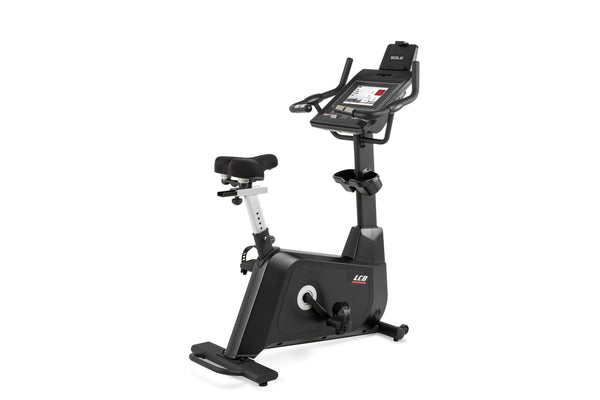
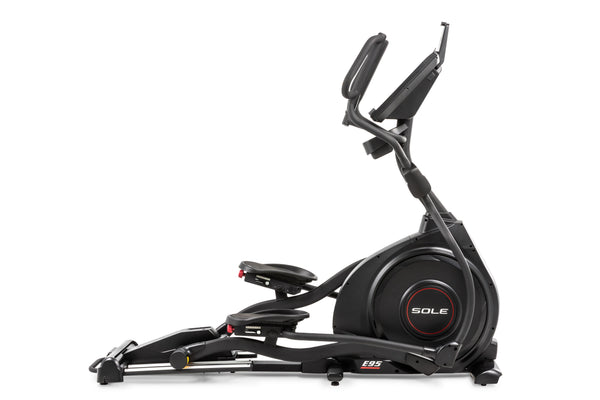
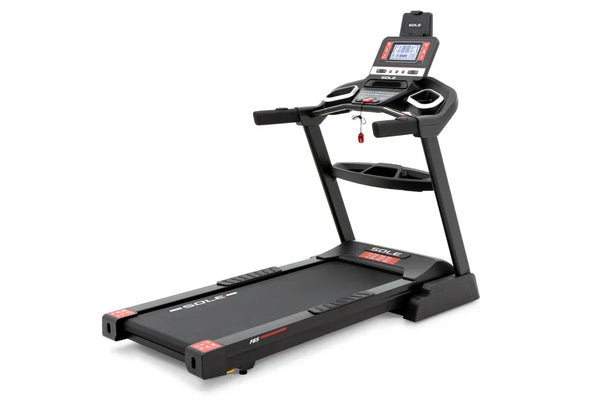
SOLE Fitness treadmills, ellipticals, bikes, and rowers handle the 20- to 30-minute easy cardio your recovery days need, then keep the routine going past Day 28 with 3,000+ guided workouts in the free SOLE+ app.
What Does Calisthenics Do for Your Body?
Calisthenics trains your muscles to control your bodyweight, building strength, joint stability, and coordination together rather than in isolation. Every movement in the challenge is compound, so a push-up loads your chest, shoulders, triceps, and core in one rep, and a lunge trains balance alongside your quads and glutes.
Over four weeks, the plan moves through that full range of patterns in a set order. Week 1 covers pushing, squatting, lunging, and core holds to set your baseline; Week 2 adds explosive work like jump squats and decline push-ups; Week 3 brings in pulling through table rows and dips; and Week 4 combines everything into supersets before Day 28 repeats Day 1.
That daily structure is what makes the four weeks work, and it's also what disappears on Day 29. Deciding what your next session looks like before you finish is how the strength you built keeps going, whether that's a second round of the plan or low-impact cardio on a SOLE machine at home.
|
Premium Home Gym Equipment with Award-Winning Quality! Complete Your Home Gym:
Why Choose SOLE: ✓ Commercial-grade quality for home use 30-Day Money-Back Guarantee: Love it or return it, no questions asked. |

The Core Calisthenics Exercises
Push-Ups
The push-up is the foundation of upper-body calisthenics. It trains your chest, shoulders, triceps, and core at once, making it a true compound movement.
Standard push-ups are the baseline, but as you progress, you'll move to wide-grip push-ups (a longer chest position through a shorter elbow range), diamond push-ups (triceps emphasis), and decline push-ups (upper chest and shoulder focus).
Form is non-negotiable here. Keep your body in a straight line from head to heel, elbows at roughly a 45-degree angle from your torso, and lower your chest to within an inch of the floor before pressing back up.

If standard push-ups are too hard at first, do them on your knees instead of letting your form fall apart.
Squats & Lunges
Your legs contain the largest muscle groups in your body, and squats and lunges are how you train them without a barbell. Bodyweight squats build quad, glute, and hamstring strength while also improving hip mobility.
Lunges add a balance and stability component that squats alone don't cover. Forward lunges, reverse lunges, and lateral lunges each challenge your lower body from a slightly different angle, so no single position dominates your training.
As the weeks progress, you'll move from standard squats toward jump squats and Bulgarian split squats, steadily increasing the demand on your lower body without ever touching a weight plate.
Planks & Core Work
Core work in calisthenics covers more than sit-ups. Planks, hollow body holds, leg raises, and mountain climbers train your core to hold position under load, which is what it does during every other movement in the program.
A strong core transfers power between your upper and lower body and helps you keep a neutral spine when you are tired. Don't skip it or rush through it.
Pull-Ups & Dips
Pull-ups are the most demanding upper body pulling exercise in calisthenics. They train your lats, biceps, and rear delts, which push-ups only recruit as stabilizers.
Dips, performed on parallel bars or the edge of a sturdy chair, work the triceps and lower chest hard. Both movements appear in the later weeks as intensity increases.
Neither is required. Every session that includes them lists a floor-based alternative, so you can complete all 28 days without buying anything.

A chair or bench gives you a dip station without buying one, and the further out your feet go, the harder it gets.
What Does the 28-Day Calisthenics Plan Look Like?
Week 1: Build the Base (Days 1–7)
The first week is about establishing movement patterns and building consistency. Don't underestimate these workouts because they look simple on paper.
With strict form and minimal rest, they're more demanding than they look. This week, the goal is to finish every session and learn your baseline. The rest time between sets in weeks 1–3 is typically around 60 seconds
|
Day |
Exercise |
Sets |
Reps |
Hold Time |
Session Time |
|
Day 1 |
Push-Ups / Bodyweight Squats / Plank |
3 |
10 / 15 |
30 sec plank |
20 to 25 min |
|
Day 2 |
Reverse Lunges / Leg Raises / Mountain Climbers |
3 |
10 each leg / 12 |
30 sec climbers |
20 to 25 min |
|
Day 3 |
Wide Push-Ups / Glute Bridges / Side Plank |
3 |
10 / 15 |
20 sec per side |
20 to 25 min |
|
Day 4 |
Squat Holds / Diamond Push-Ups / Flutter Kicks |
3 |
8 / 20 |
30 sec squat hold |
20 to 25 min |
|
Day 5 |
Full Body Circuit (Push-Up, Squat, Lunge, Plank) |
3 |
10 / 15 / 10 each leg |
30 sec plank |
25 to 30 min |
|
Day 6 |
Slow Negative Push-Ups / Step-Back Lunges / Hollow Hold |
3 |
8 / 12 each leg |
20 sec hollow hold |
25 min |
|
Day 7 |
Active Recovery: stretching, mobility, easy walk or elliptical |
1 |
No rep targets |
Continuous easy pace |
20 to 30 min |
Week 2: Add Intensity (Days 8–14)
Week 2 keeps the same movement patterns but adds volume and reduces rest between sets. You'll also introduce jump squats and decline push-ups, which raise both the cardiovascular and muscular demand.
Most people find the workload more manageable somewhere this week. If it doesn't, that's fine too. Stop any set where your form breaks and pick it up the next day.
|
Day |
Exercise |
Sets |
Reps |
Hold Time |
Session Time |
|
Day 8 |
Decline Push-Ups / Jump Squats / Plank to Downward Dog |
3 |
12 / 12 / 10 |
No timed holds |
25 to 30 min |
|
Day 9 |
Lateral Lunges / Diamond Push-Ups / Bicycle Crunches |
3 |
12 each side / 10 / 20 |
No timed holds |
25 to 30 min |
|
Day 10 |
Burpees / Wide Push-Ups / Leg Raises |
3 |
10 / 12 / 15 |
No timed holds |
25 to 30 min |
|
Day 11 |
Bulgarian Split Squats / Push-Up Hold / Mountain Climbers |
3 |
10 each leg |
20 sec push-up hold, 40 sec climbers |
30 min |
|
Day 12 |
Full Body Circuit, increased reps |
4 |
12 / 18 / 12 each leg |
40 sec plank |
30 to 35 min |
|
Day 13 |
Explosive Push-Ups / Squat Jumps / Hollow Body Hold |
3 |
8 / 15 |
30 sec hollow hold |
25 to 30 min |
|
Day 14 |
Active Recovery: yoga flow or foam rolling, plus light row or bike |
1 |
No rep targets |
Continuous easy pace |
20 to 30 min |
Week 3: Push Your Limits (Days 15–21)
Week 3 introduces pulling movements and bodyweight progressive overload, meaning you manipulate tempo, range of motion, and leverage to make exercises harder without adding weight.
Slow your push-ups to a three-second descent. Pause at the bottom of your squat for two seconds. Small adjustments like these keep your muscles working longer per rep, which makes a fixed load harder.
|
Day |
Exercise |
Sets |
Reps |
Hold Time |
Session Time |
|
Day 15 |
Table Rows or Pull-Ups / Chair Dips / Plank Variations |
3 |
8 to 10 / 10 |
40 sec per plank variation |
30 to 35 min |
|
Day 16 |
Tempo Push-Ups (3 sec down) / Pause Squats / L-Sit Hold |
3 |
10 / 12 |
15 sec L-sit |
30 to 35 min |
|
Day 17 |
Plyometric Lunges / Wide Table Rows / Hollow Body Rocks |
3 |
10 each leg / 10 / 15 |
No timed holds |
30 min |
|
Day 18 |
Pike Push-Ups / Glute Bridge Marches / Hollow Body Hold |
3 |
10 / 12 each leg |
30 sec hollow hold |
30 min |
|
Day 19 |
Max Effort Circuit, all Week 3 exercises |
3 |
As many reps as possible |
30 sec holds where listed |
35 min |
|
Day 20 |
Table Rows / Chair Dips / Burpee to Tuck Jump |
4 |
10 / 12 / 8 |
No timed holds |
35 min |
|
Day 21 |
Active Recovery: deep stretch (hip flexors, hamstrings, lats) plus steady treadmill walk |
1 |
No rep targets |
30 to 60 sec per stretch |
30 min |
Week 4: Maximum Output (Days 22–28)
The final week is your peak. Volume hits its highest point, rest drops to 30 seconds between sets, and you'll combine movements into supersets and circuits that challenge your cardiovascular system as much as your muscles.
Day 28 is a benchmark. You'll repeat the Day 1 workout and compare your numbers directly, which gives you something concrete to measure rather than a guess about how you feel.
|
Day |
Exercise |
Sets |
Reps |
Hold Time |
Session Time |
|
Day 22 |
Superset: Table Rows + Chair Dips / Jump Squats / Plank to Push-Up |
4 |
10 / 12 / 15 / 12 |
No timed holds |
35 to 40 min |
|
Day 23 |
Wall Walk Hold / Pike Push-Ups / Glute Bridge Holds |
3 |
12 pike push-ups |
20 sec wall walk, 30 sec bridge |
30 to 35 min |
|
Day 24 |
Active Recovery: mobility work plus easy elliptical or bike |
1 |
No rep targets |
Continuous easy pace |
20 to 30 min |
|
Day 25 |
Superset: Explosive Push-Ups + Plyometric Lunges / Hollow Body Hold |
4 |
10 / 12 each leg |
40 sec hollow hold |
35 to 40 min |
|
Day 26 |
Max Table Rows / Max Chair Dips / Max Push-Ups |
3 |
Max reps each, rest as needed |
No timed holds |
35 min |
|
Day 27 |
Light Movement: walk or row, stretch, breathwork |
1 |
No rep targets |
Continuous easy pace |
20 to 30 min |
|
Day 28 |
Benchmark Day: repeat Day 1 workout and record results |
3 |
10 / 15, compare to Day 1 |
30 sec plank |
20 to 25 min |
Tips for Success in the Calisthenics Workout Challenge

Warming up before a session costs a few minutes and makes the first set feel far less like a shock.
-
Warm up before every session: Five to ten minutes of light movement gets your muscles ready for the work ahead and helps lower your injury risk.
-
Form before speed: Every rep done sloppily is a rep that builds bad habits and raises your injury risk. Slow down, feel the muscle working, and prioritize quality over rep count.
-
Eat enough protein: Your muscles rebuild between sessions, not during them. Higher-protein diets preserve more lean mass than lower-protein ones, so build meals around lean meats, eggs, Greek yogurt, and legumes.
-
Sleep is non-negotiable: Seven to nine hours gives your body the time it needs to repair the work you did that day. Cutting sleep short leaves you training tired, and tired training is where form breaks down.
-
Take the active recovery days seriously: Days 7, 14, 21, 24, and 27 are not off days. They are low-intensity sessions that keep you moving while your body catches up with the training load.
-
Track your reps from Day 1: Write down every set and rep. On Day 28, you repeat the Day 1 workout, and the comparison only works if you wrote the first one down.
Keep Training After Day 28 with SOLE Fitness
Day 28 hands you a measured result: more reps, better form, and a habit that held for four weeks. That habit is the actual win, and it fades fast once the daily plan ends, because most people stop not from lost interest but from having nothing scheduled the next morning.
We build treadmills, ellipticals, bikes, and rowers that give you that next session at home, with the free SOLE+ app supplying 3,000+ guided workouts so you always have a plan to follow. Each machine includes a lifetime frame warranty and our 30-day satisfaction guarantee. Browse the SOLE range today.
Frequently Asked Questions (FAQs)
Can beginners do the 28-day calisthenics challenge?
Week 1 starts at a baseline most beginners can handle with some effort. The key is modifying from the start instead of forcing full reps with poor form, so knee push-ups are a legitimate starting point, and regular squats can replace jump squats until your joints adjust.
Can you build muscle with calisthenics alone?
Yes, and the mechanism is the same as with weights: progressive overload. You increase the demand over time through more reps, slower tempo, shorter rest, or harder variations, and the muscle adapts. Moving from a standard push-up to a decline push-up to a pike push-up is that principle applied without a single weight plate.
What happens if you miss a day during the calisthenics challenge?
Missing one day has little effect on your results, provided you pick up where you left off the next day. If you miss three or more consecutive days due to illness or injury, restart the current week instead of jumping ahead to where the calendar says you should be.
Should you combine calisthenics with cardio equipment?
During the 28 days, keep any added cardio light: 20 to 30 minutes, two or three times a week. Hard cardio on top of the challenge workouts leaves you tired for the sessions that matter, so a treadmill walk at a moderate incline, a light elliptical session, or a steady row works better.
Which SOLE equipment works alongside calisthenics?
SOLE treadmills, such as the F63 and F83, suit the walking and light incline sessions that fill recovery days, and both fold away when you are done. The ellipticals, including the E25 and E35, give you the same low-impact option without loading your knees. Both come with the free SOLE+ app, which tracks your sessions and offers 3,000+ guided workouts for the days between calisthenics.
*Disclaimer: Products and prices mentioned in this article are accurate as of the date of publication and are subject to change. Please visit the official SOLE website for the most current information.