Key Takeaways
-
An incline treadmill is a standard motorized treadmill with a 12% to 15% power incline, while an incline trainer such as the NordicTrack X24 reaches 40% incline and -6% decline to simulate steep hills.
-
Both machines reach about 12 mph, so the real trade-offs come down to grade range, storage, step-up height, and whether connected workouts carry a monthly fee.
-
Incline treadmills work the quads, glutes, calves, and hamstrings harder than flat walking and fold away for storage, though most stop at 15% and simulate only uphill terrain.
-
Incline trainers suit hikers and trail runners and support up to 400 lbs, but they don’t fold, have a taller step-up, and require a paid iFIT membership for automated workouts.
-
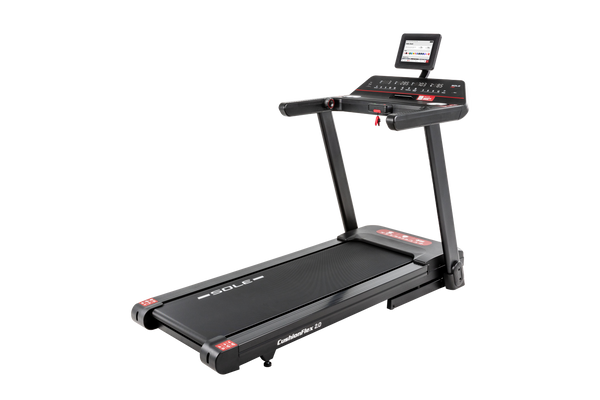
SOLE’s F-series treadmills from the F63 up reach a 15% incline and fold upright after hill workouts, with free SOLE+ instructor-led sessions included at no monthly cost.
*Note: SOLE does not manufacture or sell the NordicTrack X16 or X24. This is an independent review of a product for comparison purposes.
Why Grade Range Decides Which Incline Machine You Need
Grade range decides which machine fits you, because an incline trainer climbs to 40% while an incline treadmill tops out near 15%. Most buyers assume the steeper machine gives the better workout, but that extra grade only pays off for people training for terrain a 15% slope can’t match, such as mountain races or long alpine hikes.
Decline is the less obvious factor in this choice. Walking downhill loads the shins and the front of the thighs in a way climbing never does, so runners preparing for steep descents gain more from decline than from extra uphill grade. That feature isn’t limited to incline trainers, since a few incline treadmills, such as the SOLE TT8, offer a -6% decline.
|
Award-Winning Commercial-Grade Treadmills for Your Home
Why Choose SOLE: ✓ Commercial-grade steel frames with up to 4.0 HP motors 30-Day Money-Back Guarantee: Love it or return it, no questions asked. |

What Are Incline Treadmills and Incline Trainers?

Incline treadmills usually top out around a 15% grade, while incline trainers climb to 40% for steep, hiking-style workouts.
What Is an Incline Treadmill?
An incline treadmill is a standard motorized treadmill fitted with a power incline, typically adjustable from 0% up to 12% or 15% grade. Some models add a modest decline, often down to -3%, to mimic downhill terrain.
What Is an Incline Trainer?
An incline trainer is a treadmill built around a much wider grade range. NordicTrack’s X16 and X24 incline trainers, for example, reach as high as 40% incline and as low as -6% decline. That range is designed for steep hiking simulation and serious hill-training programs rather than everyday walking or running.
Key Differences Between Incline Treadmills and Incline Trainers
Incline & Decline Range
Incline treadmills typically max out between 12% and 15% grade, with select models adding a modest decline for downhill work. Incline trainers push much further, reaching up to 40% incline and down to -6% decline, a range built for steep hiking simulation rather than everyday cardio.
A 15% incline treadmill already delivers a substantial calorie-and-muscle-activation boost over flat walking, which is why incline treadmills remain the practical choice for most home exercisers chasing fat-burning or leg-strengthening workouts.
Size, Folding, and Step-Up Height
Folding design is where incline treadmills pull ahead for anyone short on space. SOLE’s F-series models fold up using a kick-release design, as on the F63, or a hydraulic-assist lever, as on the F85, letting the deck stand upright against a wall when not in use.
NordicTrack’s X-series incline trainers, by contrast, don’t fold and have no transport wheels, so they take up a permanent footprint in a home gym or spare room and require multiple people to move once assembled.
Step-up height adds another layer to that space equation. The NordicTrack X24 has a 13.66-inch step-up height, nearly double the 7-inch step-up on the folding SOLE F89, which can make mounting and dismounting less convenient for shorter users or anyone with mobility concerns.
Features and Subscriptions
Top speed is actually one area where the two categories line up closely. Every SOLE F-series model from the F63 up, including the F80 and F85, reaches 12 mph, matching the top speed of NordicTrack’s X-series incline trainers.
The real divide shows up in subscription requirements. NordicTrack’s incline trainers run in manual mode with a free account, but automatic incline and speed adjustments, along with trainer-led workouts, require a paid iFIT membership.
SOLE treadmills take a different approach, pairing every F-series model with the free SOLE+ app, which delivers instructor-led workouts without a recurring subscription fee. For buyers who want connected workouts without an ongoing subscription bill, that distinction can outweigh the extra incline range on paper.
Pros of Incline Treadmills vs Incline Trainers

Incline treadmills bring hill-style workouts into everyday home routines, while incline trainers suit hikers and athletes who need far steeper grades.
Incline Treadmill Pros
-
Walking on an incline works the quadriceps, calves, glutes, and hamstrings harder than flat walking, according to Harvard Health Publishing, because the body pushes against gravity.
-
A study in Gait & Posture, cited by Harvard Health, suggests incline walking may reduce knee joint loading, which could benefit people managing knee osteoarthritis or recovering from knee replacement surgery.
-
Most models fold flat or stand upright for storage, and a lower step-up height makes them easier for more users to get on and off.
-
Free app access, such as SOLE+ on SOLE treadmills, removes the need for a paid subscription.
Incline Trainer Pros
-
Up to 40% incline lets them simulate genuinely steep terrain that a standard treadmill simply can't replicate.
-
That range suits athletes training for mountainous races or anyone building leg strength well beyond what a 15% grade can provide.
-
A -6% decline helps runners prepare for downhill trail sections, working the anterior tibialis and quads in ways uphill training doesn’t.
-
The NordicTrack X16 and X24 support up to 400 lbs and reach 12 mph, so the steep grade doesn’t cost capacity or speed.
Cons of Incline Treadmills vs Incline Trainers
Incline Treadmill Cons
-
Most models cap out between 12% and 15% grade, so anyone training specifically for 20%, 30%, or 40% simulated climbs will eventually outgrow them.
-
Decline is only available on select models, such as the non-folding SOLE TT8, so most folding incline treadmills can only simulate uphill terrain.
Incline Trainer Cons
-
Their non-folding design takes up permanent floor space, and a step-up height around 13.66 inches can be awkward for shorter users or anyone with mobility concerns.
-
Automatic incline and speed adjustments, along with trainer-led workouts, require a paid iFIT membership in addition to the equipment.
Incline Treadmill vs Incline Trainer: Comparison Table
|
Feature |
Incline Treadmill |
Incline Trainer (e.g., NordicTrack X-series) |
|
Incline Range |
0 to 15% (SOLE F63 and up) |
Up to 40% |
|
Decline |
Available on select models (SOLE TT8: -6%) |
Up to -6% |
|
Folding |
Yes (SOLE F-series) |
No |
|
Step-Up Height |
7 inches (SOLE F89) |
13.66 inches |
|
Top Speed |
12 mph (SOLE F63 and up) |
12 mph |
SOLE Incline Treadmills Cover Most Home Hill Workouts

SOLE’s folding F-series treadmills reach a 15% incline for home hill workouts, with free instructor-led sessions through the SOLE+ app.
Choosing between these machines comes down to how steep your training gets. Hikers and trail runners chasing slopes beyond 15% will use everything an incline trainer offers, while most home walkers and runners get the grades they need from a folding incline treadmill that takes up less space and costs nothing extra each month.
SOLE F-series models from the F63 up deliver the 15% grade most incline programs call for, then fold away after each session. Instructor-led workouts are available in the free SOLE+ app. Shop our SOLE F-series incline treadmills for hill training that fits your space and budget.
Frequently Asked Questions (FAQs)
Is an incline treadmill good for bad knees?
Incline walking may help, since a study suggests it may reduce knee joint loading in ways that could benefit people with knee osteoarthritis or those recovering from knee replacement surgery. Incline treadmills also have a lower step-up than incline trainers, which can make getting on and off easier. Check with your doctor before starting.
Is a 15% incline enough for hiking training?
For general hill conditioning, yes. A 15% grade builds the leg strength and stamina needed for most climbs, but training for sustained slopes steeper than that calls for an incline trainer. Routes with long descents also benefit from decline, which incline trainers and select incline treadmills, such as the SOLE TT8, both offer.
Do incline trainers work your glutes more than treadmills?
Only when you use the extra grade. Glute and hamstring effort rises with how steep the slope is, not with the type of machine, so walking at 15% on either one gives a similar result. An incline trainer adds more only if you regularly train above that grade.
Which SOLE Treadmills reach a 15% incline?
The SOLE F63, F65, F80, F83, F85, and F89 all climb to a 15% incline and fold for storage, which suits incline walking in smaller rooms. Each one also connects to the free SOLE+ app, so you can follow instructor-led hill workouts without paying a monthly fee.
*Disclaimer: Products and prices mentioned in this article are accurate as of the date of publication and are subject to change. Please visit the official SOLE website for the most current information.