Key Takeaways
-
Recumbent bikes use magnetic or eddy current resistance that stays at the level set on the console or handlebar controls, while an air bike's fan resistance rises and falls with effort.
-
Recumbent bikes mainly work the quadriceps, hamstrings, and calves, while an air bike’s moving handlebars add the chest, shoulders, arms, and core for a full-body workout.
-
Recumbent bikes run quietly and offer a wide seat with a backrest, while air bikes use a narrow, backless saddle and a fan that gets loud during hard intervals.
-
Recumbent bikes suit beginners, older adults, wheelchair users, and anyone recovering from injury, while air bikes suit fitter riders who want intense intervals without adjusting resistance mid-set.
-
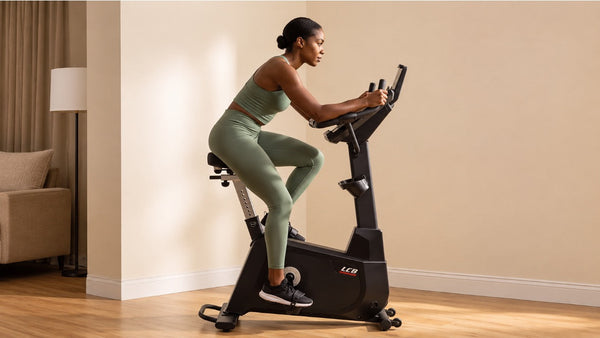
SOLE’s stationary bikes, such as the R92 and LCR recumbent bikes, offer back-supported cardio with adjustable seats and handlebar resistance controls: 20 levels on the R92 and 40 on the LCR.
Is an Air Bike Harder Than a Recumbent Bike?
An air bike generally feels harder than a recumbent bike because its fan-based resistance climbs automatically with effort, while a recumbent bike's resistance stays fixed until the rider changes it with the console or handlebar controls. People assume "harder" always means "better," but that logic skips over how long a rider can sustain that effort safely.
Difficulty is not just about how much resistance a bike can generate. It is also about how long someone can sustain effort without breaking form or aggravating an old injury. A rider recovering from a knee or back issue who chases an air bike's rising resistance can easily overshoot a safe limit, while that same intensity on a supported recumbent seat is easier to control over a longer interval.
|
Smooth, Silent Rides for Every Fitness Level. Premium Home Fitness Bikes!
 Choose Your Perfect Style: Why Choose SOLE Exercise Bikes: ✓ Whisper-quiet magnetic resistance won't disturb others 30-Day Money-Back Guarantee: Love it or return it, no questions asked. |
Air Bike vs Recumbent Bike: An Overview
What Is a Recumbent Bike?

Recumbent bikes put riders in a reclined, back-supported seat with forward pedals, focusing the effort mainly on the legs.
A recumbent bike seats the rider in a reclined position on a full seat with a backrest, rather than on a narrow saddle. The pedals sit out in front of the hips instead of directly underneath them, so the legs extend forward with each rotation rather than pressing straight down.
Even with the backrest in place, riders should keep their spine neutral rather than slumping into the seat. Recumbent bikes primarily target lower-body muscle groups, making them a more focused leg workout compared to the full-body demands of an air bike.
What Is an Air Bike?
An air bike is a stationary bike with pedals and moving arm handles connected to a large fan mounted at the front of the machine. As the rider pedals, the fan spins and creates wind resistance, and pushing or pulling the handles adds extra upper-body resistance. This is why air bikes are sometimes called fan bikes.
The resistance on an air bike isn't fixed like it is on most spin or magnetic bikes, where a knob or touchscreen sets the level manually. Instead, resistance rises and falls automatically based on how hard the rider pedals and pulls. Pedal harder, and the fan pushes back harder. Ease off, and resistance drops right away.
Because the workout engages both the upper and lower body at once, air bikes tend to spike heart rate quickly, which is exactly what interval training is built around.
Differences Between Recumbent Bikes and Air Bikes

Air bikes tie resistance to effort and work the whole body, while recumbent bikes offer steadier resistance, back support, and quieter rides.
Resistance
Recumbent bikes use resistance systems, such as magnetic or eddy current brakes, that riders adjust directly through console or handlebar controls. The level stays fixed until it's manually changed, giving a predictable, steady workout from start to finish.
Air bikes work differently. Resistance comes from a fan that spins faster the harder the rider pedals and pulls the handles, so effort and resistance rise and fall together in real time rather than being set in advance.
Muscles Worked
A recumbent bike is primarily a lower-body machine, targeting the quadriceps, hamstrings, and calves through a forward-reaching pedal stroke. Air bikes work more muscle groups at once. The moving handlebars pull in the chest, shoulders, arms, and core alongside the legs, making it a more full-body exercise overall.
Seating & Back Support
This is where the recumbent bike has a clear structural advantage. Its wide seat and built-in backrest spread body weight across a larger surface area, taking pressure off the tailbone and offering genuine lower-back support throughout the ride.
Air bikes use a narrower saddle similar to a spin bike, with no backrest, which puts more demand on core strength to maintain posture during longer or more intense sessions.
Noise
Recumbent bikes tend to run quietly, since magnetic and eddy current resistance systems operate with minimal mechanical friction. Air bikes are a different story.
The spinning fan wheel generates noticeable noise, especially during high-intensity intervals when the fan is working hardest, and the chain or belt drive connecting the pedals to the fan can add to the sound.
Benefits of Recumbent Bikes and Air Bikes
Recumbent Bike Benefits
Recumbent bikes are built around accessibility and support. The reclined seat and backrest make them a strong option for beginners, people managing chronic joint or back pain, anyone recovering from an injury, and older adults who want a safe, low-impact cardio option.
Getting on and off a recumbent bike is noticeably easier than mounting an upright or air bike, which matters for wheelchair users and people with limited mobility.
Air Bike Benefits
Air bikes shine in high-intensity interval training because resistance scales automatically with effort, so riders never have to stop and adjust a dial mid-interval. The combination of leg and arm movement also engages more muscle groups in a single session.
Recumbent Bike and Air Bike Use Cases

Recumbent bikes suit injury recovery, beginners, and steady low-impact cardio, while air bikes fit fitter riders chasing intense full-body intervals.
When to Use a Recumbent Bike
-
Recovering from an injury or managing chronic joint, hip, or back pain
-
New to exercise equipment and wanting a lower learning curve with built-in back support
-
Needing an easier, more accessible way to get on and off the machine, such as when transferring from a wheelchair
-
Preferring steady, moderate-intensity rides over unpredictable resistance spikes
Recumbent bikes are often the default recommendation for anyone whose main goal is sustainable, low-impact cardio rather than maximum-intensity intervals.
This is particularly true for people managing a health condition, since the reclined seat reduces strain on the lower back and joints during longer sessions. Anyone recovering from surgery or an injury should check with their doctor or physical therapist before starting a new routine
When to Use an Air Bike
-
Training for short, intense interval workouts where resistance needs to climb automatically with effort
-
Wanting a full-body cardio session that brings the arms and core into the workout alongside the legs
-
Looking for high-intensity training that still keeps impact on the joints relatively low
-
Comfortable with a narrower saddle and no backrest during longer or harder sessions
Air bikes tend to appeal most to people who already have a base level of fitness and want to push into harder interval zones without worrying about manually adjusting resistance mid-set.
Recumbent Bike vs Air Bike Features: Comparison Table
|
Feature |
Recumbent Bike |
Air Bike |
|
Resistance Type |
Magnetic or eddy current brake, adjusted manually through console or handlebar controls |
Fan-generated wind resistance that rises and falls with pedaling effort |
|
Muscles Worked |
Primarily lower body: quadriceps, hamstrings, and calves |
Full body: legs, chest, shoulders, arms, and core through moving handlebars |
|
Workout Intensity |
Steady, predictable intensity set in advance |
Intensity scales automatically, suited to interval-style training |
|
Seating and Back Support |
Wide seat with full backrest, less pressure on tailbone and lower back |
Narrow saddle, no backrest, more reliance on core strength |
|
Noise |
Quiet operation with minimal mechanical friction |
Noticeable fan and drivetrain noise, especially during high effort |
Get Back-Supported, Low-Impact Cardio at Home with SOLE
Choosing between an air bike and a recumbent bike really comes down to whether the goal is chasing intensity or building a sustainable routine that protects the joints and lower back over time. Both paths are valid, but only one keeps the rider seated, supported, and in control of resistance from the very first pedal stroke. SOLE's bike lineup focuses on recumbent and upright models rather than air bikes.
The SOLE R92 and LCR recumbent bikes support that routine, with quiet magnetic resistance you can adjust from the handlebars and a steel frame built for daily rides. Each bike also comes with our 30-day satisfaction guarantee, so you can try the SOLE R92 or LCR recumbent bike at home with little risk.
Frequently Asked Questions (FAQs)
Can you do interval training on a recumbent bike?
Yes. Because recumbent resistance holds at whatever level the rider picks, intervals work by raising the level on the console or handlebar controls for each hard push and lowering it to recover. That takes a few button presses an air bike doesn't need, but every effort stays steady and easy to repeat.
Should seniors use an air bike or a recumbent bike?
A recumbent bike is usually the better fit for older adults. The backrest supports the lower back, mounting and dismounting take less effort, and resistance only changes when the rider chooses. An air bike's backless saddle and effort-driven resistance ask for more core strength and balance.
Is an air bike good for people with bad knees?
It can be at gentle intensities, since an easy pedaling pace keeps the fan's resistance light. Hard intervals are a different matter, because resistance builds quickly and can put more load on sore joints. People with a long-term knee condition should get a doctor's approval before starting.
Are air bikes too loud for apartments?
They can be, especially during hard intervals, when the fan spins fastest, and the chain or belt drive adds its own sound. Recumbent bikes are usually the quieter choice for shared walls, since magnetic and eddy current resistance creates very little mechanical friction while riding.
Do SOLE recumbent bikes require a subscription?
No. SOLE recumbent bikes like the R92 and LCR include free access to the SOLE+ app, with instructor-led workouts across several fitness categories and no monthly fee. Riders can follow guided low-impact sessions without any ongoing cost.
*Disclaimer: Products and prices mentioned in this article are accurate as of the date of publication and are subject to change. Please visit the official SOLE website for the most current information.